What Neighbours Usually Call About
Belmont sits apart from a lot of the surrounding area in one important way
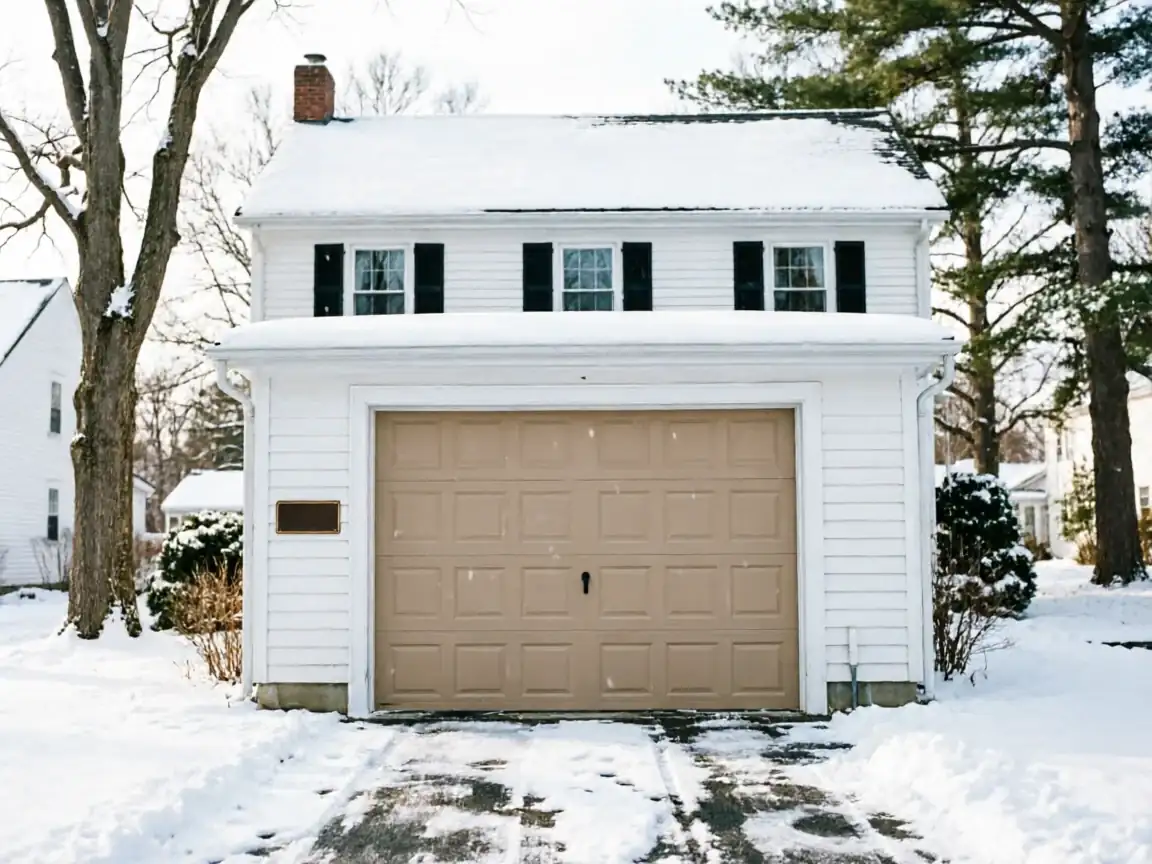
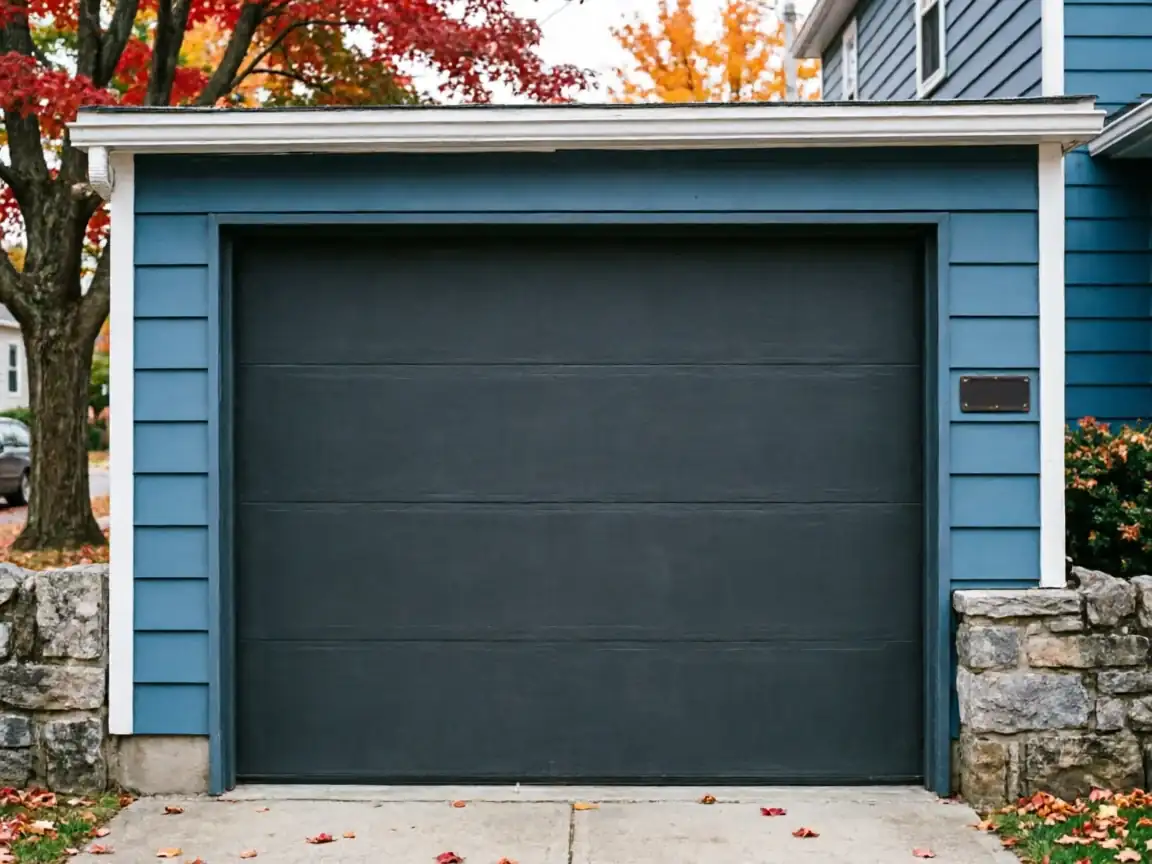
The houses here are newer. Where much of the wider Johnstown service area was built before 1960, Belmont's median build year lands around 1966. That six-to-ten year gap matters more than it sounds like. Homes from this stretch were going up just as steel sectional doors were replacing the old wood panel and track-and-hinge setups, so a lot of Belmont garages still carry early steel doors on extension spring systems rather than the one-piece wood doors you'd find in the older pockets of the area.
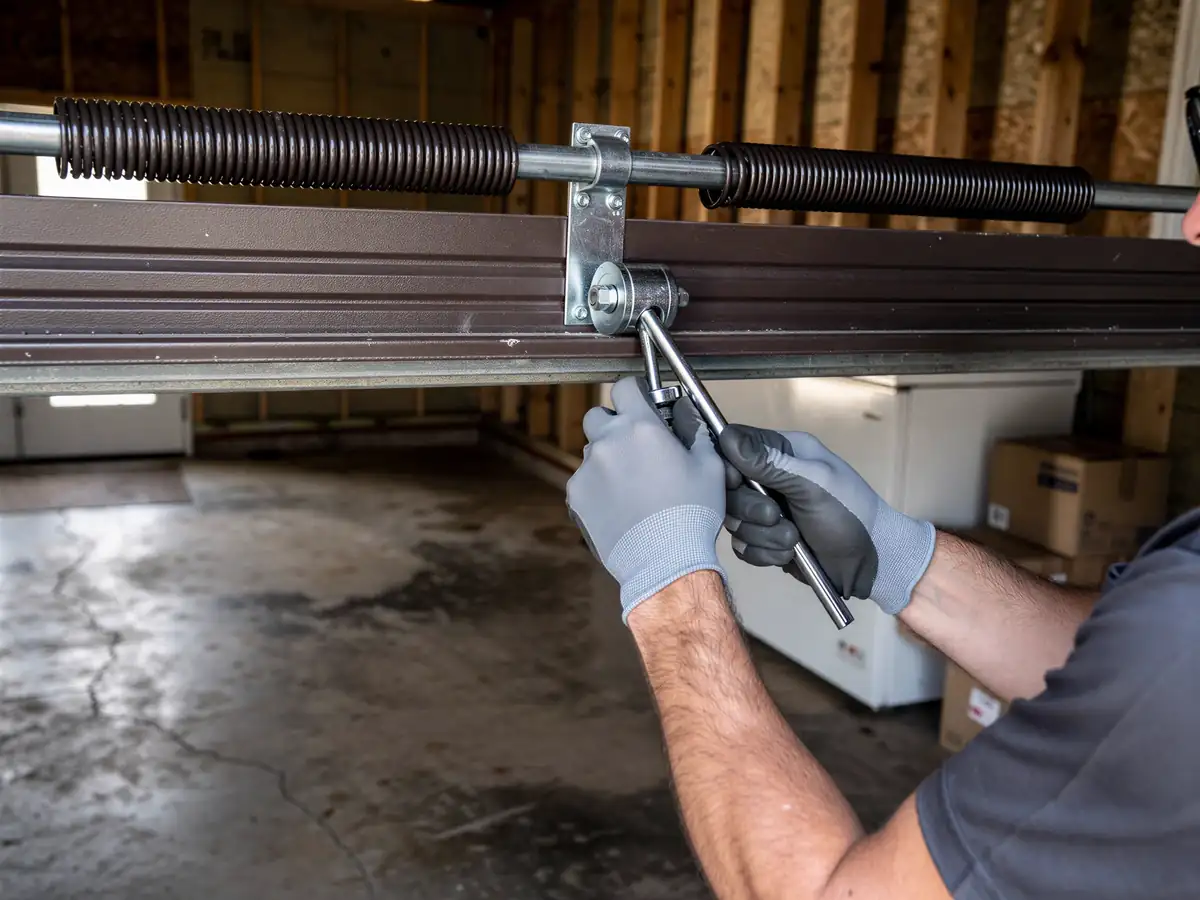
The calls we get from this stretch tend to be extension spring failures
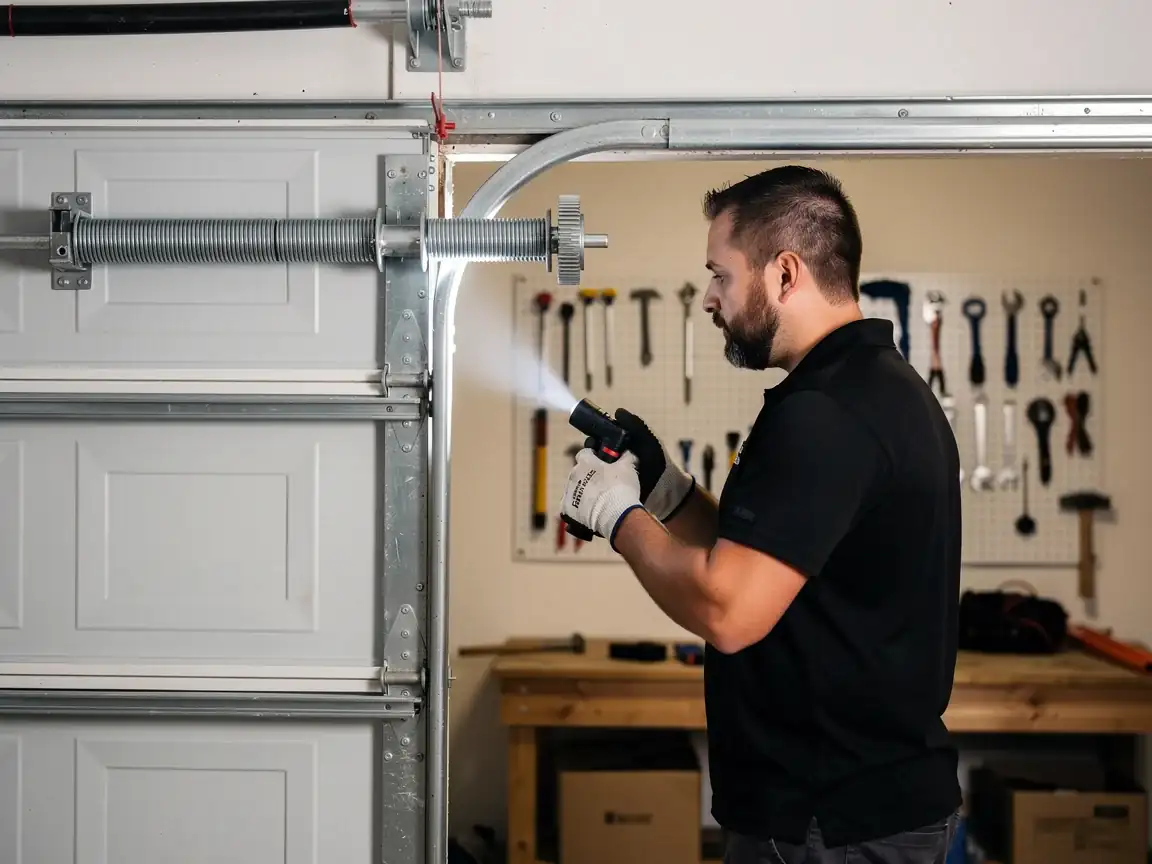
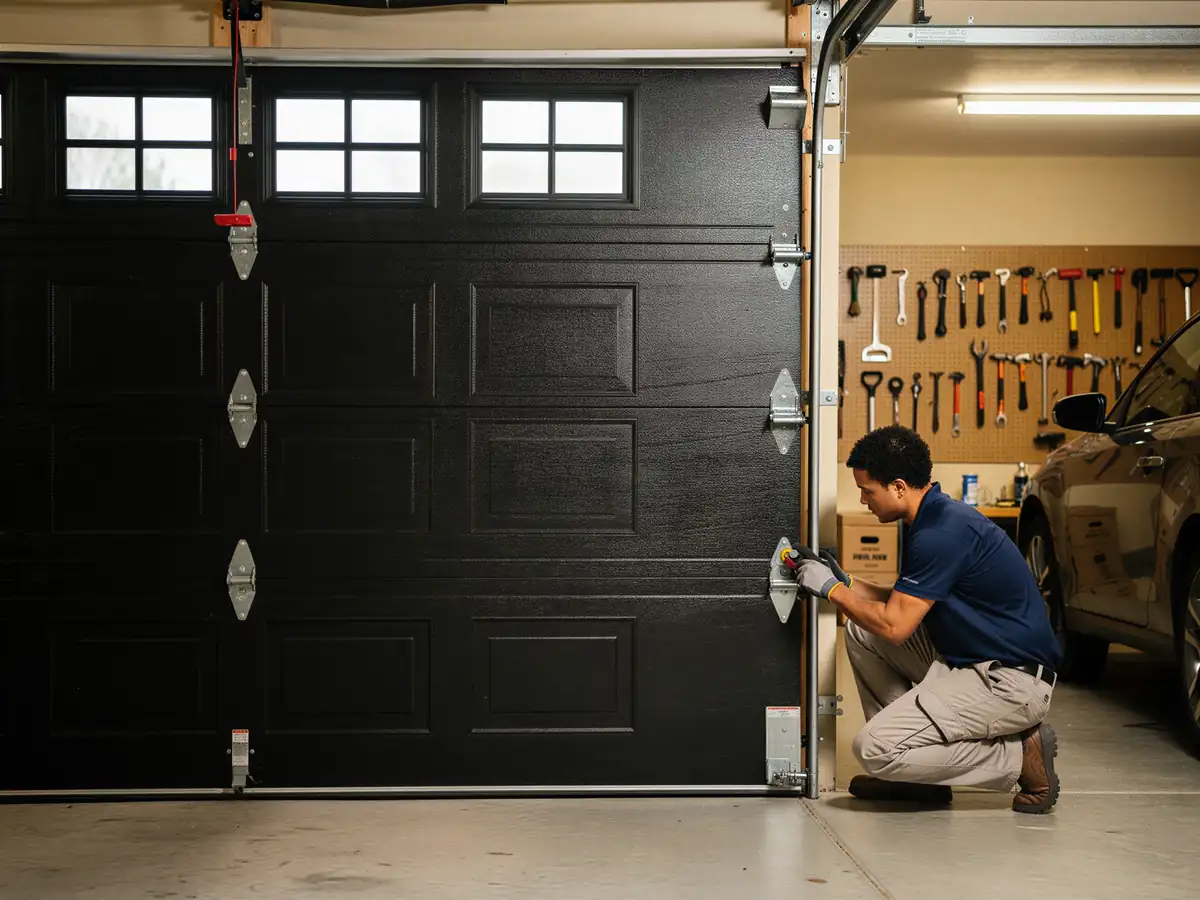
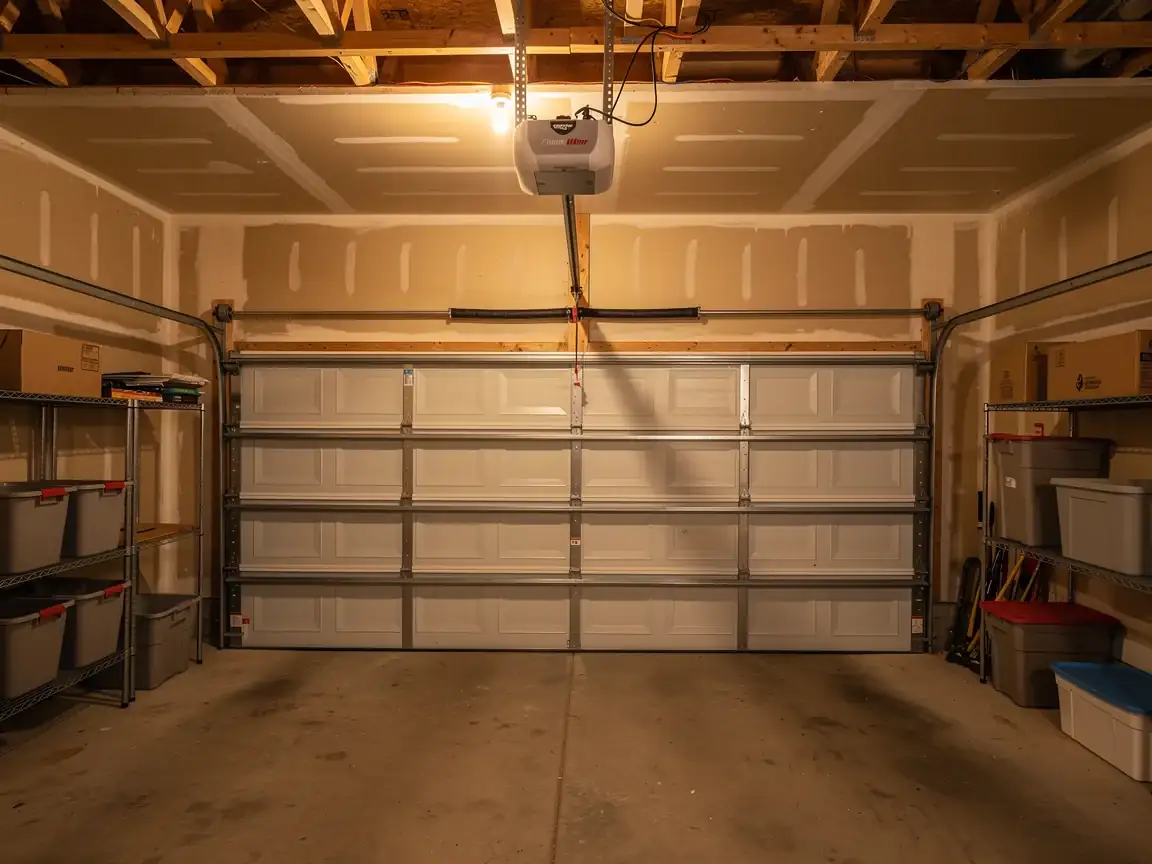
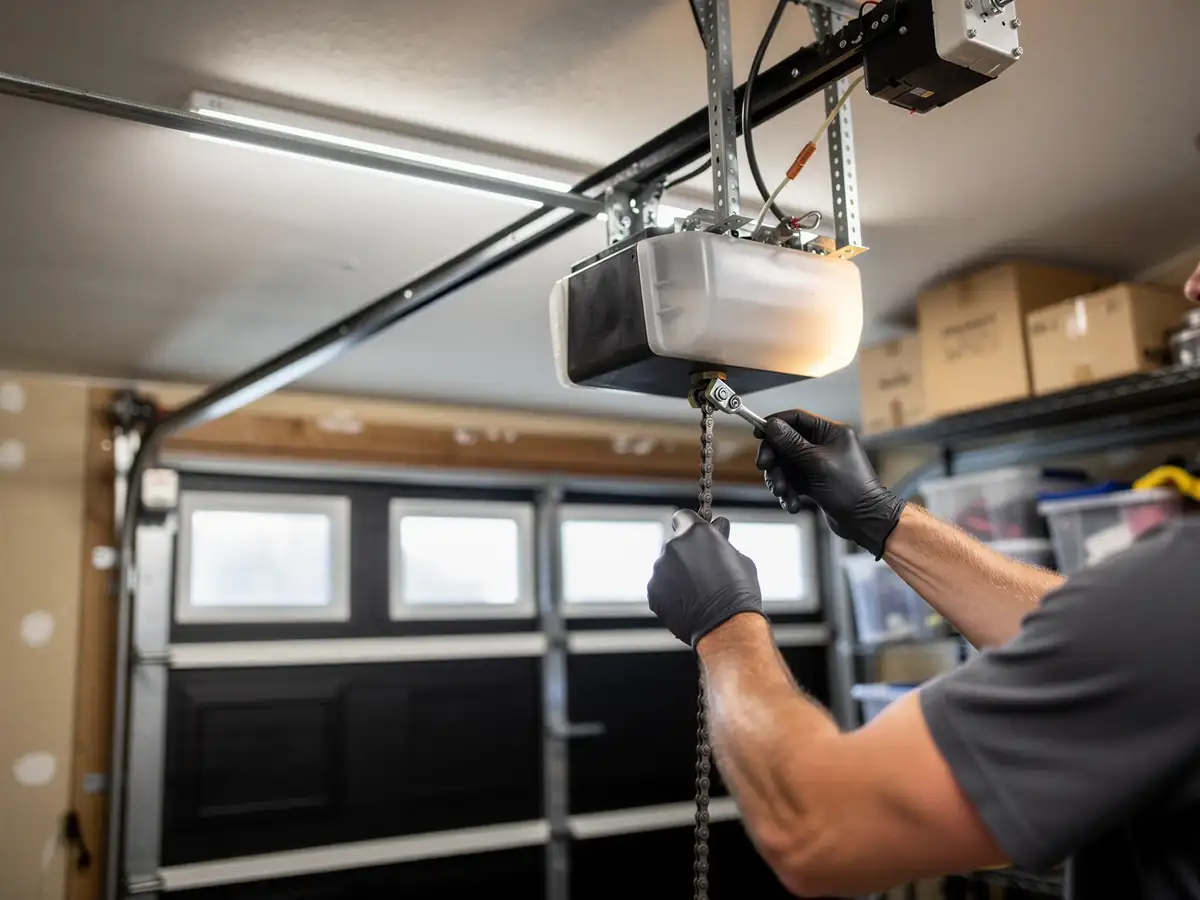
The coiled springs stretched along the horizontal track rather than the torsion bar over the header. Those springs have a shorter service life than torsion springs and they fail with a bang, not a slow sag. We also hear from owners dealing with worn pulleys and frayed lift cables, since extension systems lean on more moving parts than a torsion setup.
It's not a hard rule
Some Belmont garages were added or replaced later and already run torsion hardware. But if you've never had the door serviced, extension springs are the way to bet.
Getting Here
Belmont is about 4 miles from Johnstown, and that's where our trucks run from - we don't keep a depot or crew stationed in Belmont itself. It's a short run, not a cross-county haul, so a same-day visit is realistic depending on the day's schedule, though we're not going to promise a response time we haven't given you in writing.
Belmont also sits close to a cluster of other small communities we cover from Johnstown - Westmont, Franklin, Elim, and Ferndale are all within a couple of miles, with Brownstown closer still at about a mile out. If you're near one of those boundaries and aren't sure which name your neighbourhood goes by on paper, don't worry about it - call and tell us the door problem, not the zip code.
What That Means for Doors
A door built around 1966 is old enough that the opener, if there's one at all, has likely been replaced at least once, but the door itself and the track hardware are often original or close to it. Extension spring doors from this era usually run on a single torsion-free track with a pulley and cable system that nobody stocks in big-box stores anymore - you need someone who carries the right stretch-length springs on the truck, not just a generic torsion kit.
The cold matters here too. This area sits in a severe cold climate band, and steel doors from the 1960s weren't built with the insulation standards we'd use today. Panels flex more in deep cold, seals crack, and a door that binds in January often runs fine by June - which is why a lot of these complaints get written off as one-time glitches instead of the hardware problem they usually are.
One honest limit: if your extension springs have already been replaced with mismatched or incorrect-length springs by a prior repair, sometimes the fix isn't re-matching springs - it's replacing the track hardware as a set. We'll tell you straight if that's what we're looking at rather than patching around it.
What Was Built Here
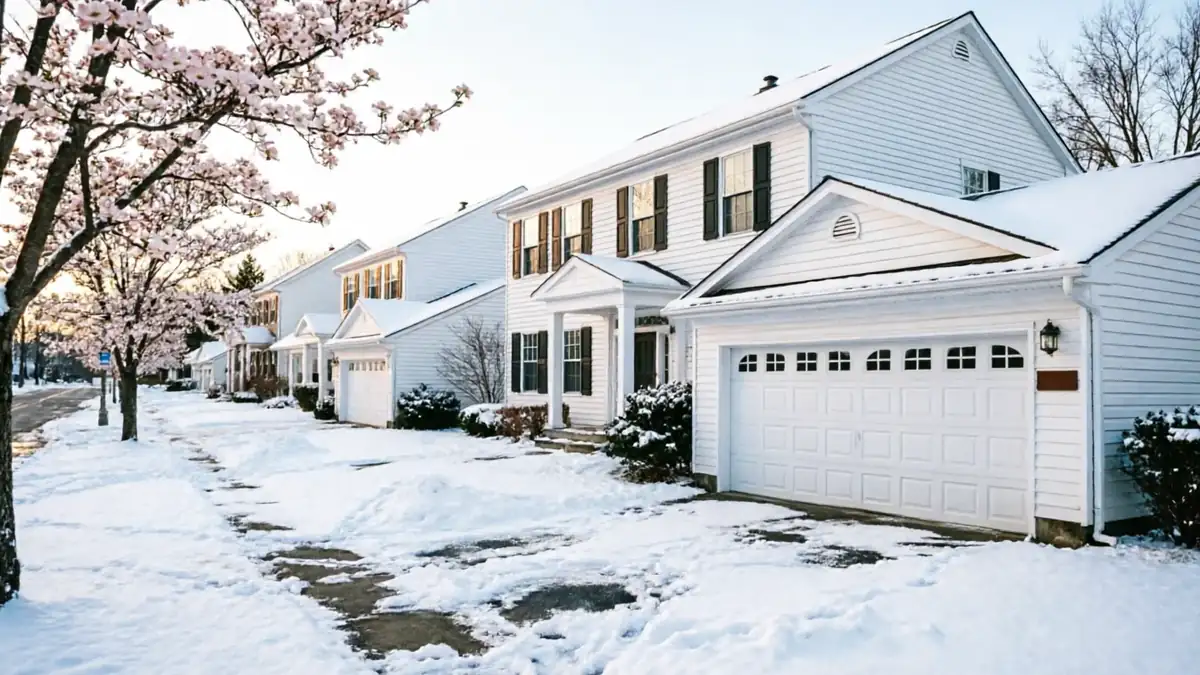
Belmont's housing stock centers on 1966, newer than the 1952 median you'd find across the broader service area
Where most of the 34 named communities skew pre-1960. That puts Belmont in the later wave of postwar construction - still solidly before modern building code, but built during the transition from wood to steel garage doors rather than squarely in the wood-door era.
With 1,212 households in Belmont and a median income of $57,132, this is a smaller, steady community, close in income to the wider area's $56,795 median but distinct in its housing age
That combination - mid-60s construction, moderate household incomes - tends to mean doors get repaired in place rather than replaced outright, which is exactly the kind of job our trucks are set up for.
- 1,212 households