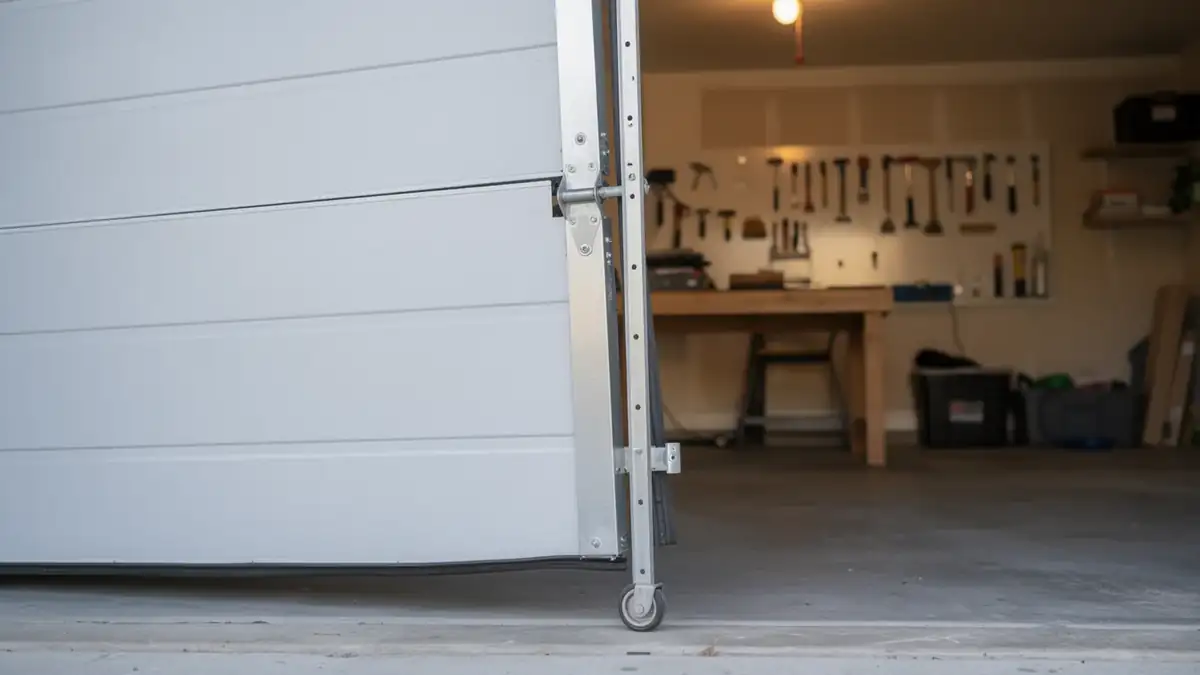
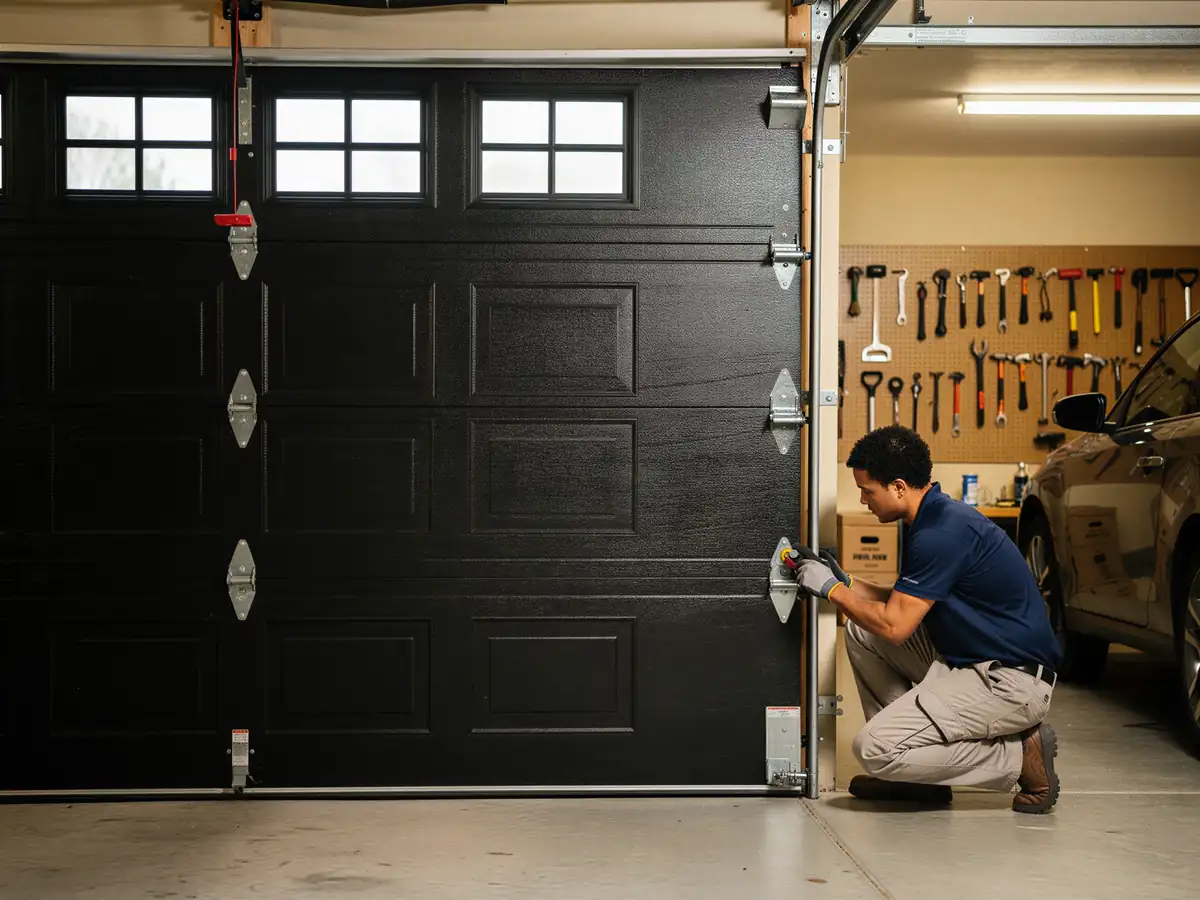
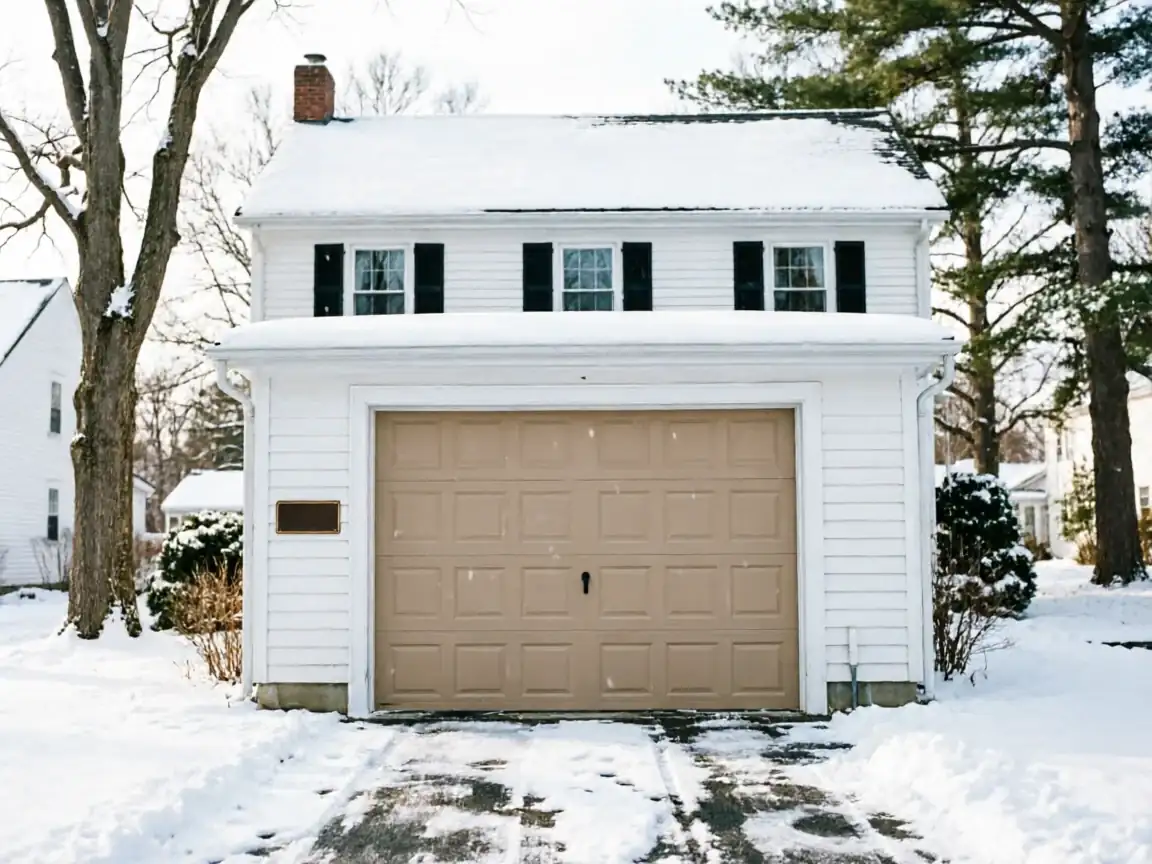
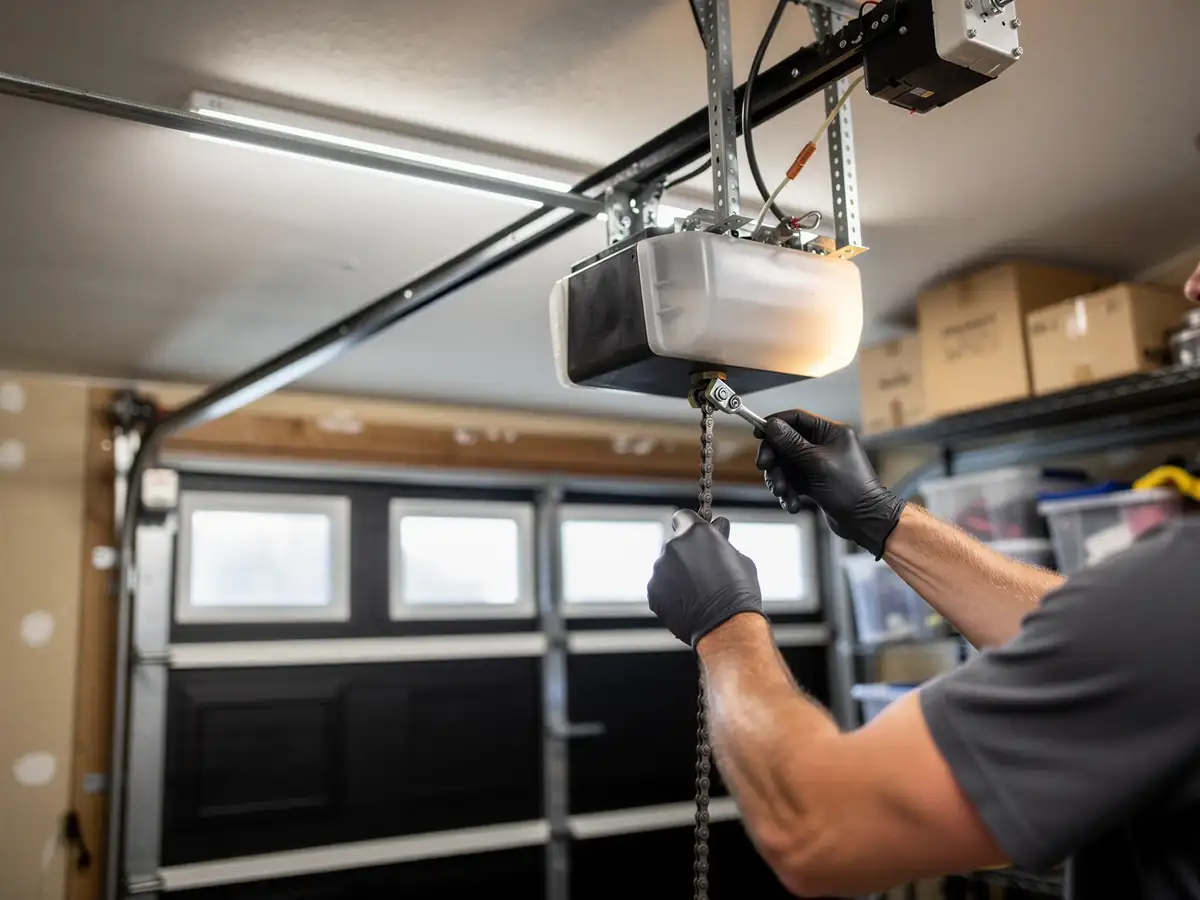
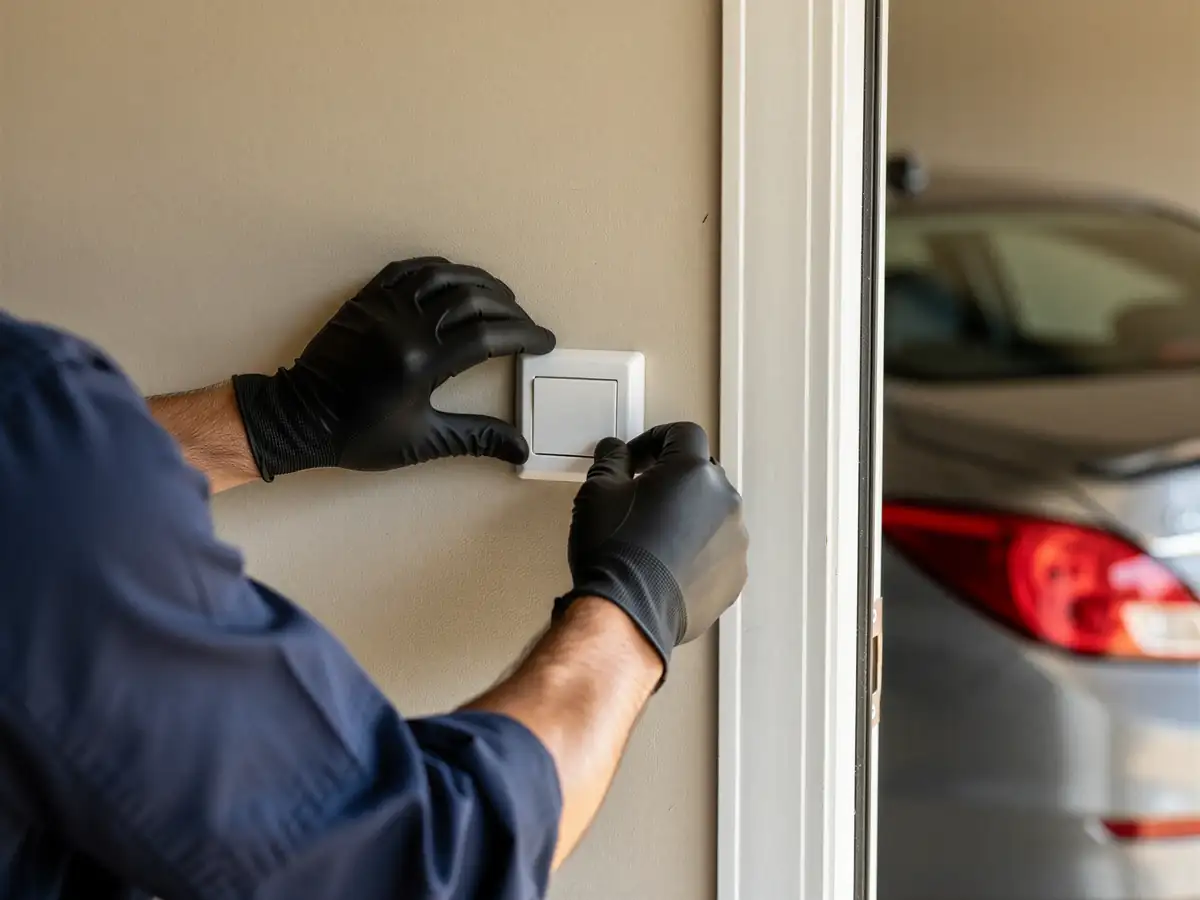
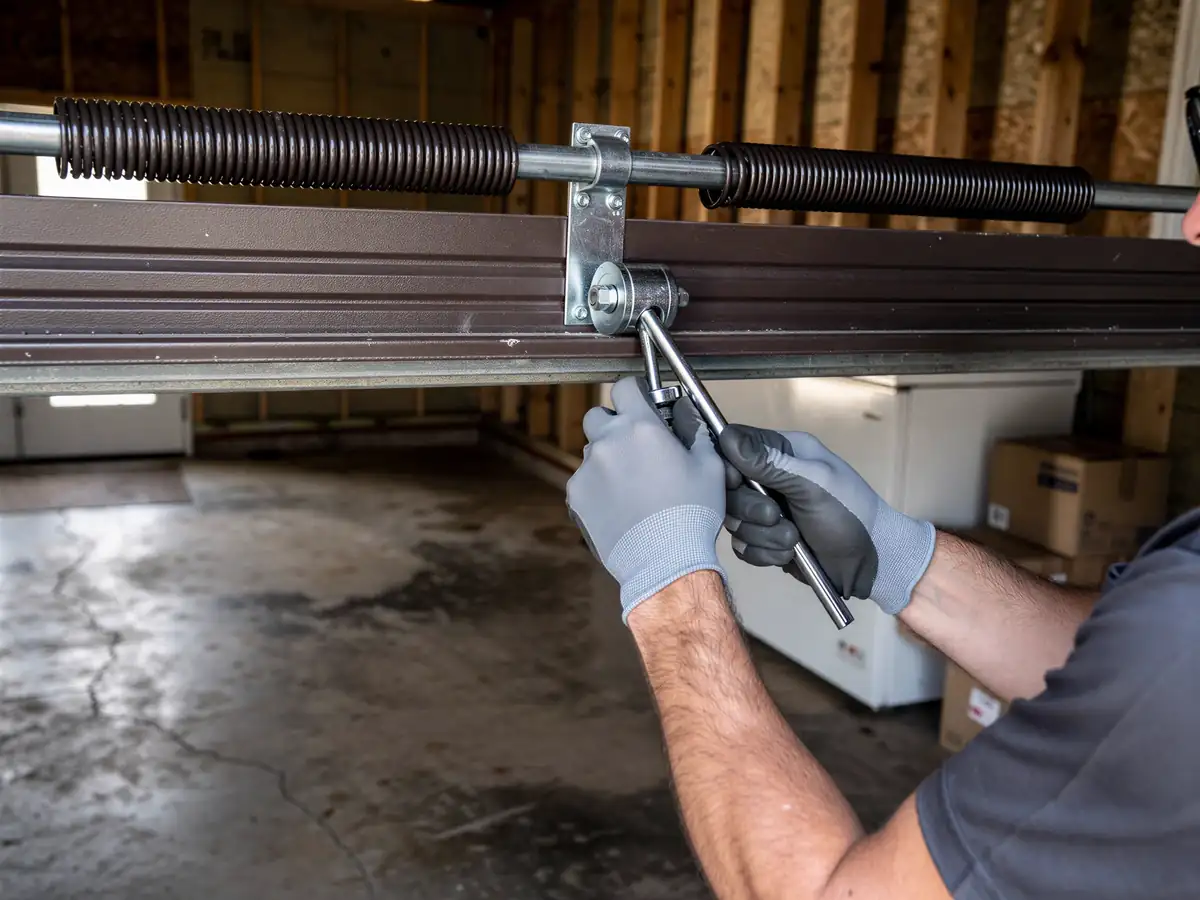
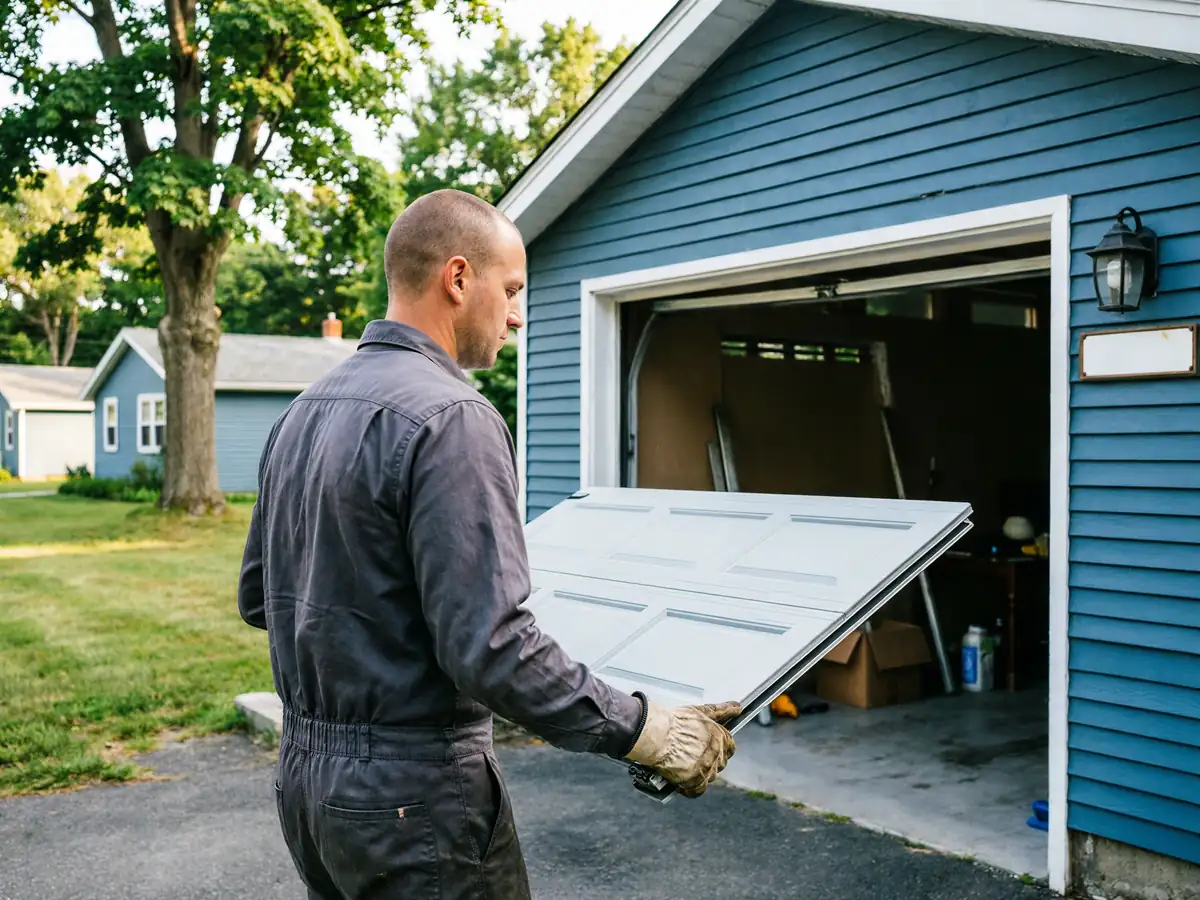
Johnstown sits in a cold-severe climate band, and that matters more to a garage door than most people think. The ground under a slab-on-grade garage freezes and heaves through winter, and the concrete apron in front of the door shifts a fraction of an inch at a time. That slow movement pulls the bottom track bracket out of true, just a hair each season, until one cold morning the roller finally climbs the lip of the track instead of riding inside it. Because so much of this area's housing went up between 1938 and 1980 (median year 1952), the original track hardware in a lot of these garages was never built to handle decades of freeze-thaw cycling. Steel tracks lose their factory bend over that many winters, and galvanized brackets that were fine in 1955 are pitted and loose by now. Add rock salt tracked in off the tires and the lower track section corrodes from the inside, which weakens the bolt holes that hold the whole thing plumb. None of this happens overnight. It's cumulative, which is why a door that worked fine last January can start binding or popping a roller this January with no single obvious cause.
The Problem
Most of the track problems we see in this area trace back to the housing stock itself. Pre-1960 construction, which covers a large share of the 34 named communities around here, often used lighter-gauge track and horizontal supports anchored directly into wood framing that has since shrunk and settled. When that framing moves, the horizontal track section tilts a few degrees out of level, and the rollers start riding the edge of the track instead of the center. You'll hear it before you see it - a grinding or clicking as the door travels, worse at the top or bottom of the run depending on which bracket has worked loose. A bent track is a different animal from a misaligned one. Misalignment you can usually true back up by loosening and resetting the bracket bolts. A bent track, from a car bumper tap or just metal fatigue, needs the section replaced - you cannot bend it back straight and expect it to hold. One honest limitation: if the vertical tracks have rusted through at the base, which happens on a fair number of these older slabs where water pools at the threshold, patching the rust doesn't fix the underlying rot in the metal. At that point you're replacing track, not adjusting it.
What You Pay
We don't have a flat number to give you here because track repair costs swing on a few things: whether it's a bracket adjustment or a full section swap, whether one track is affected or both, and whether the opener's travel limits need resetting afterward on top of it. A simple bracket tightening and realignment is a different job than pulling a rusted or bent track section and replacing it, and we'd rather give you an honest number after we look at the actual hardware than a figure that doesn't match what's really wrong. What we can tell you is that putting it off rarely saves money. A door running on a track it's slowly climbing out of will eventually jump the roller entirely, and that's a service call that usually costs more than catching the misalignment early.
What to Look At First
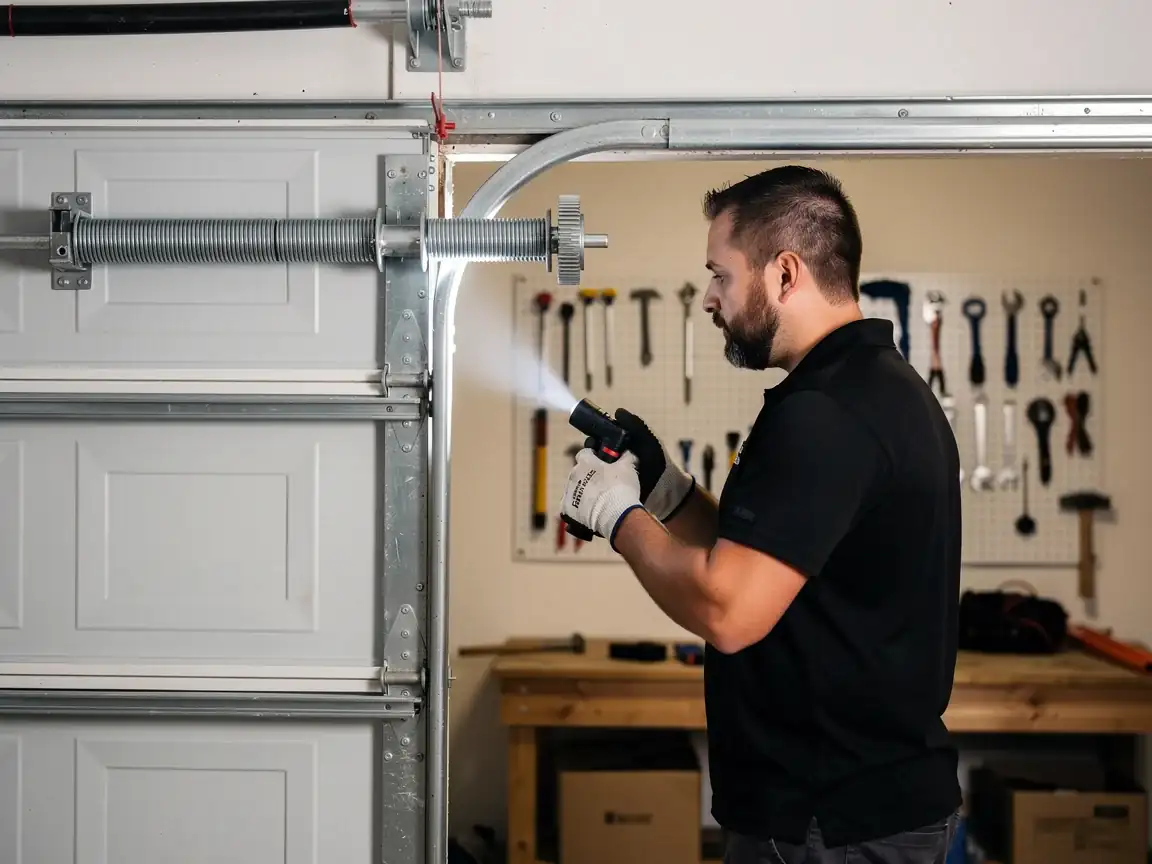
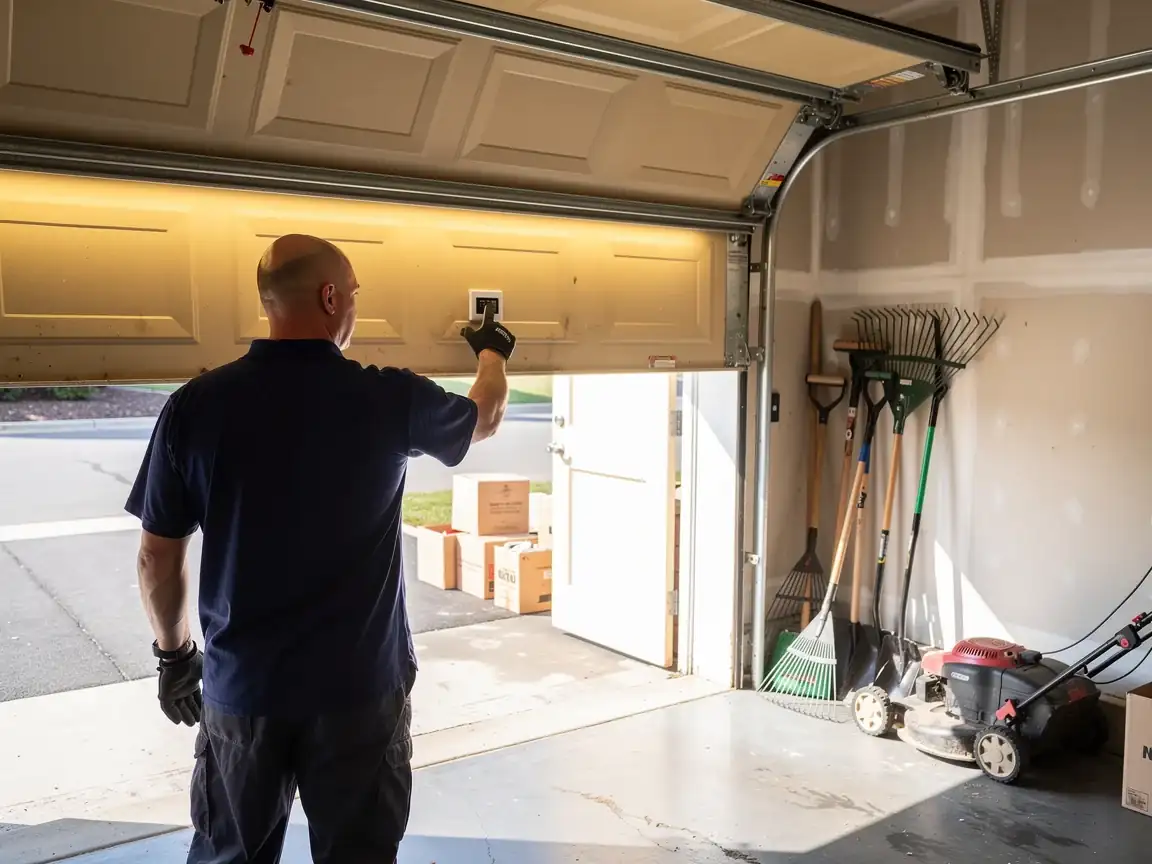
Before you call anyone, open and close the door slowly by hand with the opener disconnected, and watch the rollers at the point where the curved track meets the horizontal section - that transition is where most of the strain shows up first. Look for daylight between the roller and the track wall, or a track that visibly bows away from the wall bracket when the door passes. Check the lag bolts holding the horizontal track to the framing; on older homes where the wood has shrunk over the decades, those bolts back out and the whole track sways under load. If you see rust at the base of the vertical track near the floor, press on it - if it flakes or gives, that's corrosion eating the steel, not just surface staining. None of this requires tools, just a flashlight and a few minutes, and it tells you whether you're looking at a $20 bolt problem or a track that needs to come off the wall.
Why did my garage door suddenly come off the track after years of working fine?
It's rarely sudden - the hardware has usually been drifting out of alignment for a while. In this area, frost heave under the slab and shrinking wood framing in older homes (a lot of this housing dates to the 1938-1980 range) slowly pull track brackets loose. The day it finally jumps is just the day the last bit of margin ran out.
Can I push a derailed door back onto the track myself?
You can sometimes reseat a roller that's just popped out near the bottom of the curved track, with the opener disconnected and the door manually supported. If a spring is under tension or the track itself is bent, don't force it - that's how fingers and torsion springs get hurt.
Is it the track or the rollers that usually fail first?
On the older housing stock common around here, it's usually the track hardware - loose lag bolts, corroded brackets, or a track that's lost its bend from decades of freeze-thaw movement. Rollers wear out too, but a worn roller tends to make noise long before it causes a derailment.
Ready to get your garage door sorted?
Tell us what it’s doing and where you are in Johnstown - we’ll take it from there.