What the Repair Takes
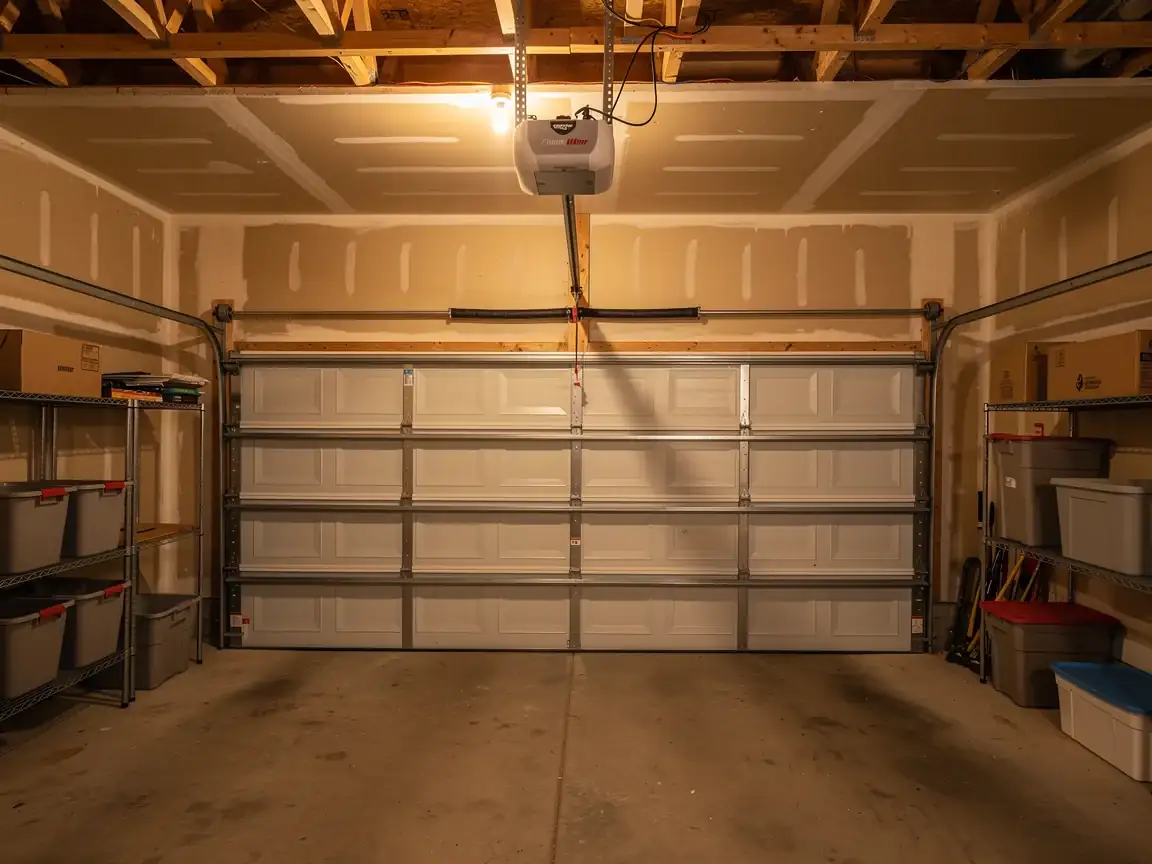
With a median build year of 1966, most Belmont garages were framed for doors and openers that are nothing like what's sold today. The jamb width, the headroom above the opening, and the track radius all assume older hardware. A straight swap - new door, same track, same springs - works on some of these houses. On others, the opening needs the jamb squared up or the header reinforced before a new door will hang right, especially if the original door sagged for years before anyone replaced it. We check headroom and backroom clearance first, because that's what decides whether this is a half-day job or a two-visit job. Houses this age in a cold-climate area also tend to have settled slabs, which throws the floor out of level under the door - something you plan for, not improvise around once the new door's already on the truck.
How Long You Are Without the Door
A straightforward install on a Belmont-era opening - same width, no structural correction - goes in one visit. If the jamb needs squaring or the header needs backing, that's a second trip once material is on hand, which means the opening sits temporarily secured, not finished, between visits. We don't like leaving a job half-done any longer than necessary, but we also won't force a door onto an opening that isn't ready for it. With 1,212 households in Belmont and a housing stock concentrated in that one build era, we see the same handful of opening quirks often enough to know which ones need the extra visit before we start.
What You Pay
Belmont's median household income runs $57,132, slightly above the wider service area's $56,795, and that matters for the repair-or-replace call. At this income level, a door with one bad section, intact springs, and a working opener is almost always a repair, not a replacement - the labor-to-value math doesn't favor a full swap. Where replacement makes sense is when the door itself is original to a 1966-era build: the panels are thin, uninsulated, and the track geometry doesn't match any part we can still get locally. We give a firm number after measuring, not a phone estimate, because headroom correction and backroom clearance issues add cost that a generic quote would hide until the invoice.
What Can Go Wrong
The most common surprise on a Belmont job is discovering the opening was never quite square to begin with - not uncommon in houses built in the mid-1960s where framing tolerances were looser than code allows today. That shows up as a door that hangs fine on one side and binds on the other. Less common but real: a slab that's settled enough that the new door's bottom seal won't sit flush without a threshold strip. Neither is a reason to walk away from the job, but both add time we won't know about until we're standing in front of the opening with a level. The one thing we won't do is force a new door onto a bad opening just to finish in one visit - that comes back as a service call within a year.