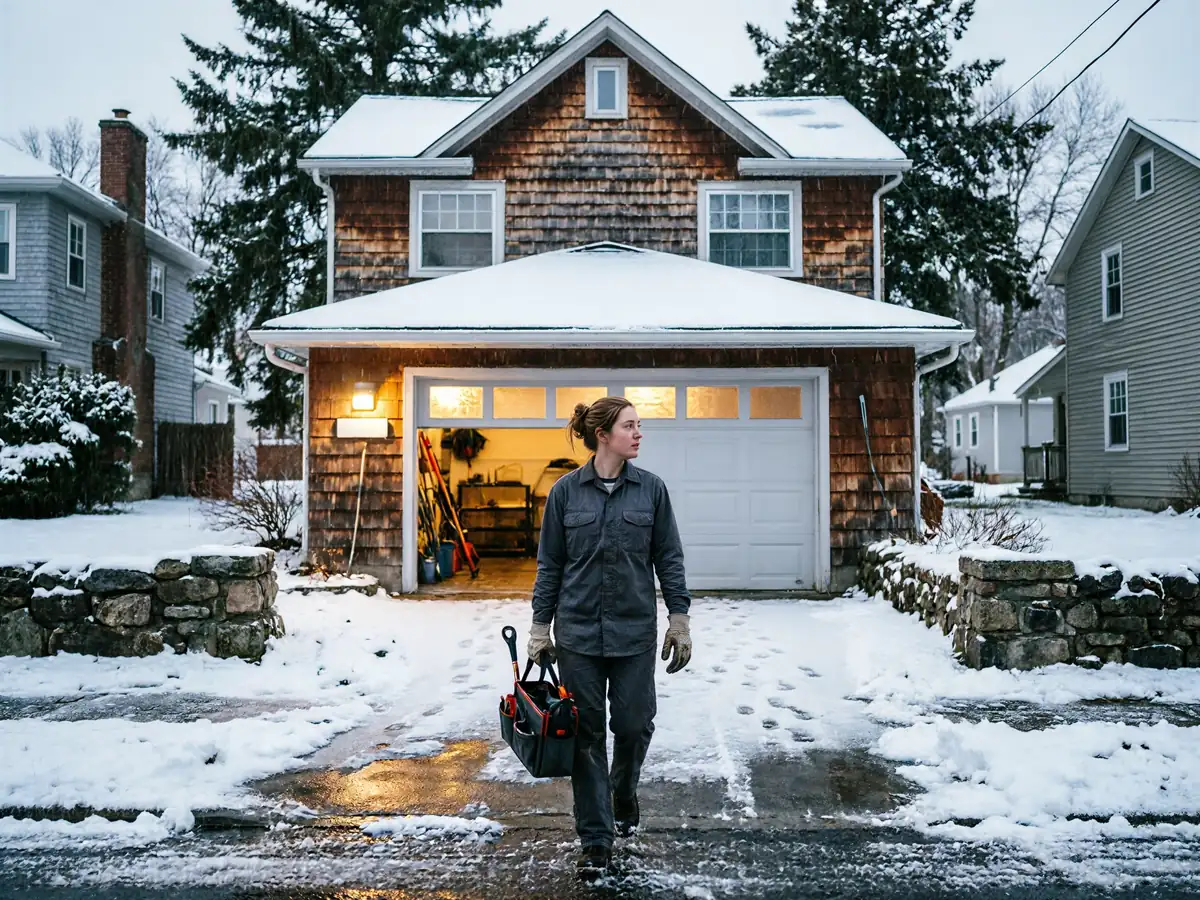
When a Spring Goes in Cold Weather Around Johnstown
Johnstown homes built 1938-1980 run original torsion hardware into severe cold winters. Here's what breaks, what it costs to fix, and where to look first.
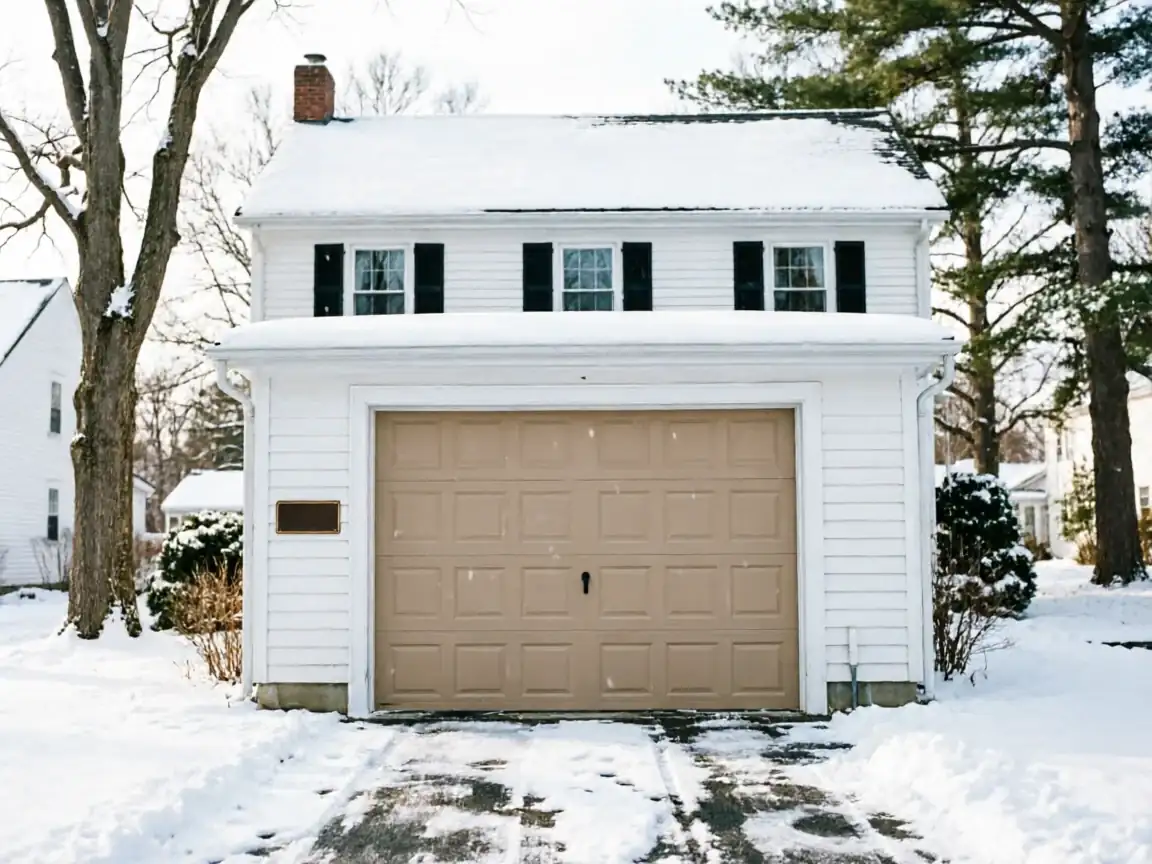
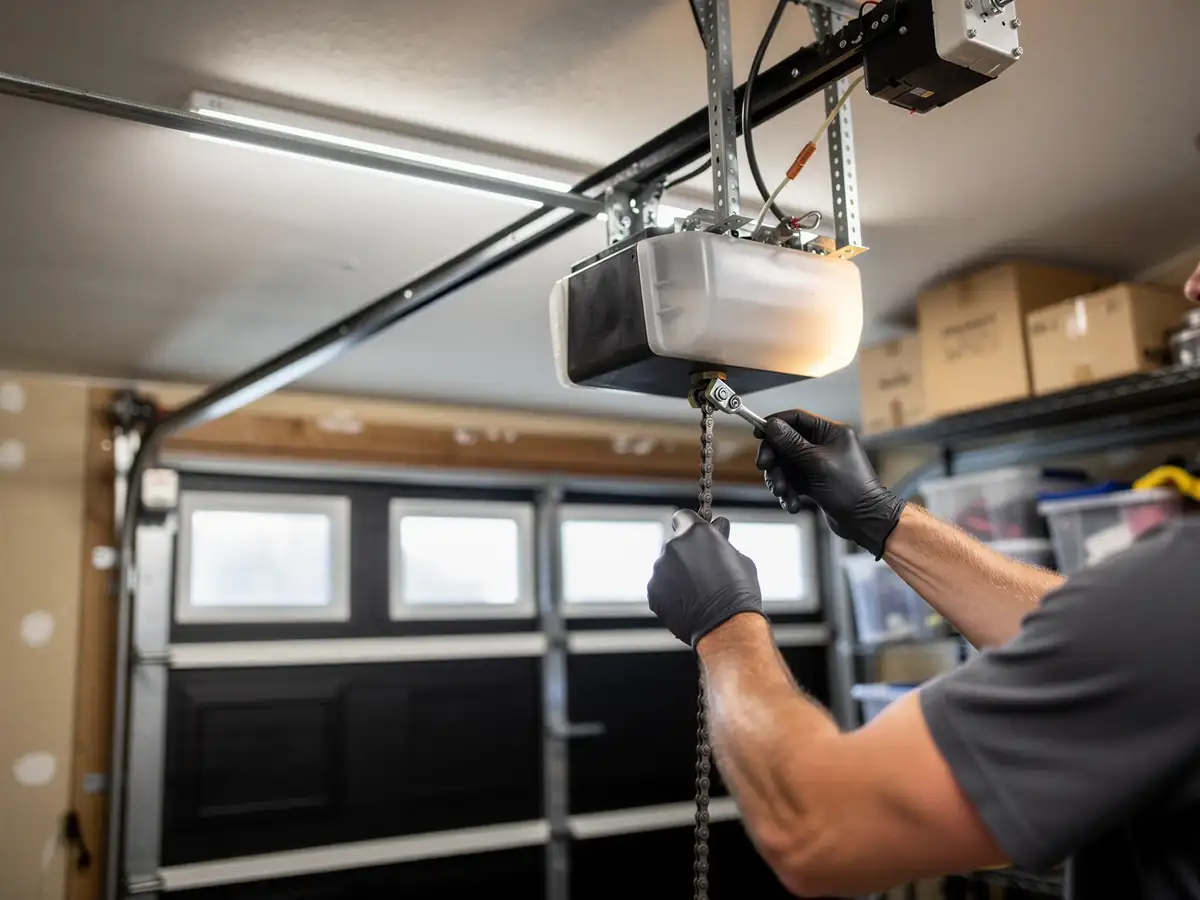
Johnstown sits in a severe cold climate band, and that matters more for a garage door than most people think. Steel torsion springs lose temper strength as the metal contracts in low temperatures, and a spring that's already fatigued from decades of cycles is the one that lets go on the coldest morning of the year, not the mildest. Most of the housing stock in this service area went up between 1938 and 1980, with a median build year around 1952, which means a lot of these springs and the galvanized wire in them predate any modern coating standard. Cold also stiffens old lubricant in rollers and hinges, so the opener motor works harder to pull a door that's dragging, and that extra strain finds the weakest point in the system - usually the spring, sometimes the cable. None of this is unique to one street. It's the combination of old steel and a hard winter that does it.
The Problem
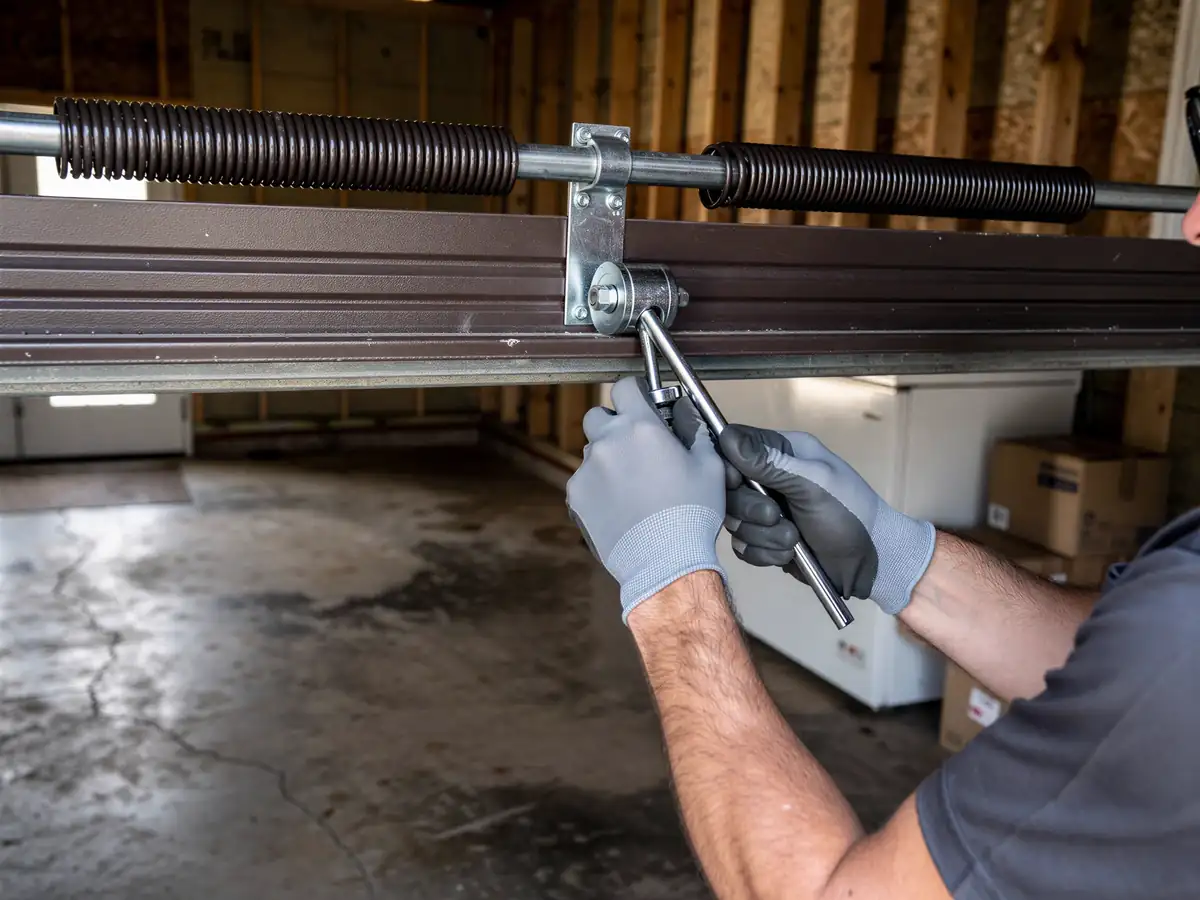
Across the 34 named areas that make up this pre-1960-heavy service territory, the typical failure call in winter is a torsion spring that snapped overnight, not one that failed during use. The door looks fine until someone tries to lift it and it won't move, or it slams down because one side let go and the other didn't. On houses built before 1960 - which is most of the stock here - the original hardware is often still in place because nobody's replaced it, just patched it. That means a single spring doing a job it was never rated to do forever, on a door that's heavier than it was when installed if panels have been swapped or insulation added. We see this most on older single-car doors with one spring instead of two, since there's no backup when that one piece of steel finally cracks in the cold.
What You Pay
We don't have a flat number to put here that would hold up across every job, and giving you one would be a guess dressed up as a fact. What drives the cost on a cold-weather spring failure is whether it's one spring or a pair, whether the drums and cables came down with it, and whether the opener strained itself trying to lift a dead-weight door before anyone called. A single spring replacement on an older single-car door is usually the simpler end of the job. A double door with two springs and a damaged cable from the sudden drop costs more because there's more to replace and more to inspect. With median household income in this area at $56,795, we try to tell people straight whether a repair makes sense or whether the door's age and condition mean replacement is the better money.
What to Look At First
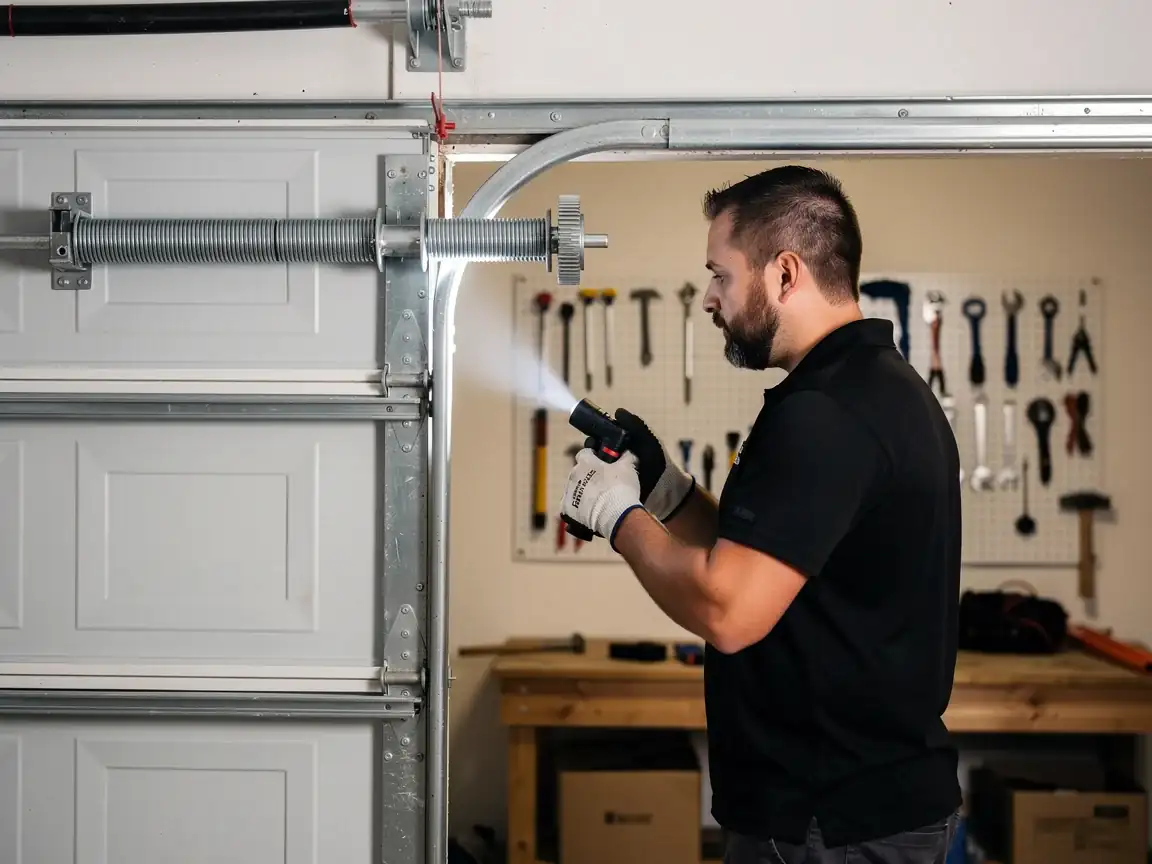
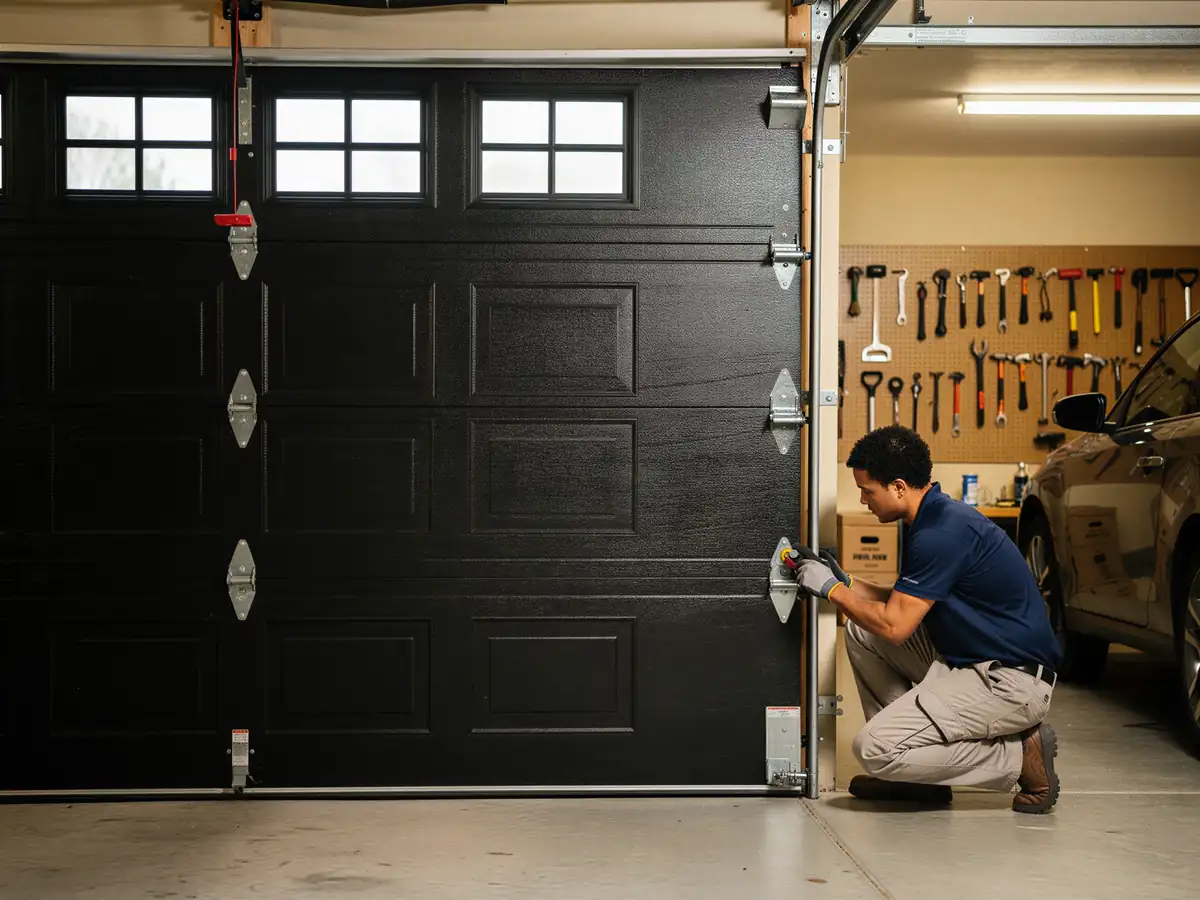
Before you call, look at the spring itself - it's the metal bar mounted horizontal above the door, over the header. If it's visibly separated or twisted open, that's your answer and the door isn't safe to force. If the spring looks intact, check whether the door is unusually heavy to lift by hand with the opener disconnected; a door that used to be light and now isn't is losing spring tension gradually, which is common once cold sets in on hardware from the 1950s and 60s. Listen for the opener straining on a cold start - a motor working loud and slow against resistance is telling you the spring is carrying less load than it should. One honest limit: we can't always get a matching replacement spring on the truck the same day for older or nonstandard sizing, especially on original hardware from houses built before 1960, so a same-day fix sometimes means a return trip.
Why does my garage door spring always seem to break in winter?
Cold makes steel more brittle, and a torsion spring that's already fatigued from years of cycling is more likely to snap when temperatures drop hard. Johnstown's severe cold climate band means this isn't rare - it's the most common cold-weather call we get, especially on older single-spring doors.
Is my house old enough to have original garage door hardware?
If your house was built between 1938 and 1980, which covers most of this area with a median build year around 1952, there's a real chance the torsion spring setup is original or close to it. That hardware wasn't built for the cycle counts it's seen by now.
Should I replace both springs if one breaks?
On a double door with two springs, if one broke from age and cold, the other is usually close behind since they're under similar load and wear at a similar rate. We'll look at the install date and condition of both before recommending it, rather than replacing a spring that still has life left.
Ready to get your garage door sorted?
Tell us what it’s doing and where you are in Johnstown - we’ll take it from there.