Why It Happens Here
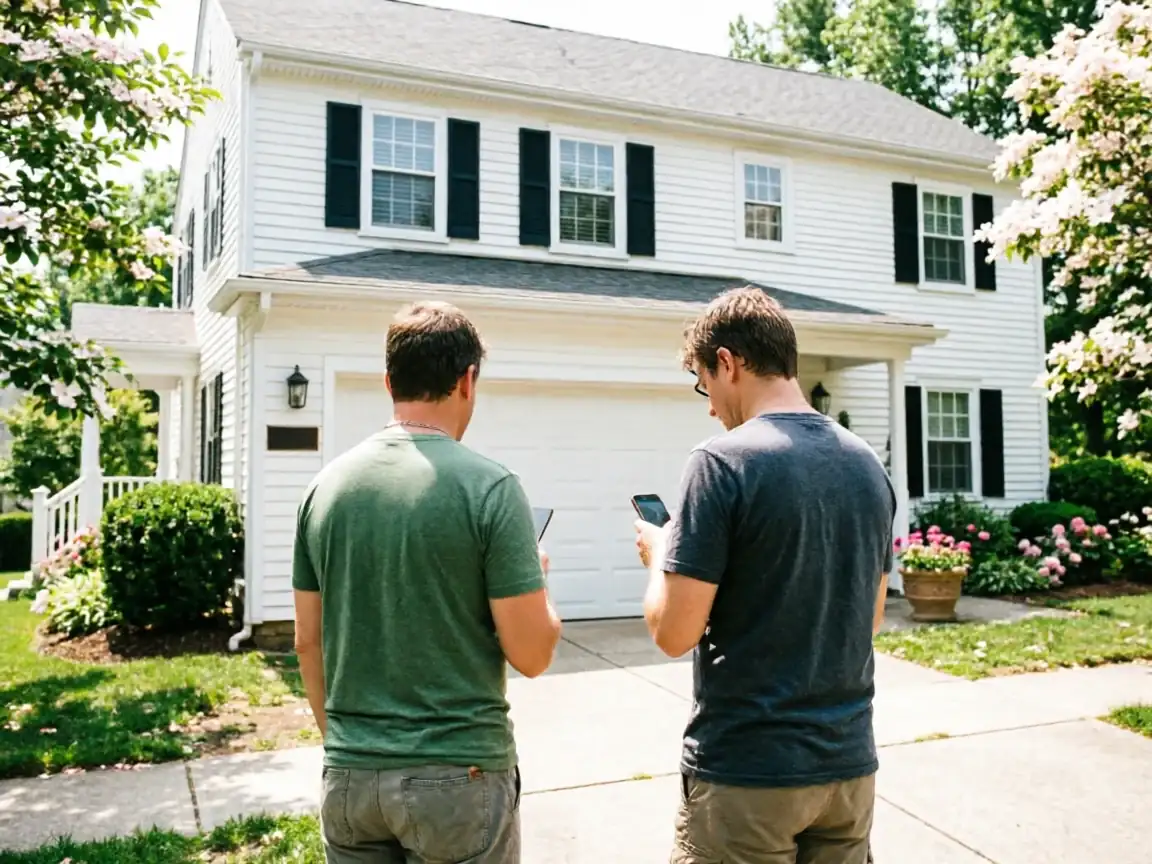
Most of the housing around Johnstown went up between 1938 and 1980
With a median build year around 1952. That means a lot of garages here still run original or early-replacement hardware: steel track bolted to wood jambs that have shifted with age, torsion springs sized for doors that have since been swapped for heavier insulated panels, and openers wired into circuits that predate modern safety sensors. Across the 34 named areas we cover - from Brownstown and Westmont a couple miles out to Ebensburg and Blairsville further south - the pattern repeats: pre-1960 construction, cold-climate stress, and hardware that's outlived its intended service life.
The cold is the other half of it
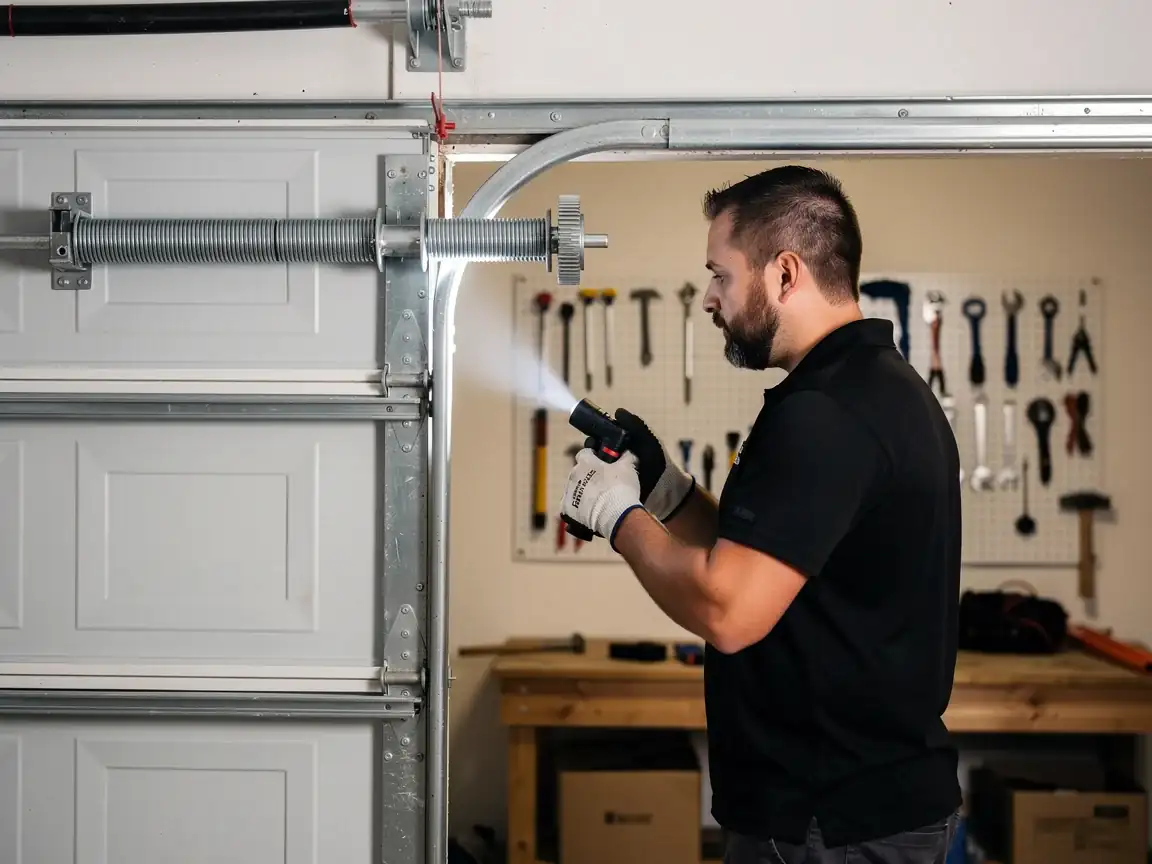
This is a severe cold climate band, and steel contracts hard in a Johnstown winter. A torsion spring that's been winding and unwinding for twenty-some years loses temper faster when it's cycling through single-digit mornings. Nylon rollers crack. Lift cables that were fine in October start showing frayed strands by February because the cold makes the wire brittle right where it bends over the drum.
Put an old house and a cold winter together and you get predictable failure points
Springs, rollers, and cable ends. That's most of what we're called out for.
How It Shows Up
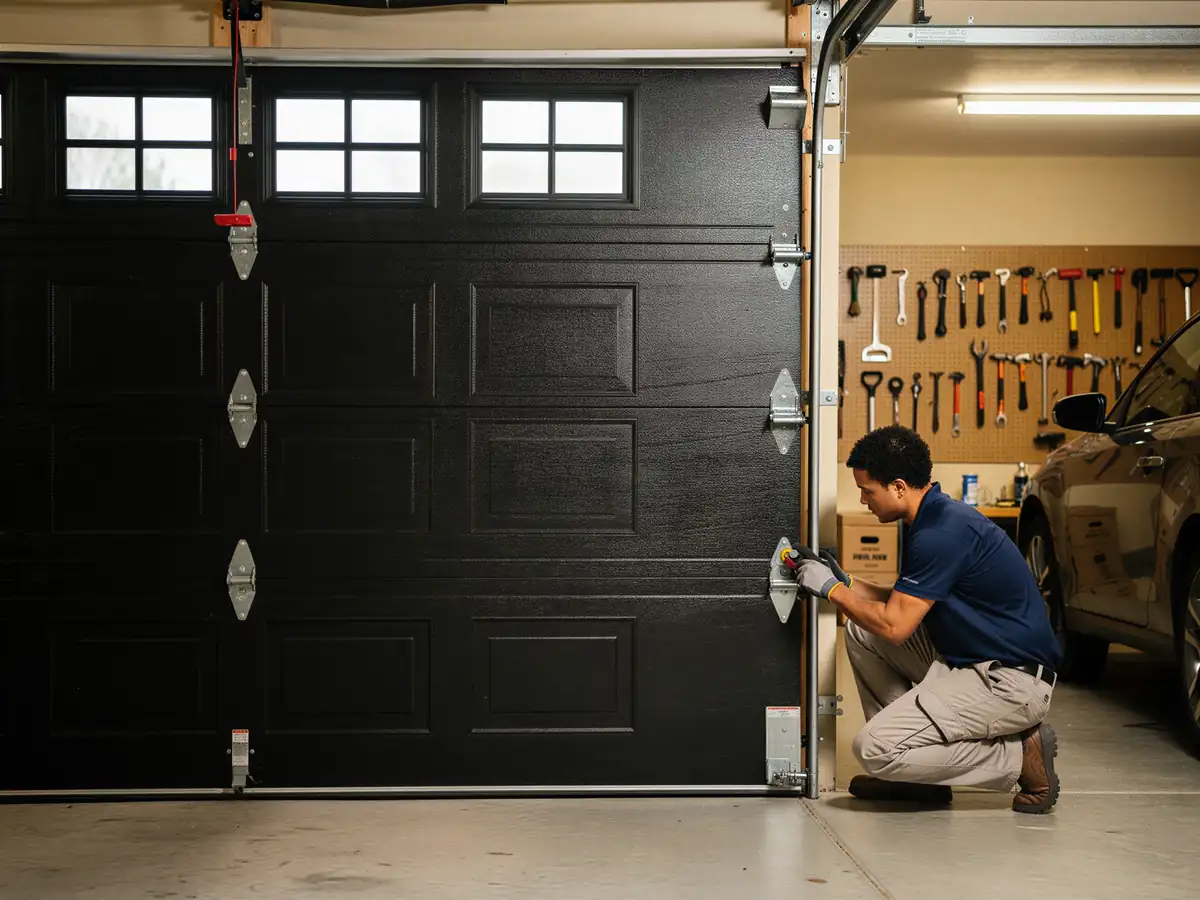
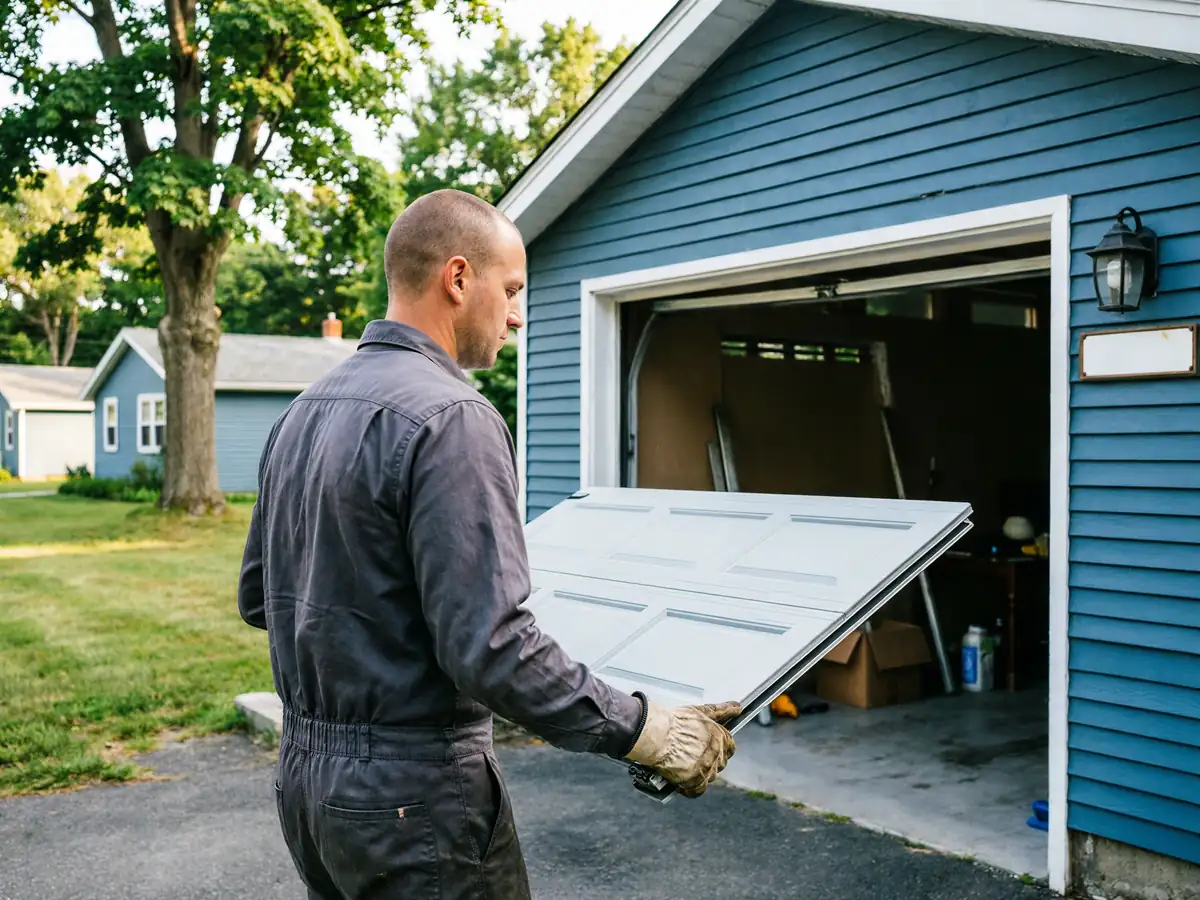
The first sign is usually noise - a groan or a bang when the door starts moving, which on a house this age often means a spring that's lost tension unevenly on one side of the shaft. Next is the door that won't sit level at the floor, catching on one corner, which on pre-1960 track is almost always a bent rail rather than anything wrong with the opener.
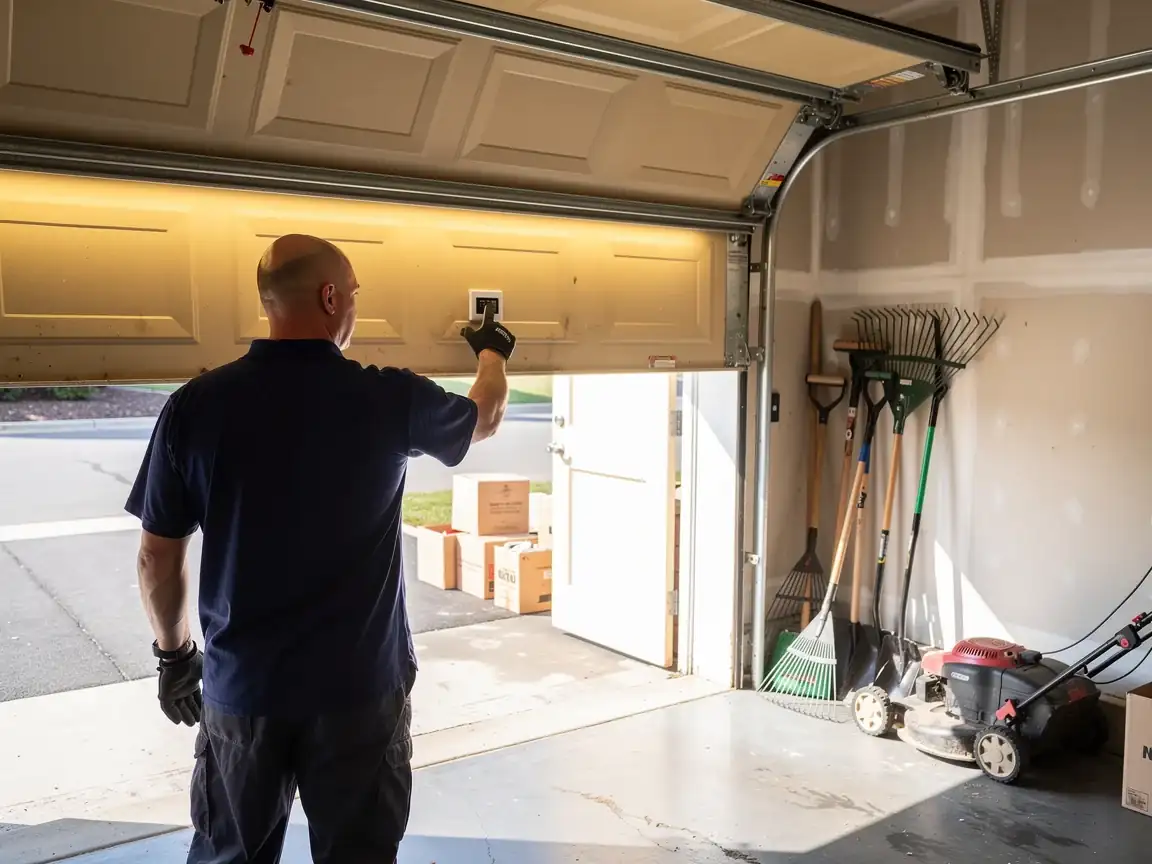
In winter especially, homeowners tell us the door feels heavy all of a sudden, like the opener is straining. That's the spring doing less of its job than it used to, and the opener motor picking up the slack until it can't. On a house built in the 1950s with original wood jambs, you'll also see the door drag or stick partway up - the jamb has moved slightly over seventy-some years, and the track bolted to it has moved with it.
Some owners notice it as a slow opener response, a second or two delay before the door even starts to lift. On older torsion setups that's often the spring losing its wind, not an electrical problem at all.
What Can Go Wrong
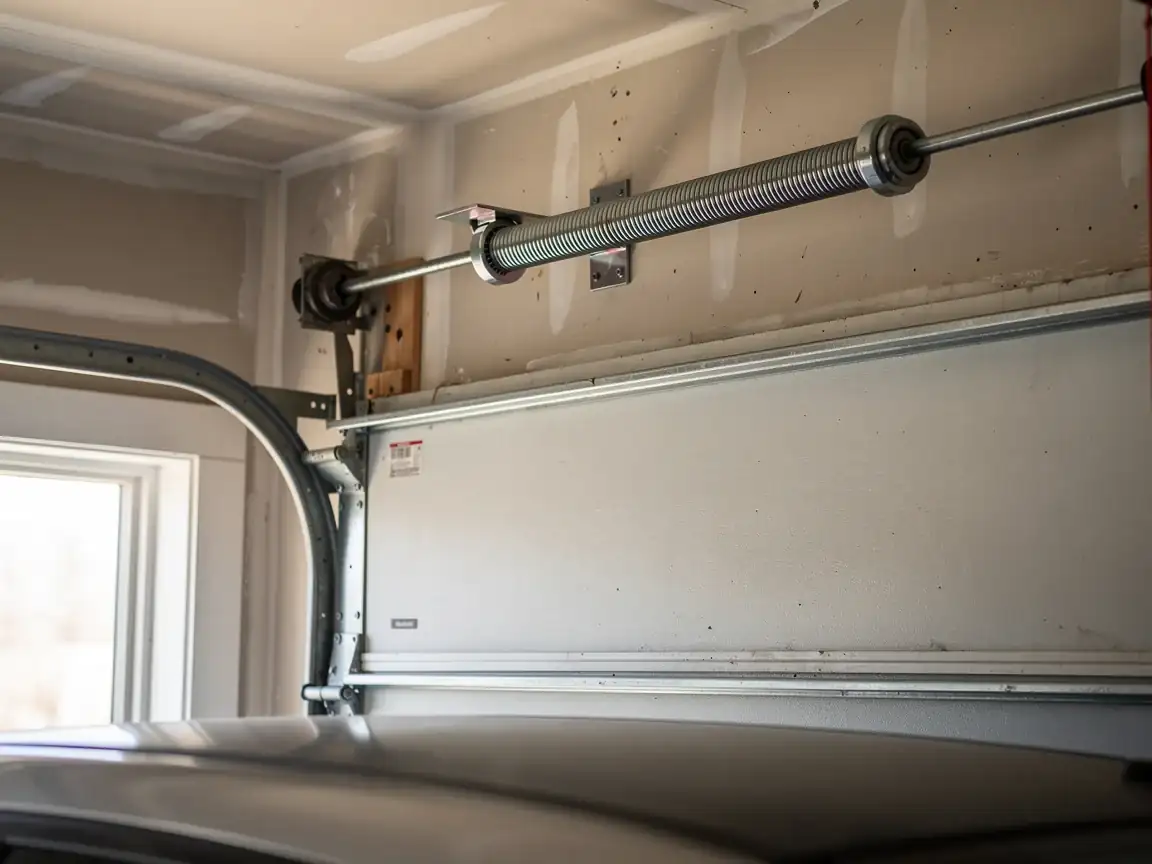
A torsion spring under tension that finally lets go can take a finger or snap a cable with it - this isn't a job to push past when you hear the warning signs. On the hardware side, a bent track that keeps getting forced will eventually pull the mounting brackets out of a jamb that's already softened with age, and at that point you're not fixing a track, you're rebuilding the frame it's attached to.
Left alone, a weak spring puts more load on the opener gear, which is a cheaper part to replace than the drive assembly it eventually strips. Frayed cables on older drums sometimes still run for months before they snap - until they do, usually with the door halfway up and nobody near enough to catch it.
We'll say plainly: not every old door is worth saving. If the jamb has rotted at the base or the track has been bent and re-bent past square, a repair that holds for six months isn't a good use of your money. Replacement is sometimes the honest answer, even though it's not the one that gets us a quick call.
Can You Do This Yourself
Checking the obvious stuff is fine
Tighten loose bolts on the track, clear debris from the floor track, listen for where the noise is coming from. None of that needs a technician.
Torsion springs are where we draw a hard line
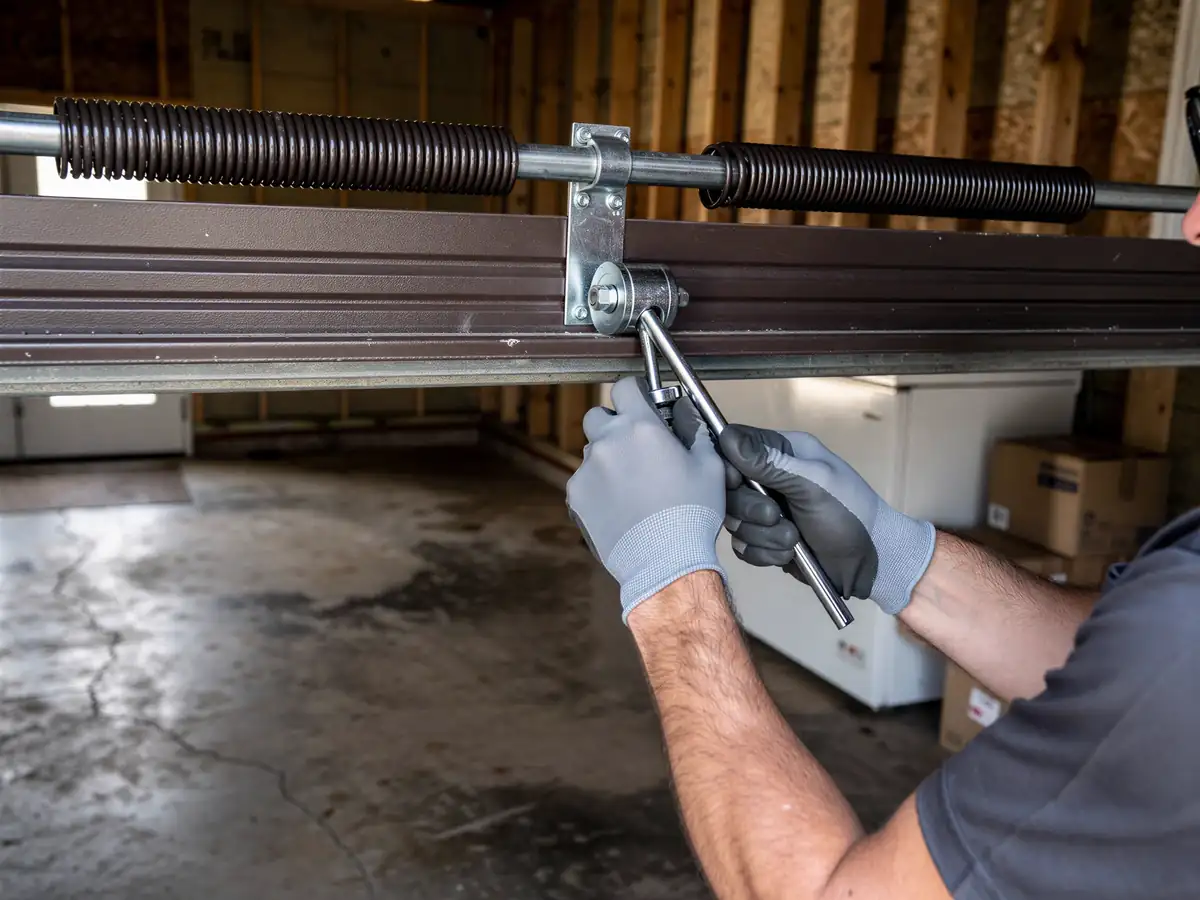
They're wound under enough tension to break bone, and the tools to wind or unwind one safely aren't something most garages have lying around. If a spring looks stretched, uneven, or has visibly separated coils, that's a call, not a weekend project.
Cable work is the same story
A cable under load behaves nothing like one that's slack, and a slipped cable on a torsion drum can whip. If you're comfortable with a wrench and the door is simply off-track with the power disconnected, you can usually re-seat a roller yourself. Past that, especially on anything involving the spring or the lift cables, it's worth having someone look at it who does this daily.