Why It Happens Here
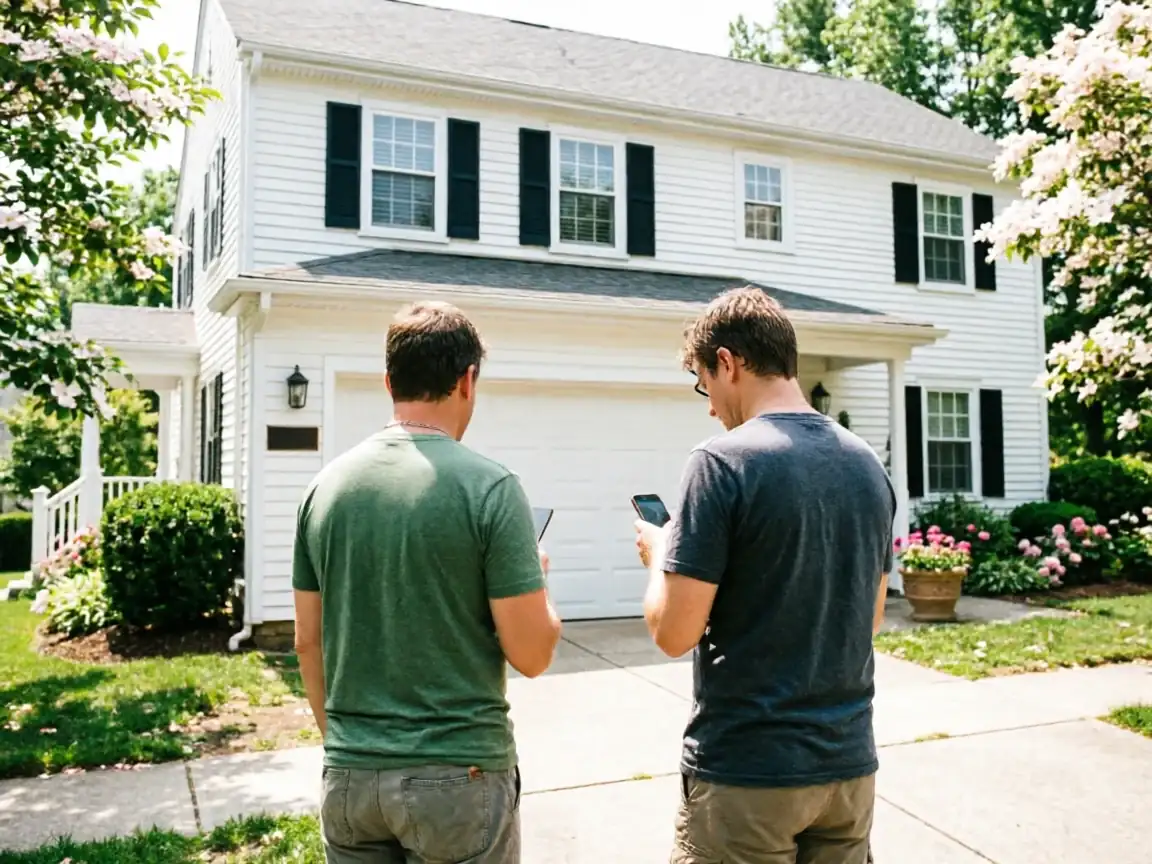
Most of the houses this company works on went up between 1938 and 1980
With the typical build year landing around 1952. That matters for a garage door because the hardware installed in that era - steel torsion springs, single-strand lift cables, steel tracks bolted straight to wood jambs - was never designed to run thirty, forty, or seventy years on the original parts. Across the 34 communities we cover, from Brownstown a mile out to places well past Ebensburg, the stock is overwhelmingly pre-1960, so the failure patterns repeat house to house.
- 34 communities
Johnstown also sits in a severe cold climate band
Steel contracts in cold weather, and a spring that's already fatigued from decades of cycles loses what little flex it had left right when the temperature drops. Lubricant that's been fine all summer turns thick and sluggish in January, which loads extra strain on an opener motor that's already working against a heavier, older door. Put an aging spring and a cold snap together and you get the classic 6 a.m. call: door won't budge, or it came down crooked and jammed in the track. None of this is bad luck. It's the direct result of a 1950s build date meeting a Pennsylvania winter.
How It Shows Up
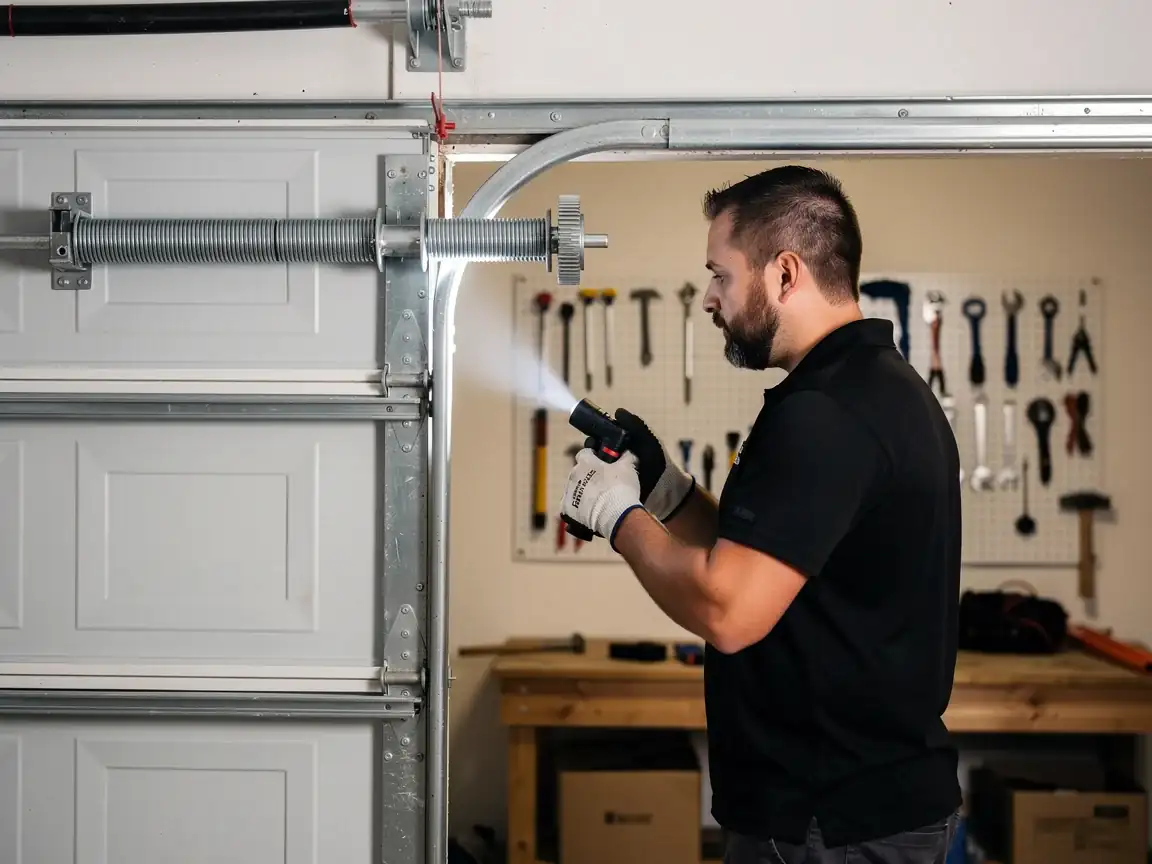
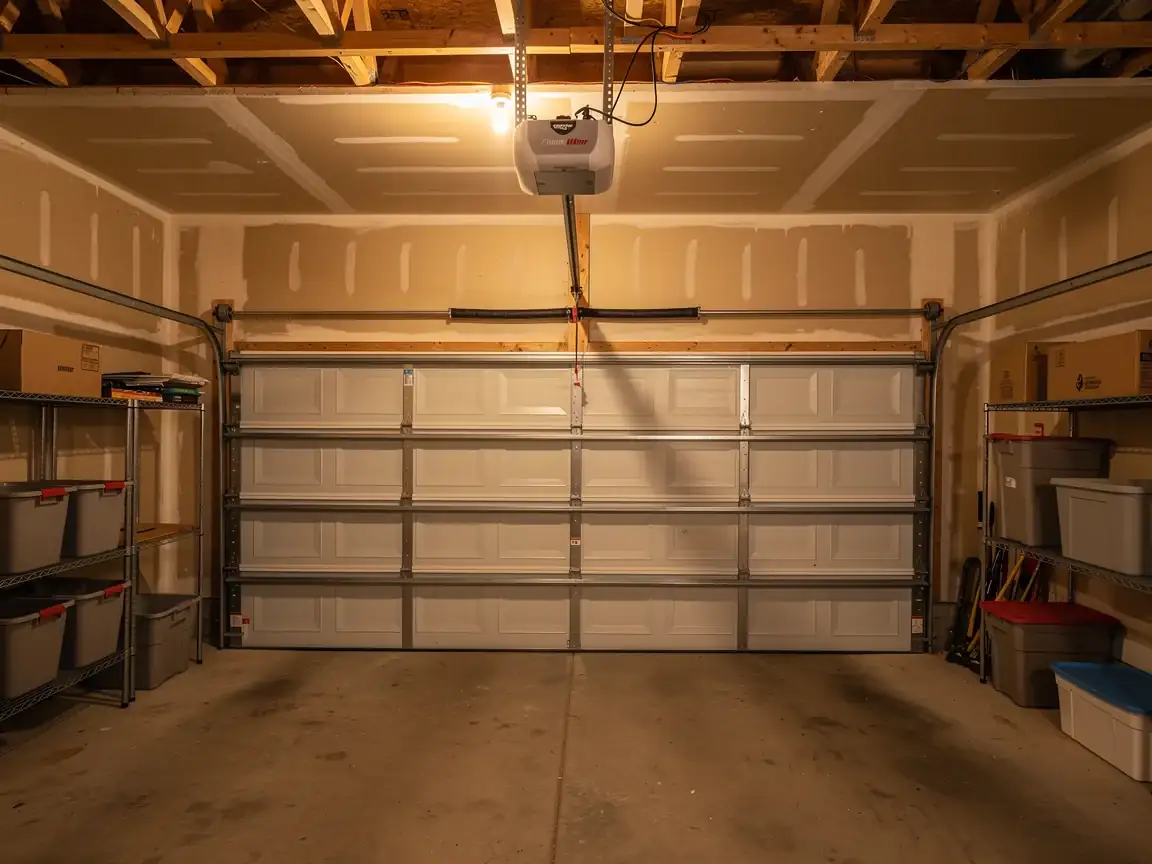
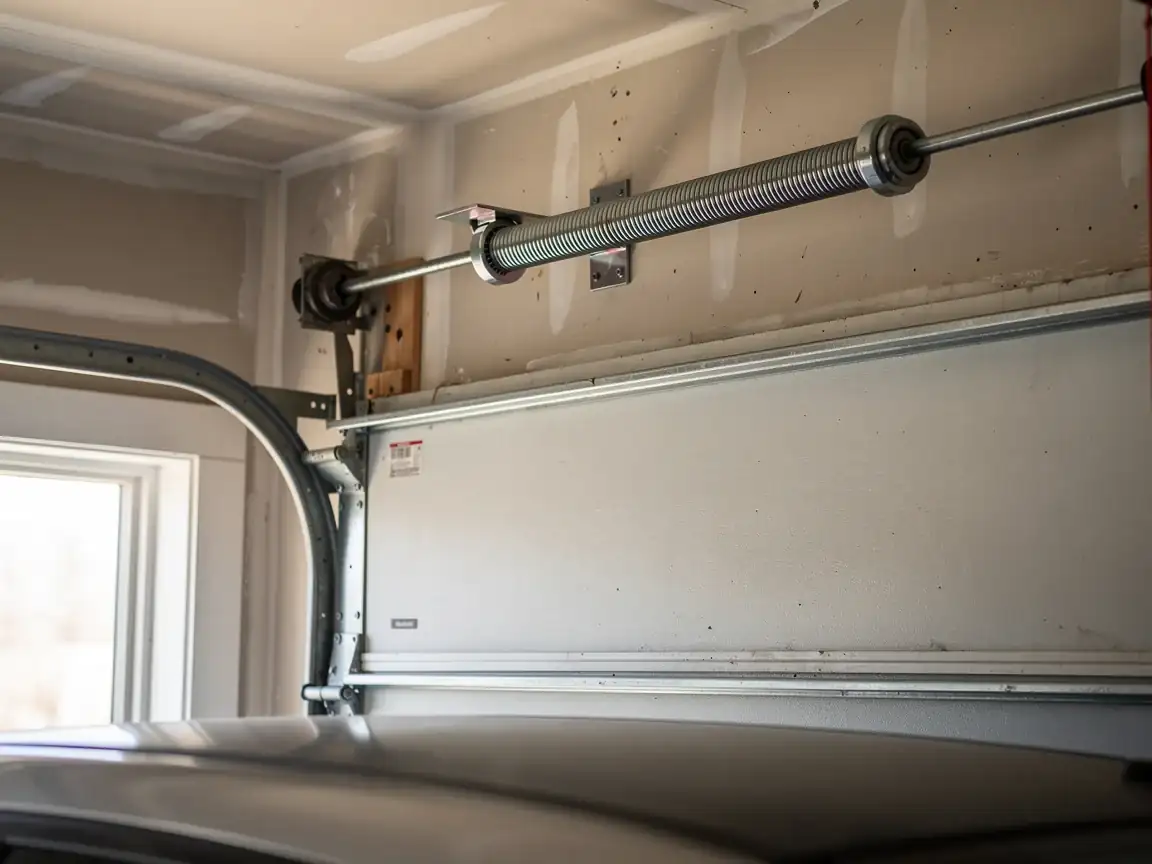
The first sign is usually noise - a grinding or popping from the spring area that wasn't there last month. On original torsion hardware from houses built around 1952, that popping often means the spring has already started to crack along its winding and is close to going. Next is a door that feels heavier than it used to, especially on the lift. If you're muscling it open by hand or the opener strains and stalls partway up, the spring is no longer carrying its share of the weight.
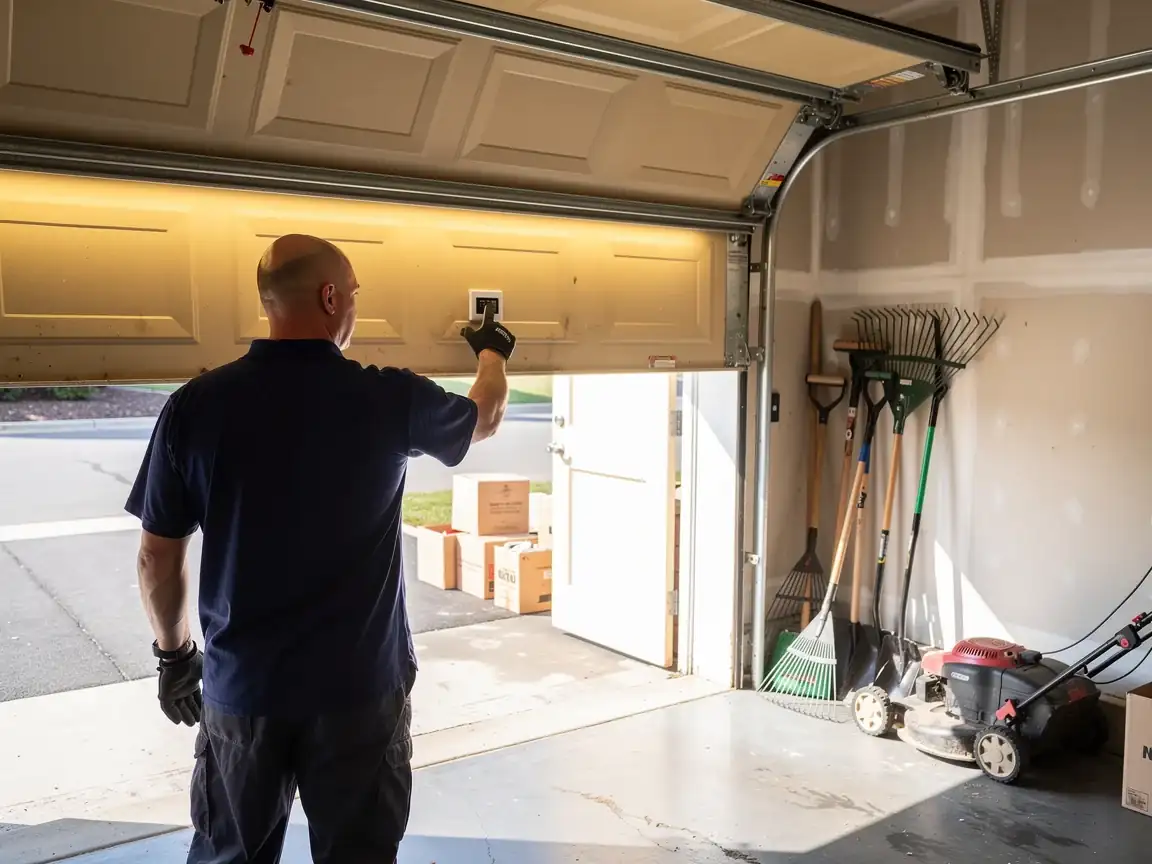
Cold-weather households also see the door come down off-level, dragging on one side, because stiffened cable or a track that's picked up ice at the bottom roller isn't feeding evenly. In some of these older houses the track is still fastened to wood framing that's shifted slightly over seventy-plus years, so a door that worked fine in October starts binding once the first freeze sets the frame. None of these are cosmetic. They're the early stage of the same fault: aging steel losing its tolerance for cold and cycles at the same time.
What Can Go Wrong
The spring itself is the main failure point. On a double door with a single torsion spring from this era, a full break usually means the door drops hard and fast - enough to damage the bottom panel or crack a track bracket on the way down. Cables are the second failure. A cable under tension that's been nicked by a rusted roller can snap, and on these older setups there's often no safety cable backing it up, which means the door section can swing loose.
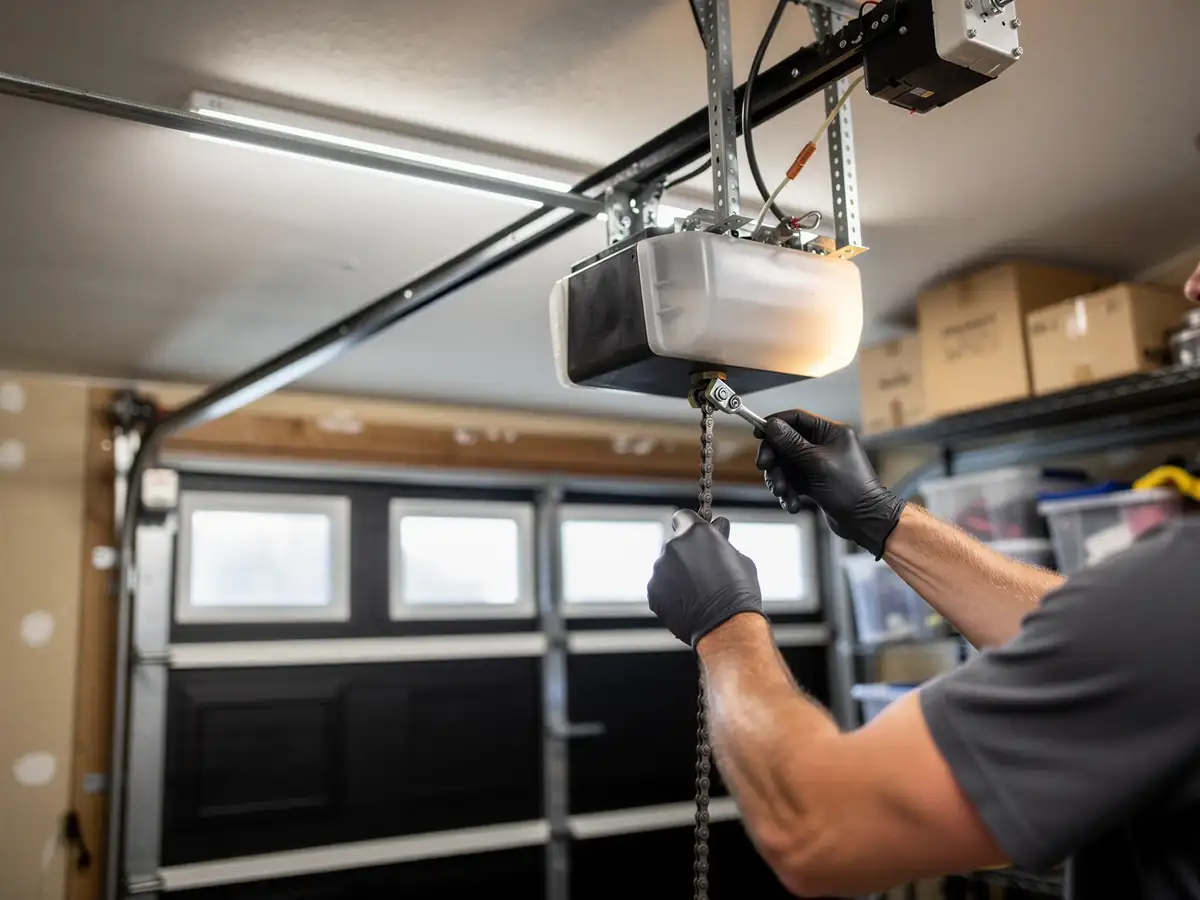
Openers add a third layer. A motor built or installed decades ago, straining against a heavier original door in cold weather, burns out its gears or capacitor faster than it would on a lighter modern door. We also see rollers that have worn their track grooves oval-shaped from years of use, which throws the whole door out of alignment even after a spring repair. Across the 16,767 owner-occupied houses in this service area, this combination - old spring, worn roller, strained opener - accounts for most of the repair calls we run.
Can You Do This Yourself
Some of this is fine to handle on your own
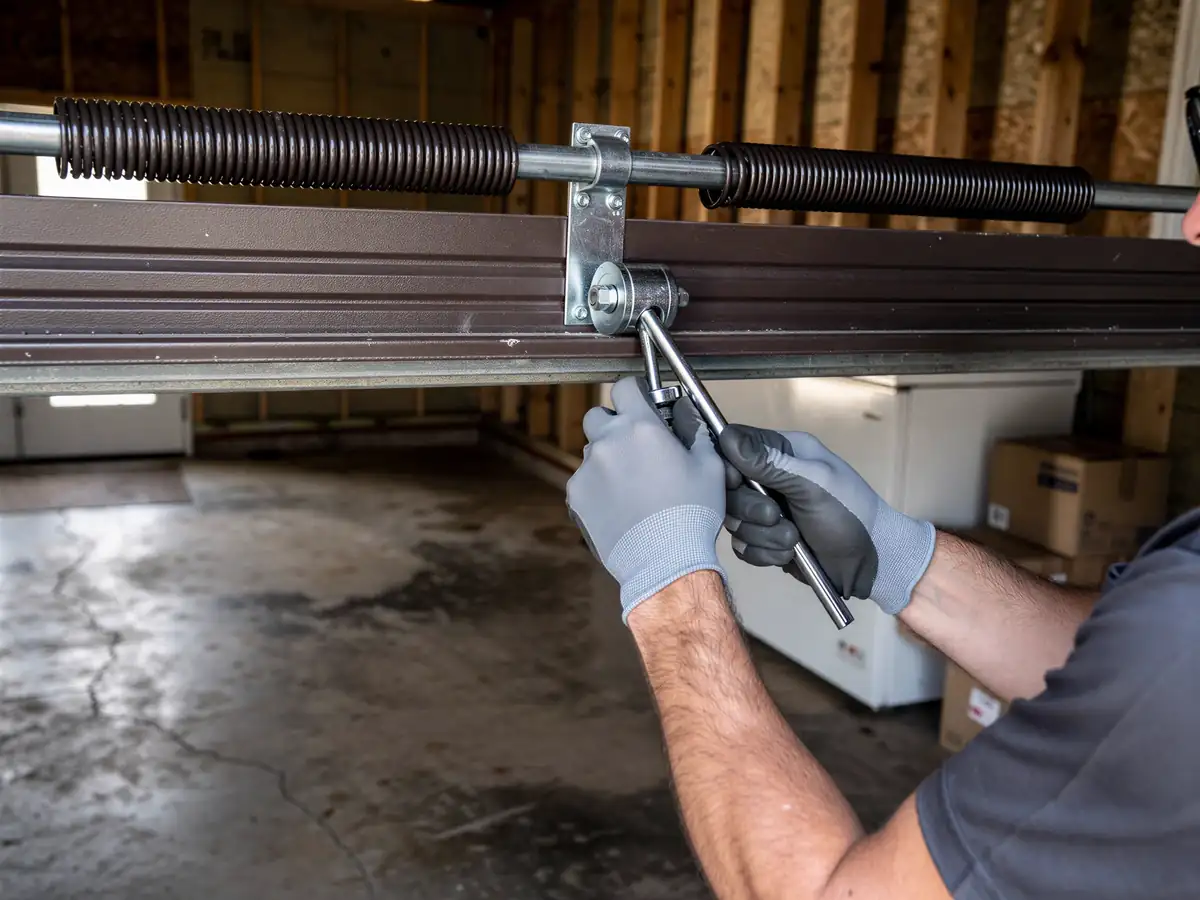
Clearing ice off the bottom of the track, tightening loose hinge bolts, or lubricating hinges and rollers with the right grease are all reasonable weekend jobs. What you should not do is touch a torsion spring. These springs hold enough stored tension to break bones or worse if they let go while you're working on them, and the tools for a safe spring swap aren't something most homeowners have sitting in the garage.
We'll also say plainly where repair stops making sense
If a door built in the 1950s has a cracked wood frame section, a badly warped panel, and a spring that's already gone, you're often better putting that money toward a new door rather than patching three separate failures on hardware that age. At a median household income of $56,795 across this area, most owners we talk to want the honest number before deciding, not a sales pitch toward the bigger job.
- $56,795 median household income