Serving Johnstown, PA & nearby
(814) 245-8973
Johnstown, PA

Panel Replacement for Richland's 1970s-Era Garage Doors

Richland homes mostly went up around 1975, later than much of the Johnstown area. That means different door hardware and different panel fixes. Here's what to expect.

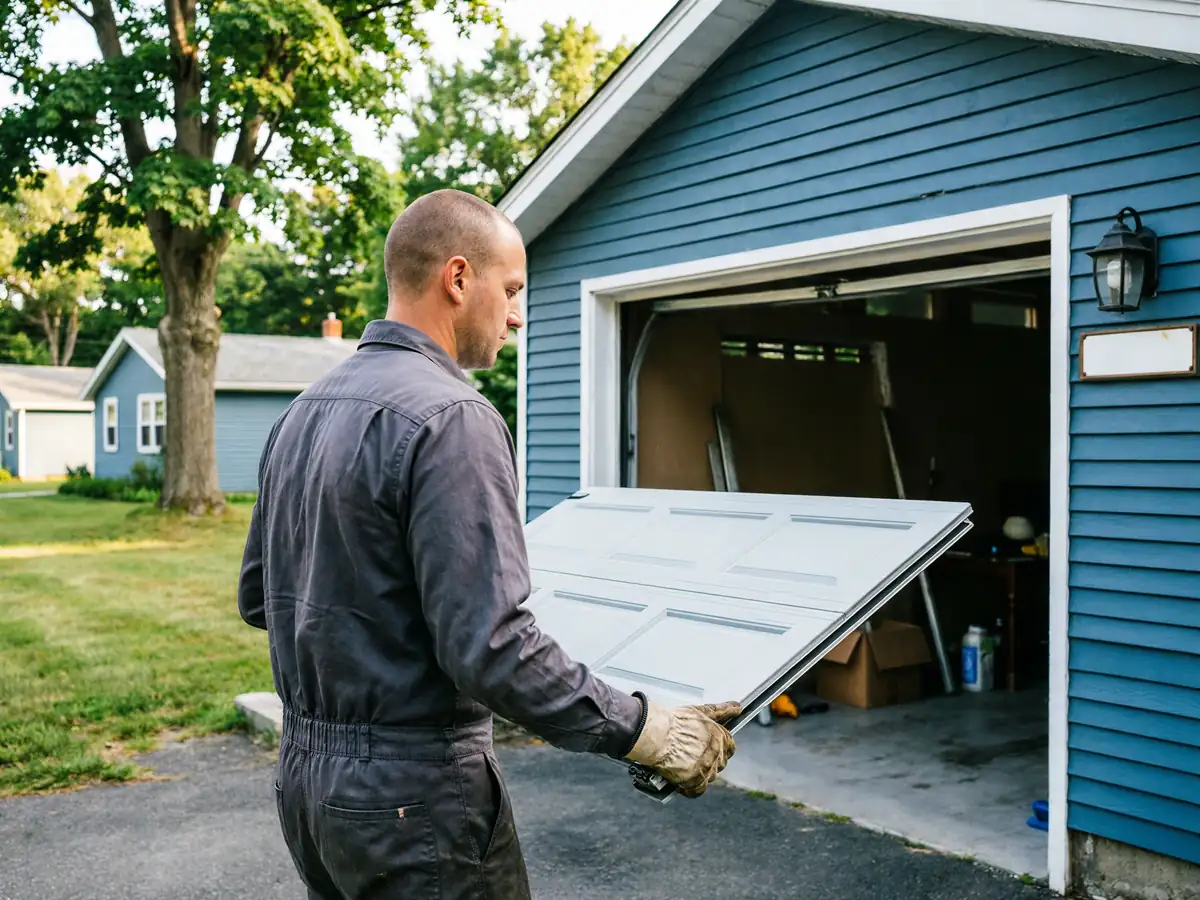
A technician in a gray jumpsuit carries a white garage door panel toward a blue garage.
Johnstown, PA
8 services
8 service areas
Diagnosis first, then the fix

Can You Do This Yourself

Richland's housing stock centers on 1975, which is later than a lot of what we see closer into Johnstown, where the median build year runs back to 1952. That matters here because a house built around 1975 almost always went up with a steel sectional door, roll-formed panels bolted to stile rails rather than the older one-piece or wood-panel doors that show up on the pre-1950s streets nearby. Swapping a single damaged section on that kind of door is a real DIY option if you can get an exact match - same rib pattern, same panel height, same color. That last part is the catch. Builder-grade steel from the mid-1970s came in a narrow run of standard finishes, and after fifty years of fading and repainting, matching a replacement section to the three panels next to it is harder than it sounds. If the color is close but not exact, you'll see the seam from the driveway. We'll tell you straight if a full-door swap looks cheaper and cleaner than chasing a panel match, because sometimes it is.

How Long You Are Without the Door

We run out of Johnstown, about 5 miles from Richland, so we're not sitting on a Richland job site with a stocked trailer the way a depot shop might be. Once we're on site, a straightforward panel swap on a standard steel sectional is usually a same-visit job if we're carrying the right section size. The variable is the match - if your door is an older or less common width from the 1970s builder runs, we may need to order the panel before we can finish the job, and that's a second trip. We won't pretend otherwise. If your opener, track, and springs are fine and it's just the panel, that's the fastest version of this repair there is.

What the Repair Takes

On a sectional door, panel replacement means pulling the damaged section out of the track without disturbing the hinges and rollers on the sections above and below it, then fitting the new panel into the same hinge pattern. On the builder-grade steel common to Richland's 1970s stock, sections are usually held with hex-head hardware rather than rivets, which makes the swap cleaner than on some older doors. We check the track alignment and the end hinges while the section's out, because a bent panel often means a track took an impact too, and replacing the panel without straightening the track just means the next section fails the same way. If the torsion spring is original to a door this age, we'll flag it - a spring that's run since 1975 is past any reasonable service life and not something we'd want to leave in place while we're already in there.

How It Shows Up

Most panel calls start with an obvious dent or crease - a car bumper, a dropped ladder, a kid's bike. On steel sectional doors from the 1975 era, the panel will crease at the rib line rather than shatter, so the door usually keeps running on the track even with a visibly bent section, which is why some homeowners leave it longer than they should. The real problem shows up later: a creased panel changes the door's balance point slightly, and the opener starts working harder to lift it. If you've noticed the opener straining or reversing partway up, that's often the panel damage, not the opener.

Why It Happens Here

This area sits in a cold climate band with severe winter conditions, and that plays into panel wear in a specific way. Steel panels contract in deep cold, and a section that already has a small dent or hairline crease from an earlier impact will flex more at that weak point every time the temperature swings hard. On a door built when Richland's homes were going up - 1975 and nearby years - the steel gauge is thinner than what's standard today, so it dents easier to start with and then works that dent through freeze-thaw cycles each winter. That's a different failure pattern than what we see on the older wood-panel doors common in the pre-1950s parts of the wider service area, where the panel doesn't flex the same way but the frame rots instead.

What Is on the Truck

We carry a run of standard steel panel sections sized for the sectional door widths common in builder-grade construction from the 1960s through 1980s, which covers most of what's installed in Richland. We also carry the hinge hardware and roller brackets that go with that era of door, since those wear out around the same time as the panels do. What we can't carry for every job is an exact color and texture match for a fifty-year-old finish - that's something we check against your door in person, and if it's not a close match off the truck, we'll tell you before we start rather than leave you with a visible seam.
How it works

From “it’s stuck” to “it’s fixed”

1
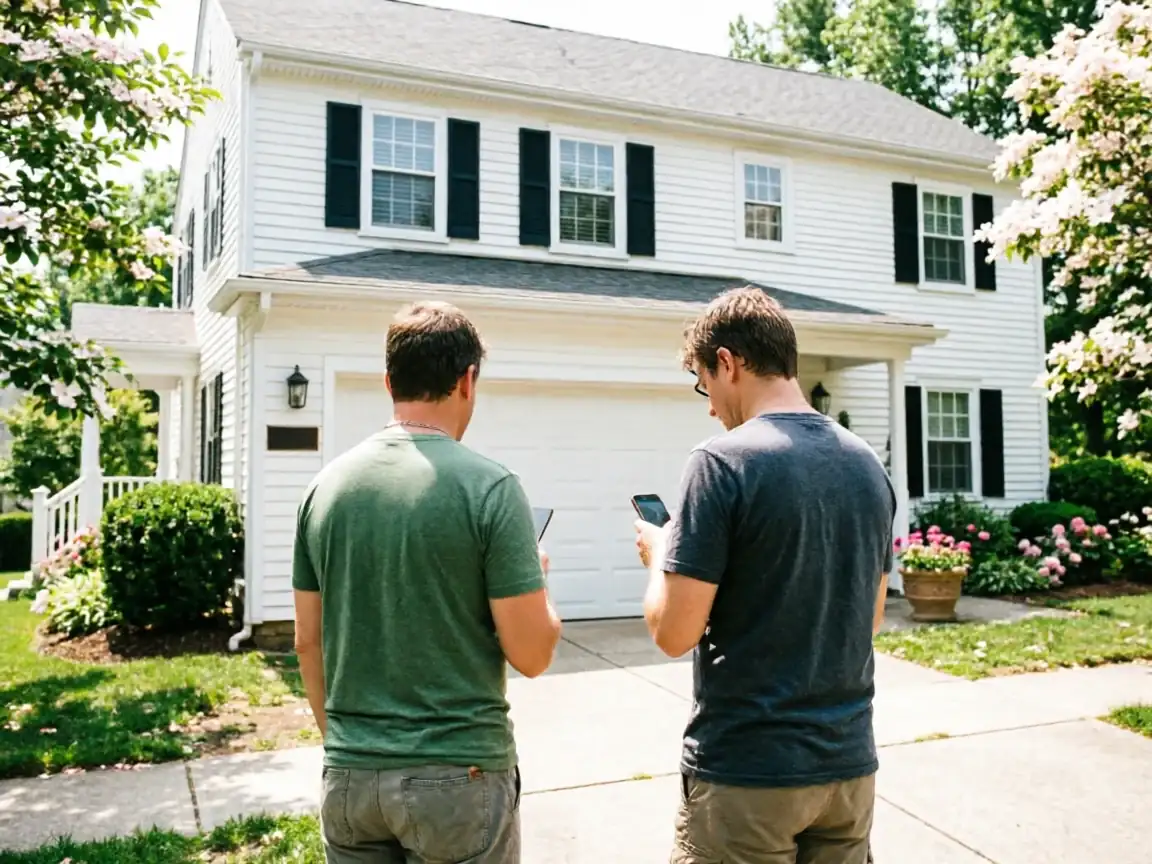
Two technicians stand in front of a white house, looking at their phones.

Tell us what’s wrong

Describe the symptom - won’t open, loud bang, opener runs but the door won’t move.

2
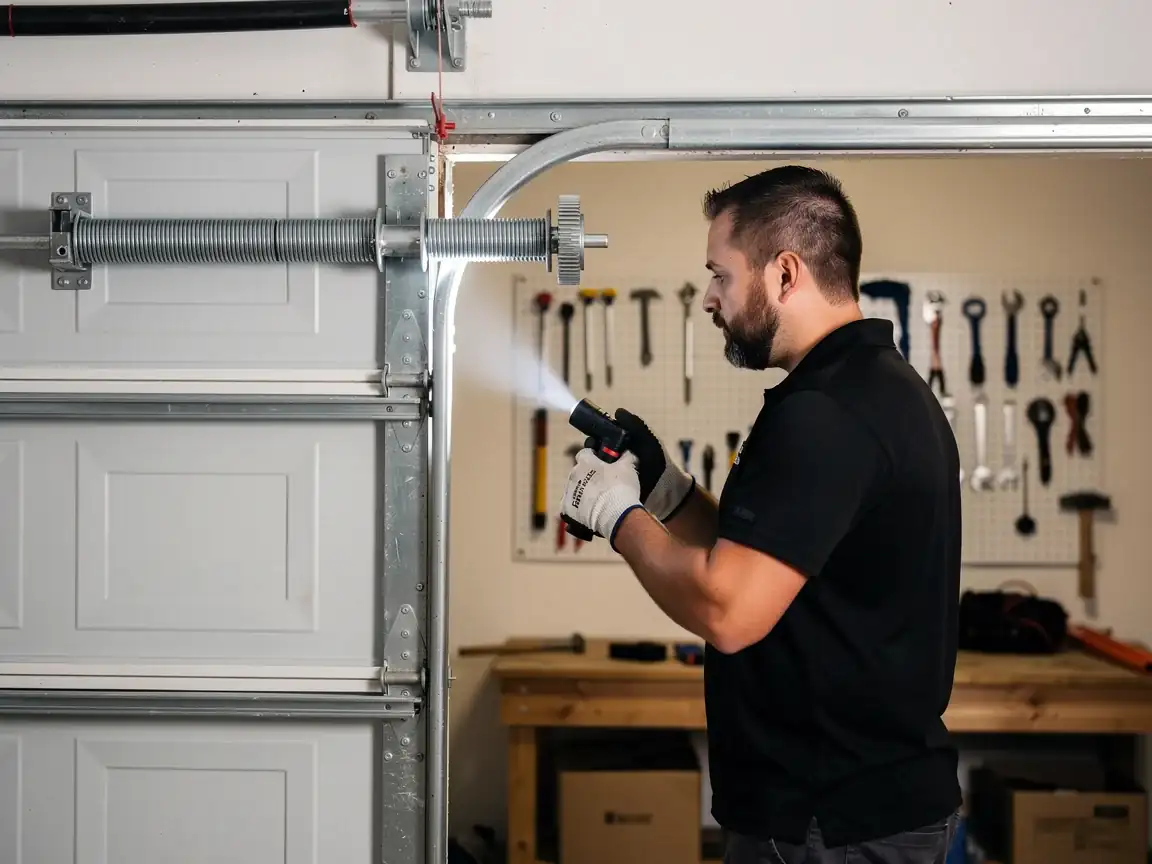
A technician sprays lubricant on a garage door torsion spring.

On-site diagnosis

A technician tests the door under power and by hand and finds what actually failed.

3
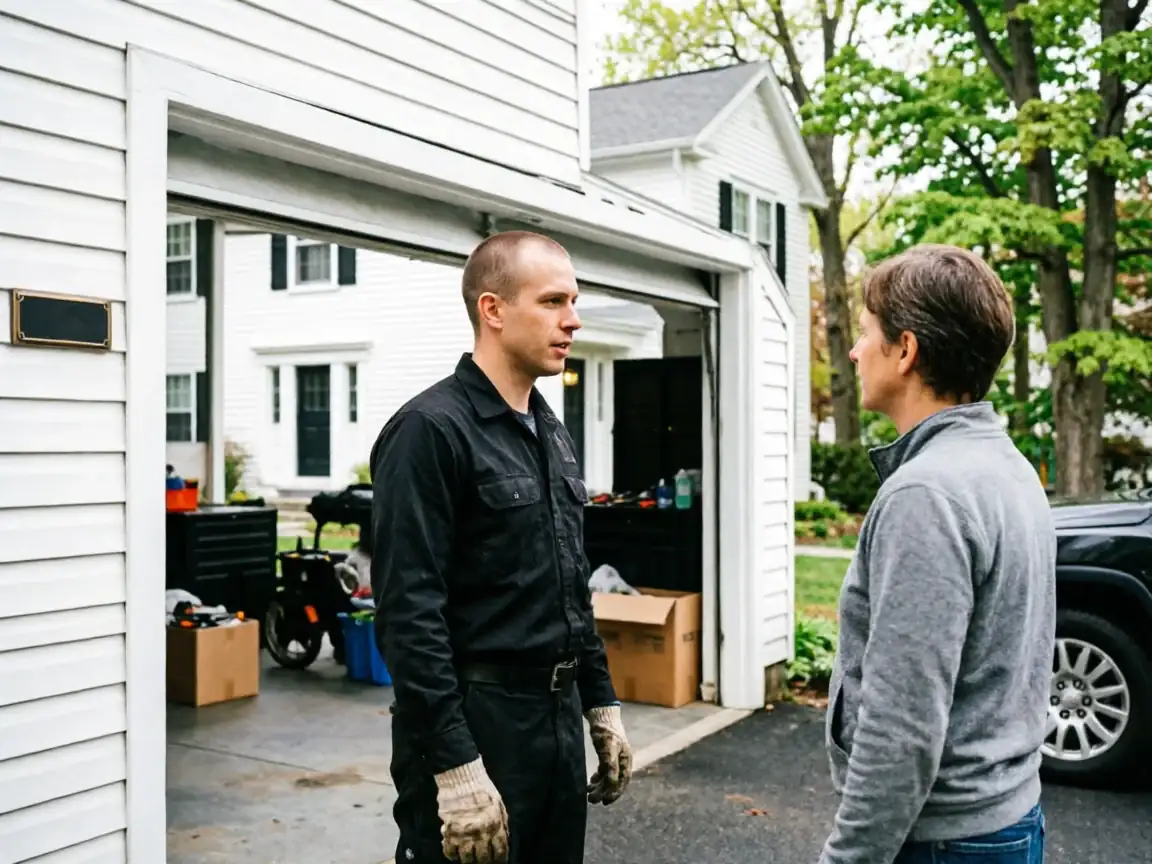
A technician in a black uniform talks to a person in a gray sweatshirt.

Clear, up-front plan

You get the fix that’s needed and what drives the cost - before any work starts.

4
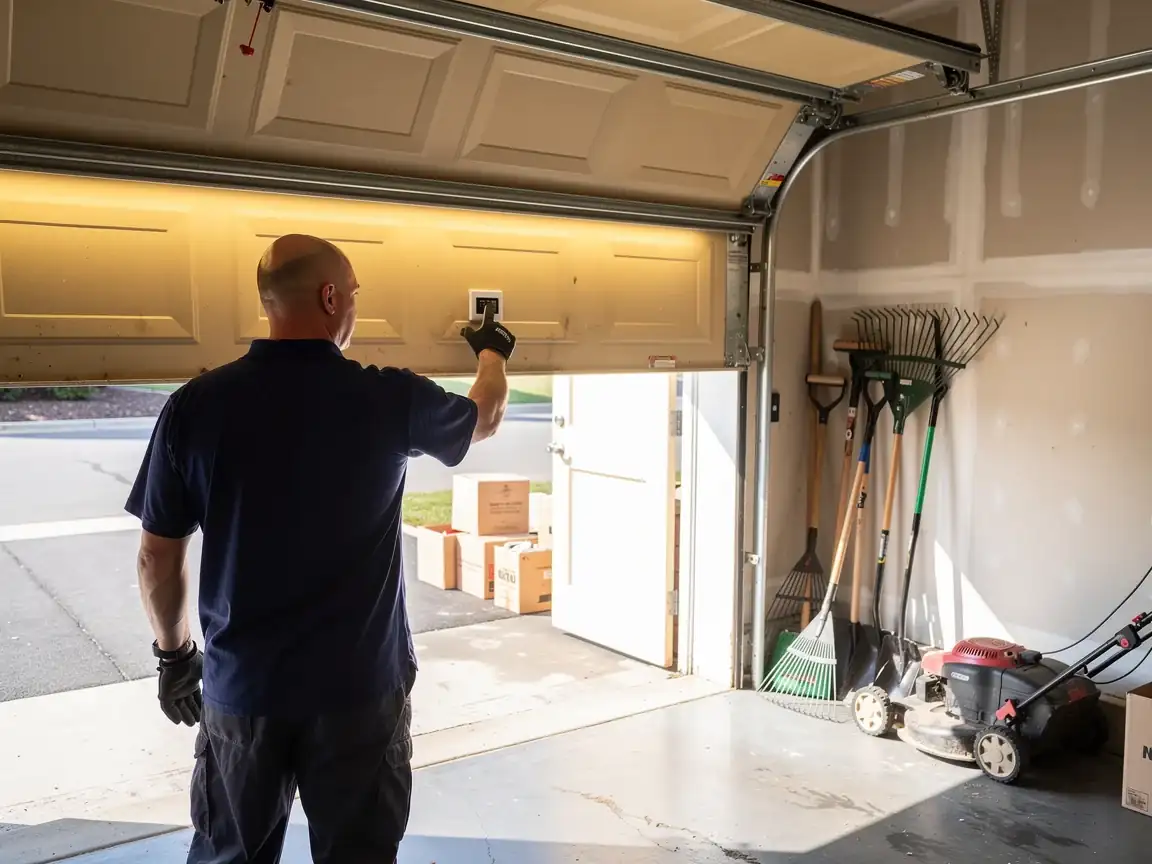
A technician in gloves adjusts a light strip on an open garage door.

Repaired & tested

The repair is done, the door is set true and tested, and the work area left clean.

Next step

Not sure which repair your door needs in Johnstown, PA? Describe what it’s doing - every job starts with a diagnosis.

How we work

What to expect

Diagnosis first

Every visit starts by finding what actually failed - not a pre-written parts list.

The right part for the door

Springs and openers matched to the door’s weight and age, so the fix holds up.

Straight answers

When a repair makes more sense than a replacement - or the reverse - you hear it plainly.

Clean, careful work

Tension released safely, hardware set true, the door tested under power before we leave.

19,966Residents in Johnstown
8Garage door services
8Neighborhoods & suburbs
PAServing Johnstown, PA
Questions

Frequently asked

Straight answers about garage door repair in Johnstown. Still unsure? Ask us directly.

Will a new panel match the rest of my door if my house is from the mid-1970s?

It depends on the finish. We carry standard steel sections sized for builder-grade doors from that era, but exact color and texture matching on a decades-old finish isn't guaranteed off the truck. We check it against your door in person and tell you honestly if a full-door replacement will look better than a patched panel.

Do you keep a crew or parts stocked in Richland?

No. We run out of Johnstown, about 5 miles away, and bring what we need for the job with us. For common panel sizes that's usually a same-visit repair; for less common widths we may need to order the section first.

Why did my panel dent instead of crack?

Steel sectional doors from the 1970s crease along the rib line rather than shatter on impact, which is why the door often keeps running on the track even with visible damage. The dent usually gets worse over winter as cold temperatures flex the weak point in the metal.

Is it worth fixing one panel or replacing the whole door?

If the rest of the door is sound and we can get a close enough finish match, a single-panel swap is the cheaper route. If the spring or hardware is also original to a door this age, or the color match isn't close, replacing the full door often ends up making more sense.

Ready to get your garage door sorted?

Tell us what it’s doing and where you are in Johnstown - we’ll take it from there.

Request a QuoteCall