How It Shows Up
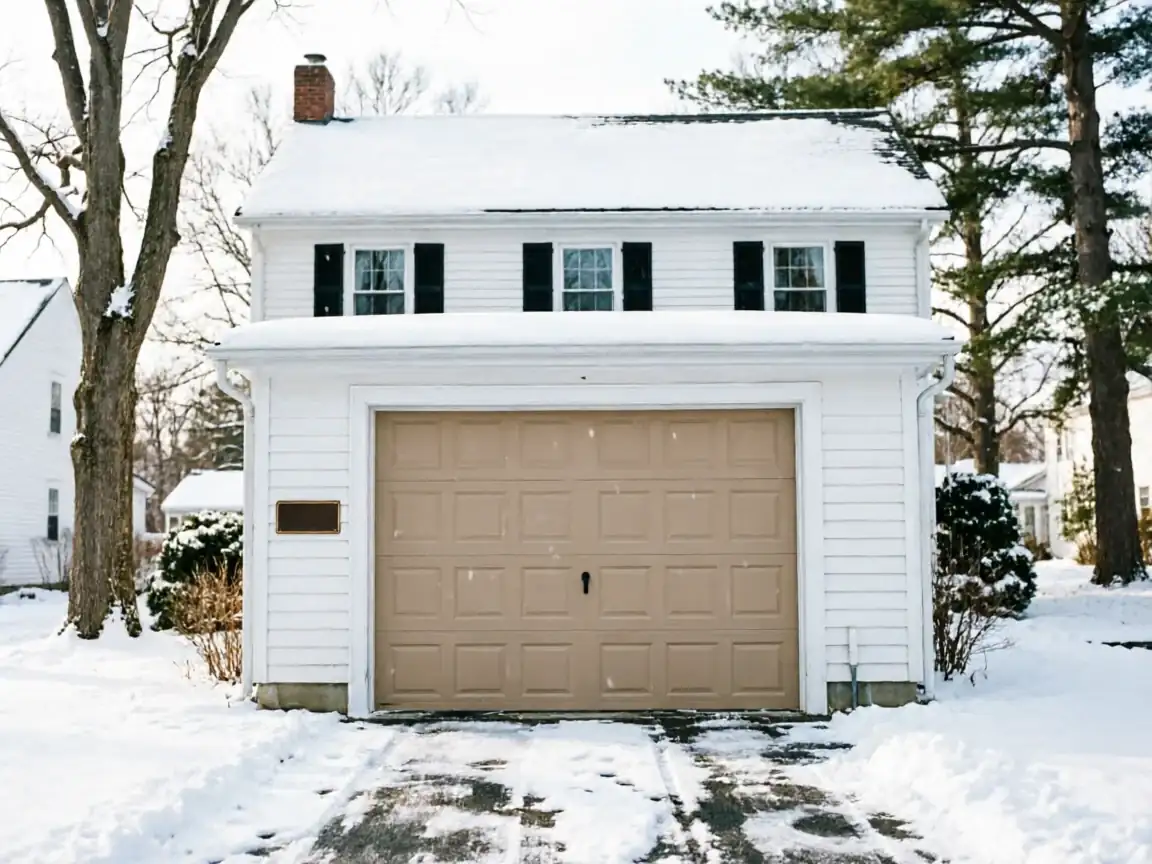
Most houses in Elim went up around 1958
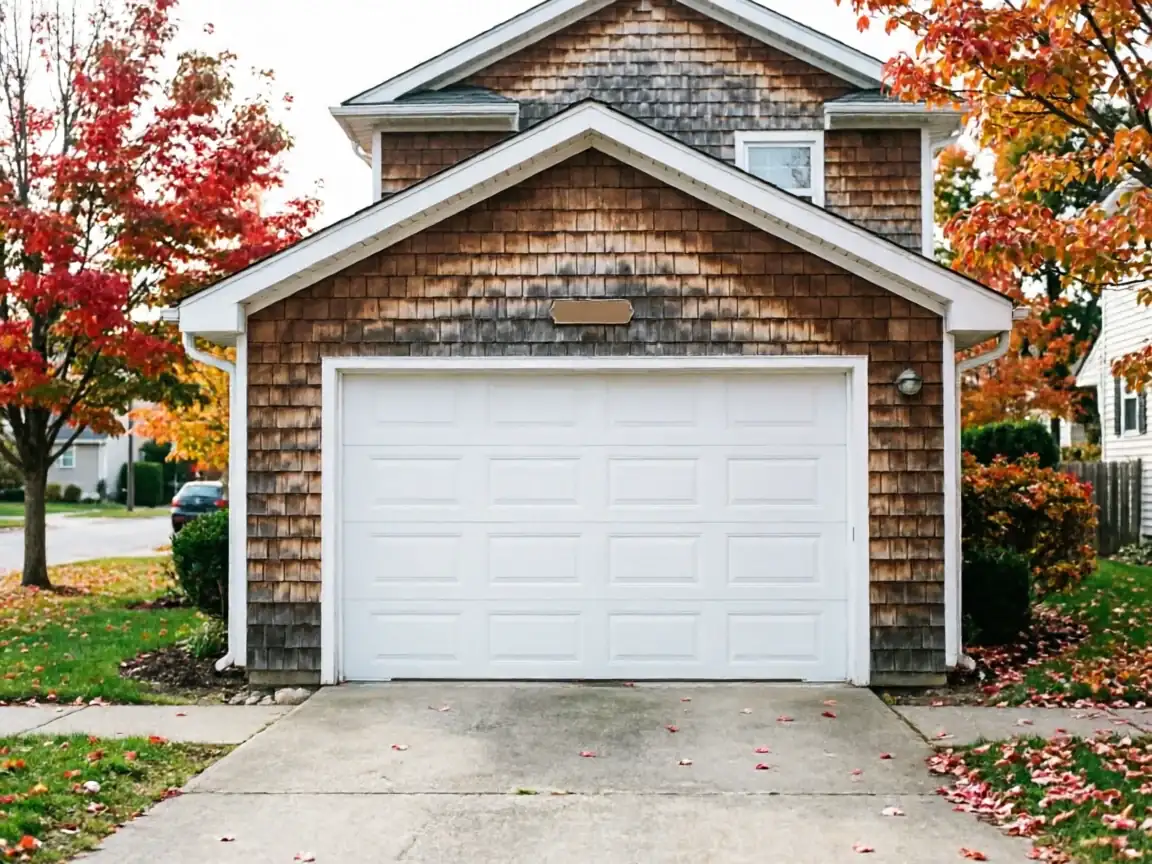
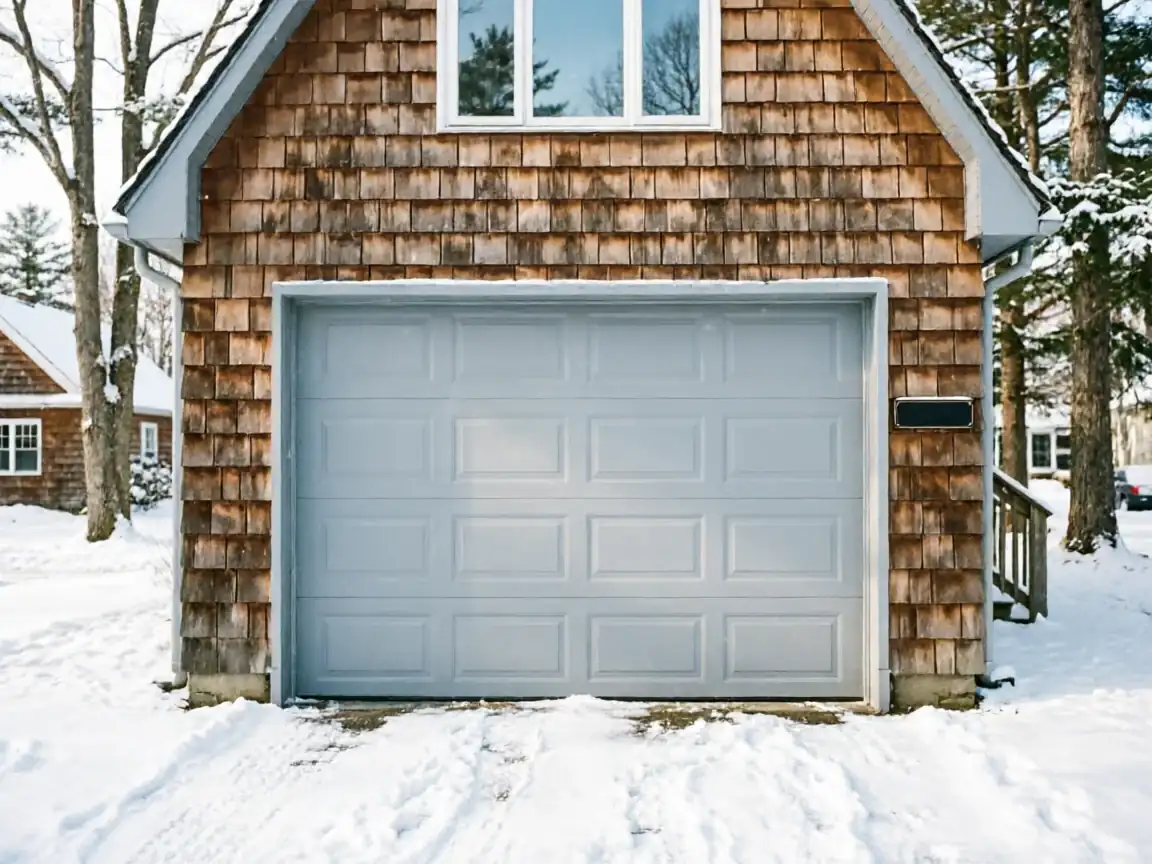
Which puts the garage door on the property somewhere in the steel sectional range that was standard through the late 1950s and into the 1960s. That hardware shows damage in a specific pattern: the bottom one or two panels take the hit first, from a car bumper, a dragged trash can, or just decades of freeze-thaw working at the seams. You'll see a bowed or creased panel, paint that's flaking at the hinge line, or a section that won't sit flush when the door closes. On doors this old the panel is often the weak point long before the opener or the torsion spring gives out, because the steel gauge and coating used back then wasn't built for 60-plus winters of road salt and ice.
Sometimes what looks like one bad panel is actually the track pulling out of square
Which bends the panel next to it. We check both before quoting anything, because replacing a panel that was never the real problem doesn't fix the door.
What You Pay
We don't post prices for panel work because it depends on whether we can match the existing panel, source a compatible one, or need to move you toward a full door. Elim's median household income runs $64,597, noticeably higher than the $56,795 median across the broader service area, and in practice that shows up as more owners here asking to match a single panel rather than replace the whole door outright - a reasonable call on a door that's structurally sound otherwise.
The honest limit: on doors from the 1958 vintage, an exact panel match isn't always available. Manufacturers changed panel widths and profiles more than once since then, so a true match sometimes means hunting a compatible used section, and sometimes means the repair costs more than a sensible full-door swap. We'll tell you which situation you're in before you pay for anything.
How to Book
We work out of Johnstown and cover Elim from there - it's about a 2 mile run, so there's no separate branch or crew based in town, just the same shop sending someone out. Call and describe what you're seeing: which panel, how the door is behaving when it opens and closes, and roughly how old the house is if you know it. That last detail actually matters here, since Elim's 1958 median build year tells us a lot about what hardware we're likely to find before we even arrive.
See our Elim service page for what else we cover in town, and if this turns out to be a Johnstown-side job instead, the panel replacement page for Johnstown covers that service area directly.
What the Repair Takes
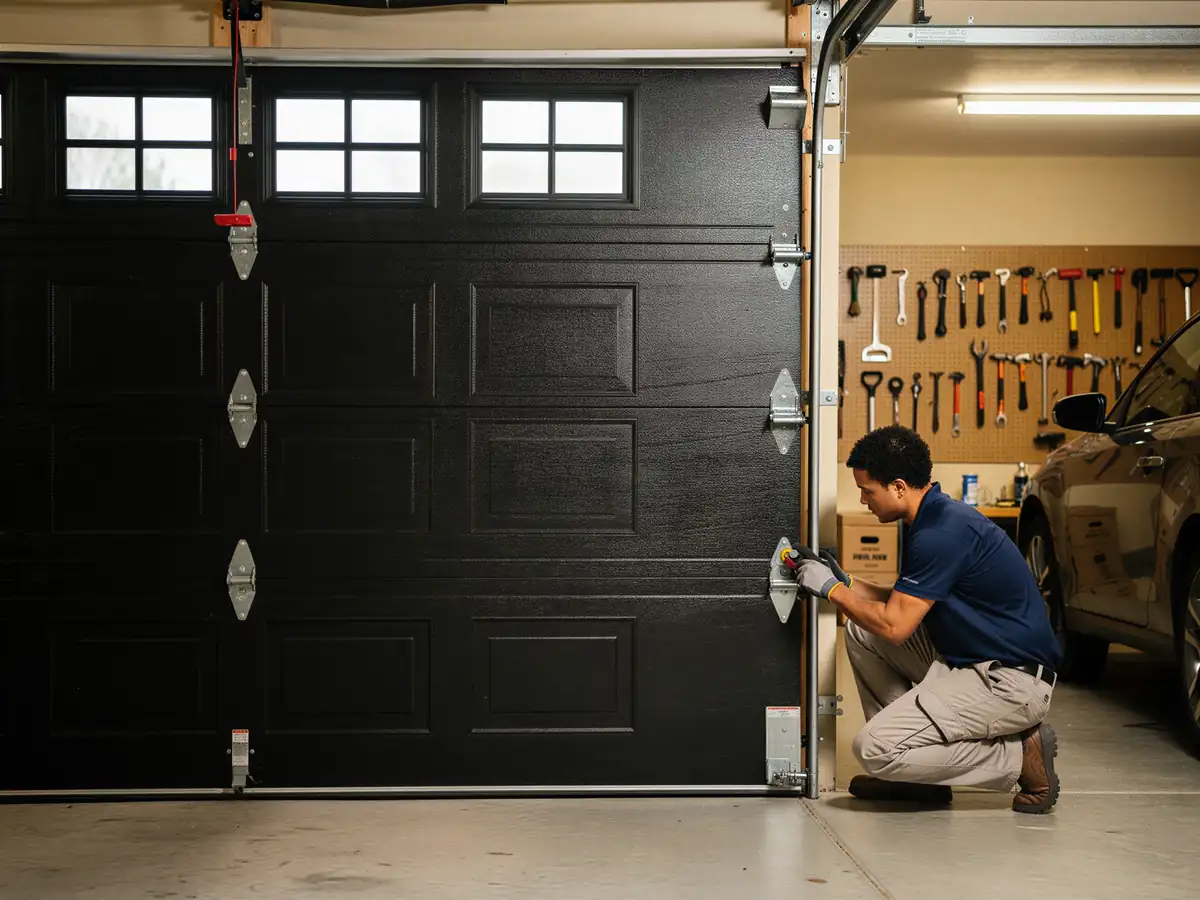
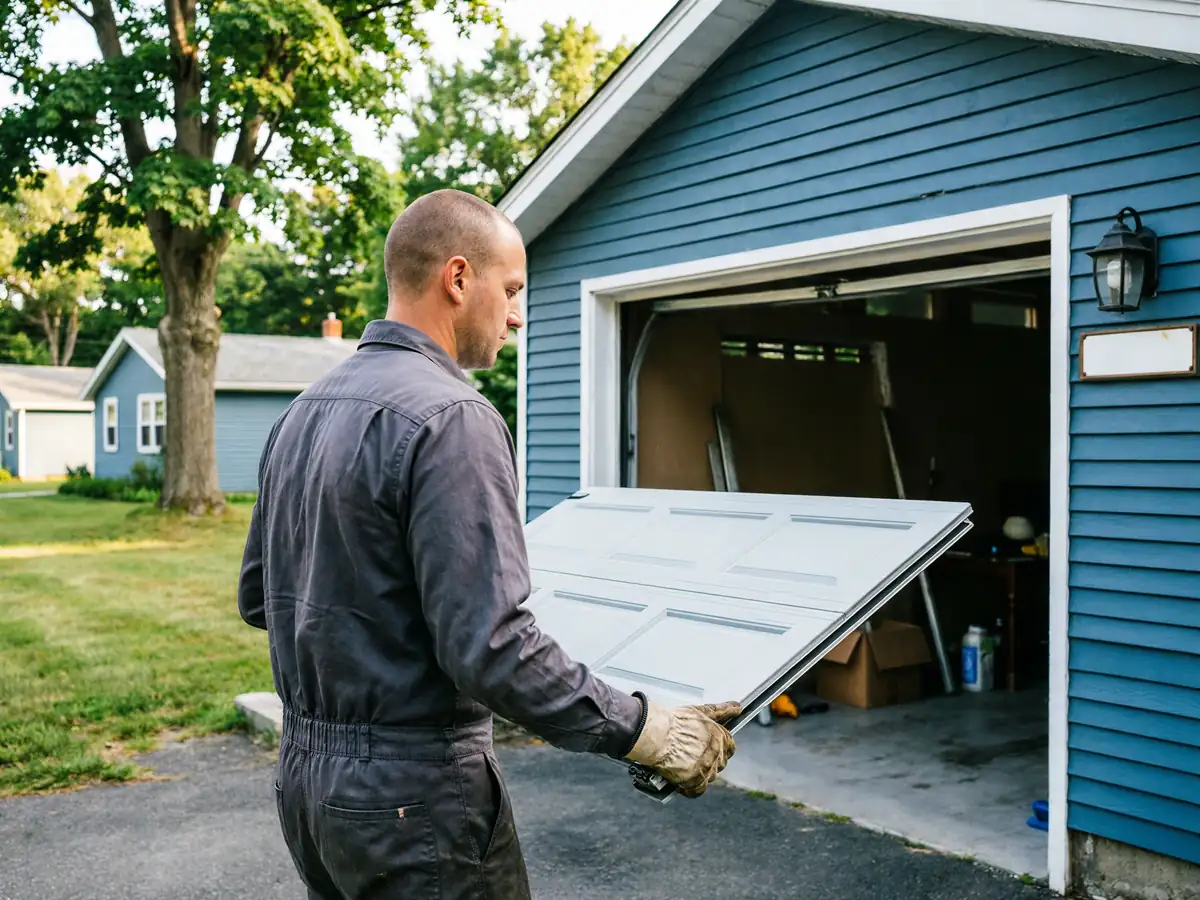
Swapping a single panel on a sectional door means pulling the hinges and rollers off the damaged section, freeing it from the track
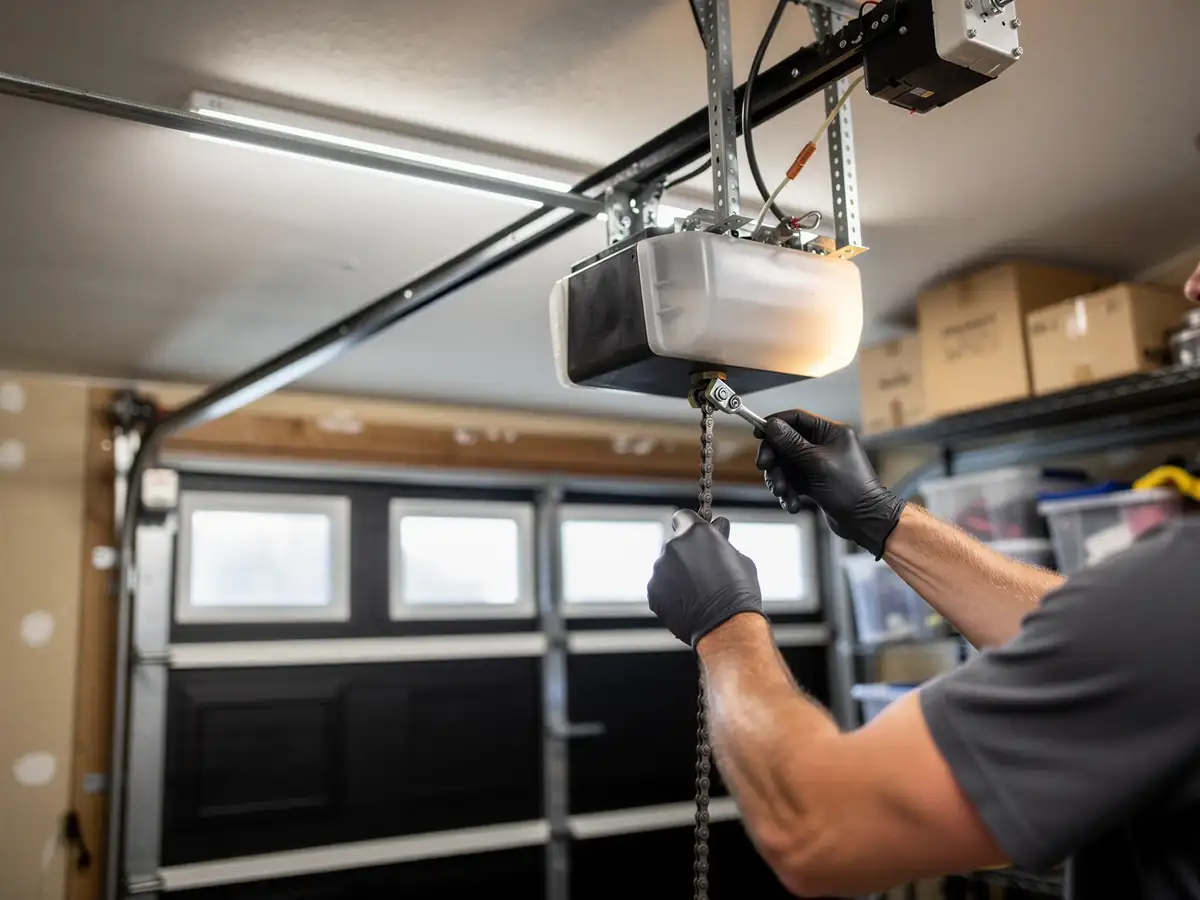
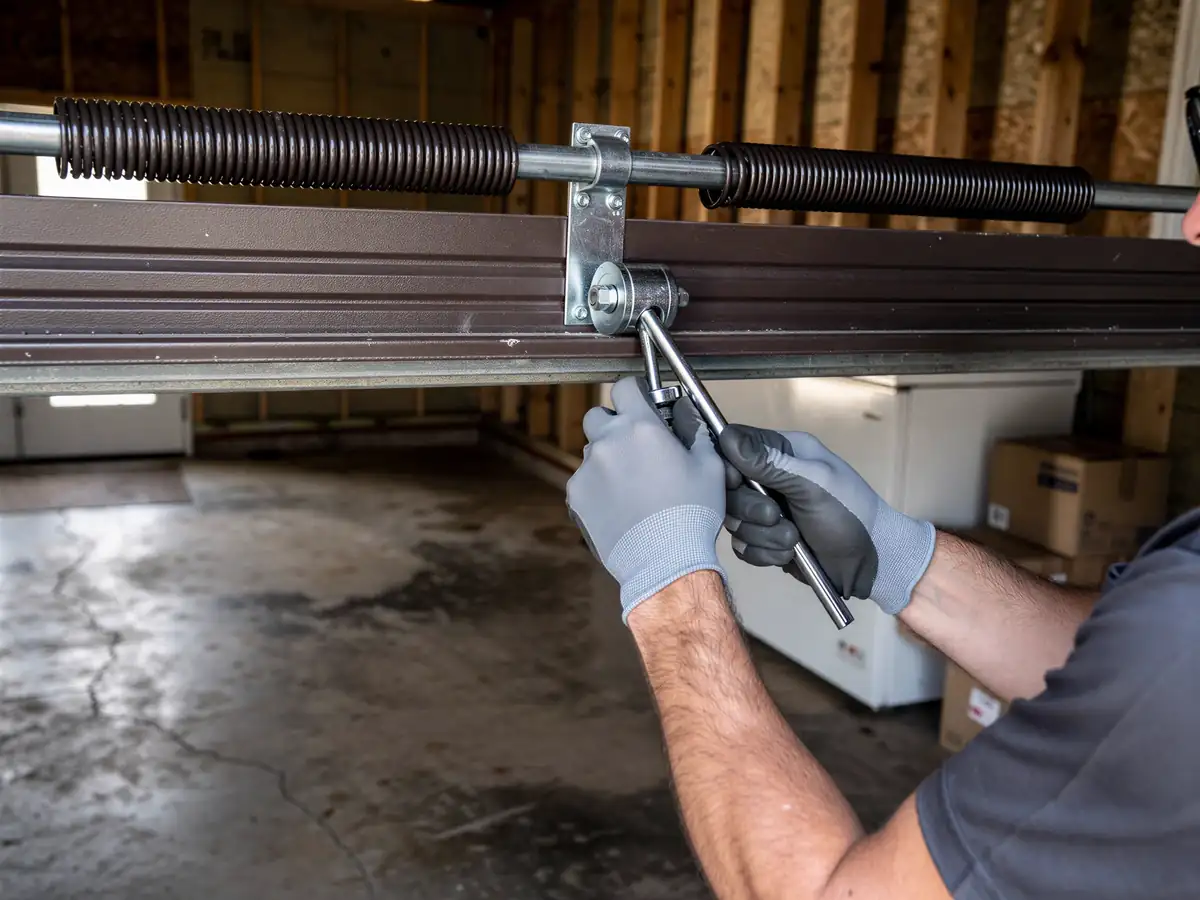
And setting the replacement in without disturbing the rest of the door's balance. On doors built to the 1958-era standard, that balance is already touchier than on newer doors, since the springs were often sized for the original steel weight and any mismatch in panel gauge throws the lift off. We check spring tension and roller condition on the rest of the door while we're in there, because the areas with mostly pre-1960 housing stock tend to have other hardware aging out at the same time.
If the panel is a close match, the swap itself is usually a same-visit job
If we're hunting a compatible section first, that part takes longer and we'll tell you a timeframe once we know what's out there.
Can You Do This Yourself
Panel replacement is one of the more doable garage door jobs for a homeowner comfortable with a drill and a ladder, provided the door isn't under spring tension while you work and you're only swapping a bottom panel that doesn't involve the torsion hardware. Where it gets risky on Elim's older housing stock is panel matching - ordering a section that's close but not exact in height or screw pattern leaves you with a door that doesn't seal or track right, and sometimes with a panel you can't return.
We'll say plainly that we'd rather quote the match-sourcing part of the job than have someone order blind and end up swapping twice. The mechanical install itself, once you've got the right panel in hand, isn't the hard part.
Why It Happens Here
Elim's housing centers on 1958, a few years behind Johnstown's own 1952 median, and that narrow gap still puts the town's garage doors in the same general era: steel sectional stock built before galvanizing standards caught up to the kind of winters this region gets. The climate here runs cold and severe, and road salt plus repeated freeze-thaw cycles go after the bottom panel seams first, which is exactly the failure point we see most in town.
With roughly 1,525 households in Elim, it's a small enough market that panel sizes specific to that late-1950s run aren't something any local supplier keeps on a shelf - we're sourcing them the same way we would for any town built on that timeline. None of that is unique to one house; it's the age of the stock, not the address, driving what breaks.