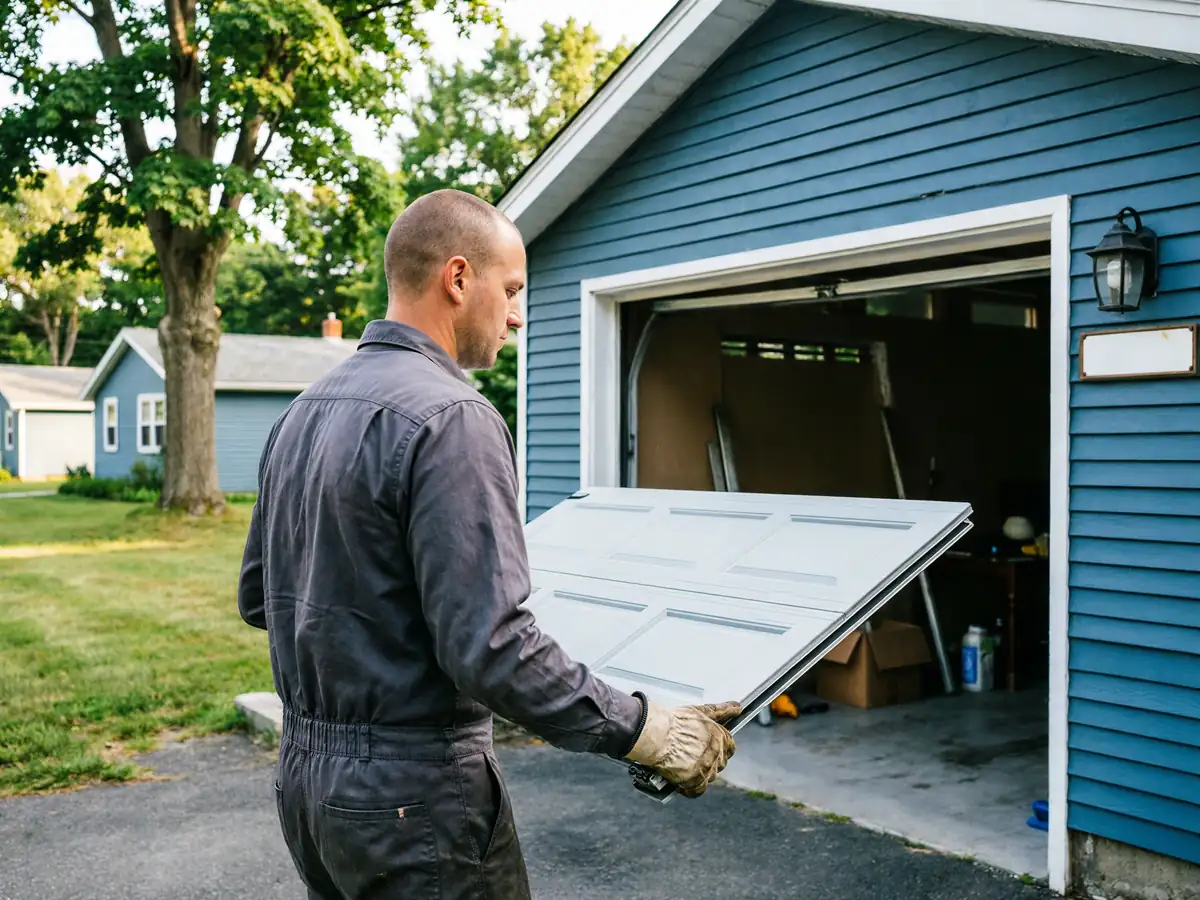
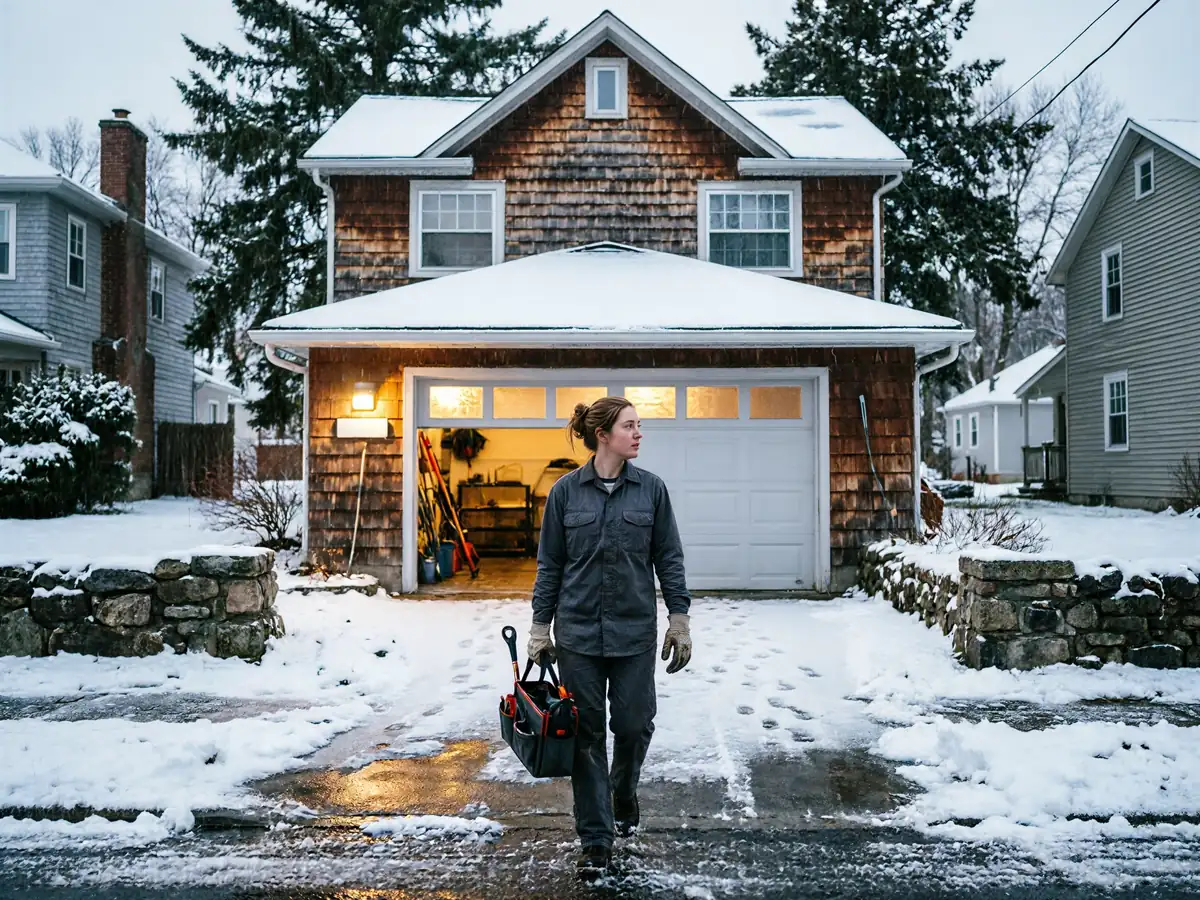
Can You Do This Yourself
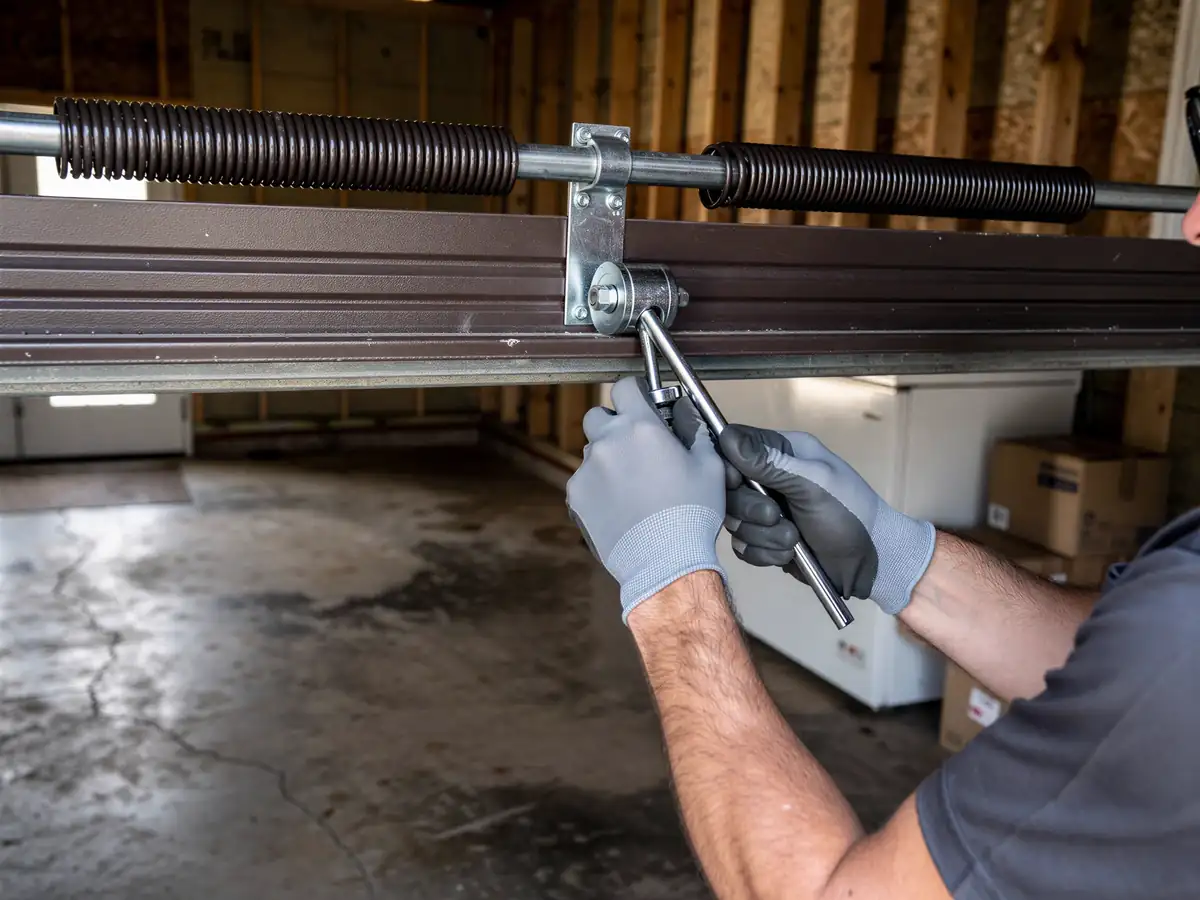
If your door won't open and the spring looks snapped or stretched out of shape
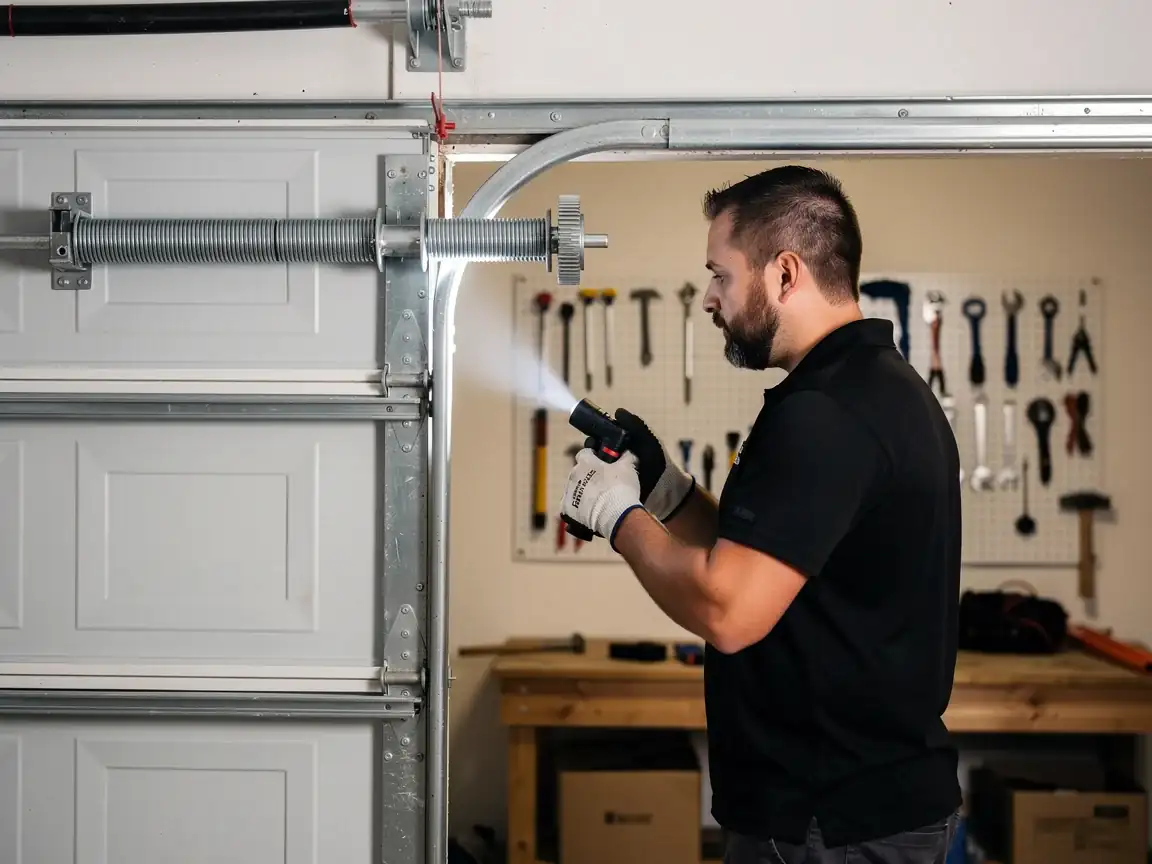
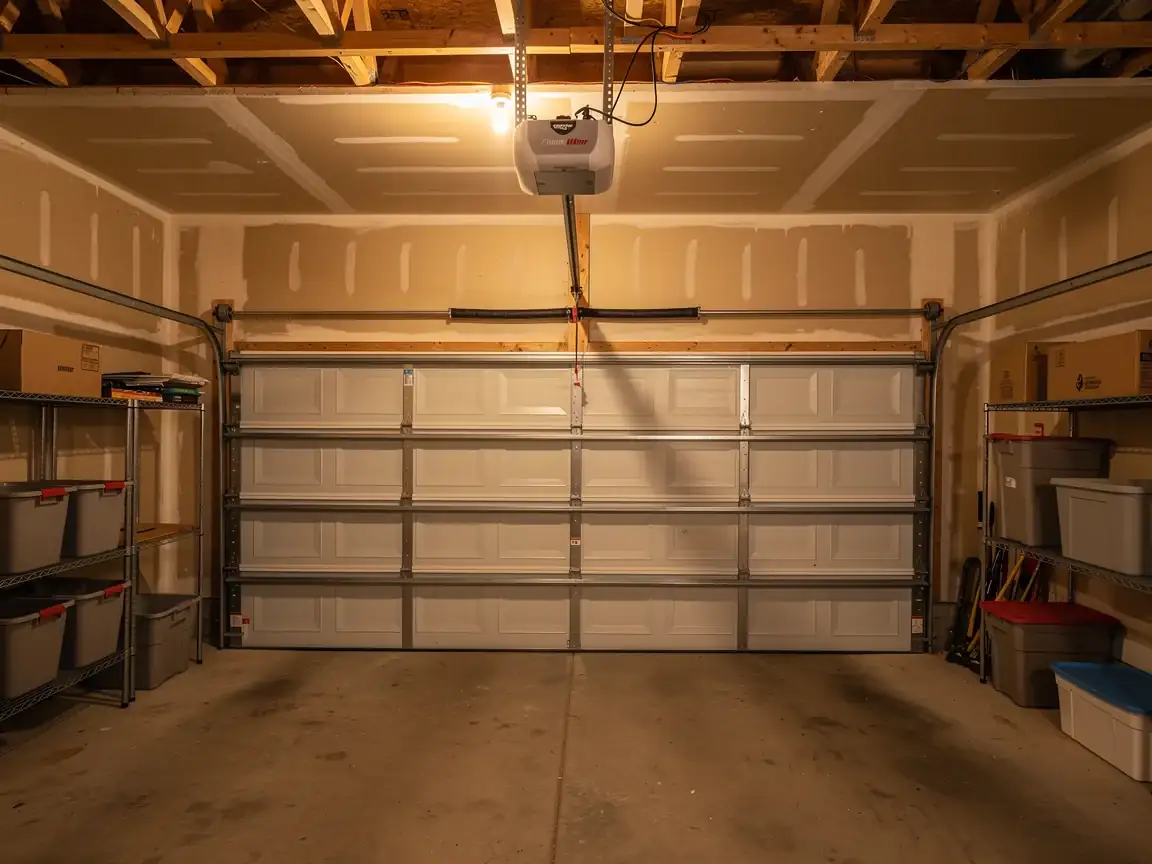
Don't try to force it. A torsion spring under tension can take a finger off, and on the one-piece and early sectional doors common in Ferndale's 1947-built housing, the hardware wasn't made to modern safety spec - no auto-reverse sensors, no secondary restraint on the spring. That's a real limitation: we won't talk you through a spring swap over the phone, because on this era of door it isn't a DIY job.
What you can safely check yourself
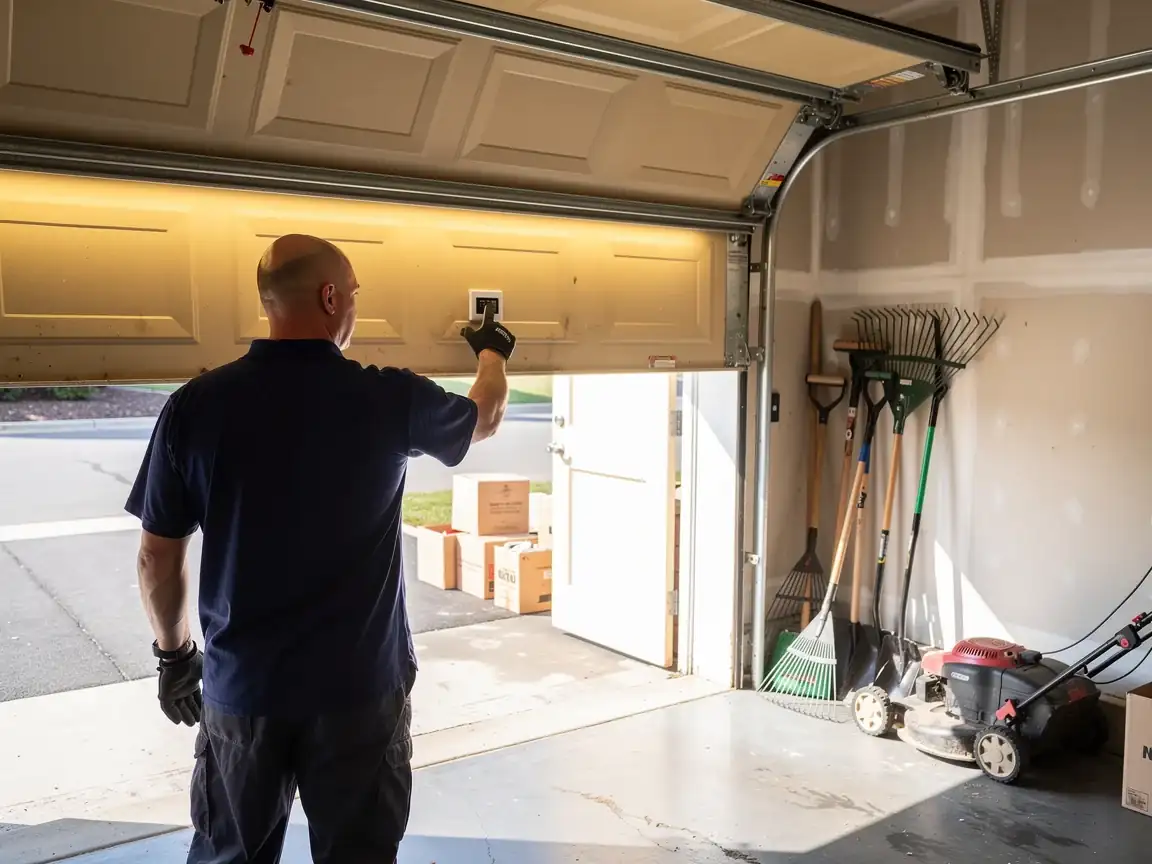
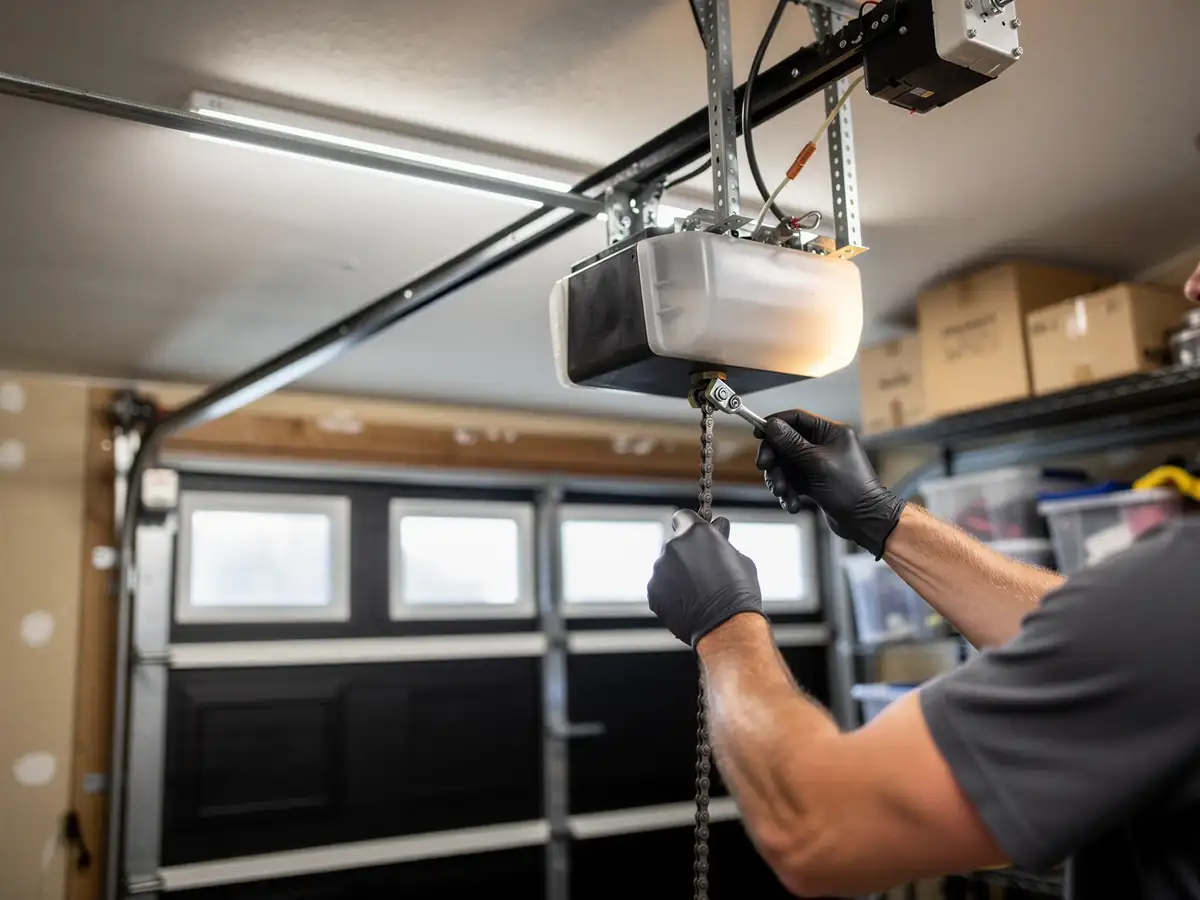
The opener's power cord, whether the track is visibly bent or pulled from the wall, and whether something is blocking the photo-eye sensors if you've got a newer opener retrofitted onto an old door. If the door is off track or a cable has come loose from the drum, leave it alone and call it in. Trying to muscle a door back onto bent track usually turns a repair into a replacement.
If the door is stuck shut and there's a car trapped inside, that's the one case worth forcing a manual release
The red cord hanging from the trolley - so you can get the vehicle out before someone arrives to fix the real problem.
Why It Happens Here
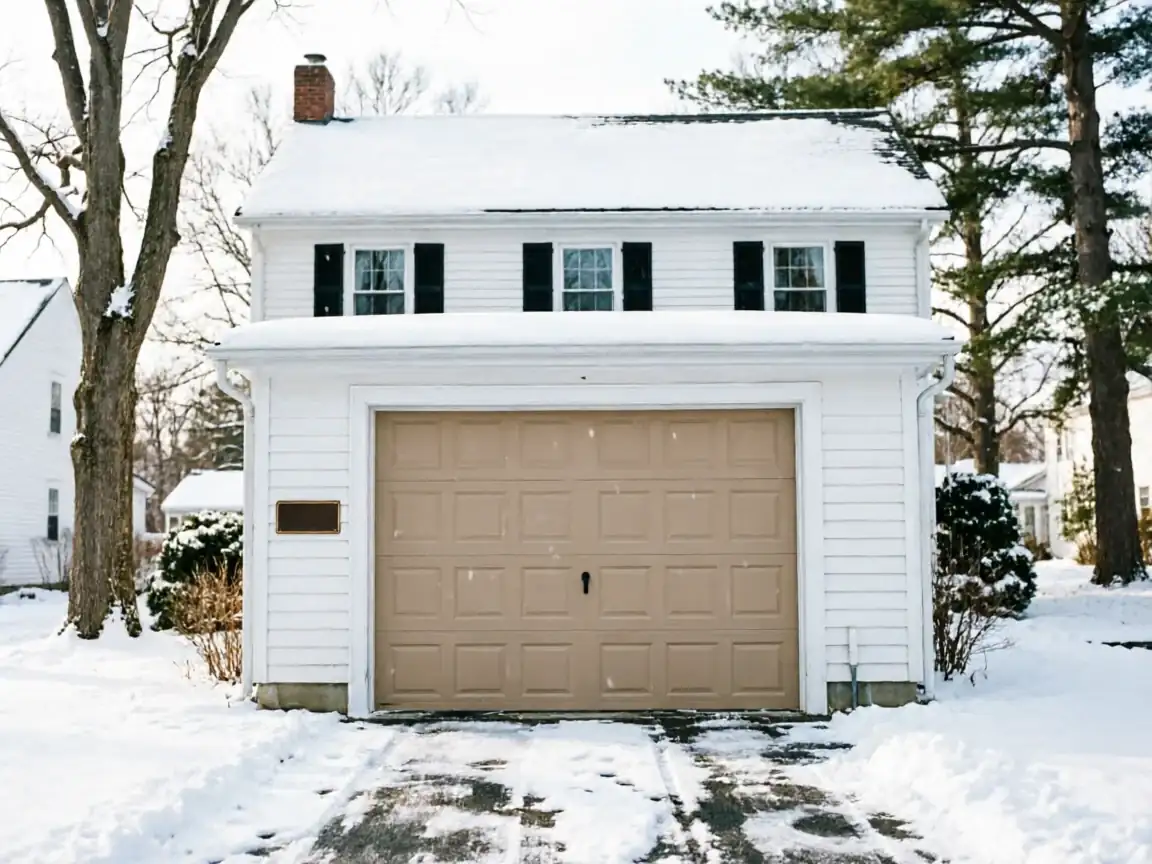
Ferndale's housing stock centers on 1947, square in the pre-1960 wave that covers most of this part of the service area. Doors and openers installed or retrofitted on houses from that build year tend to run older tracks, lighter-gauge panels, and in a lot of cases torsion springs sized for hardware that's since been discontinued. When a spring on one of these goes, it's often not a like-for-like swap - we're matching an older drum and shaft setup, not just ordering a stock part.
Cold is the other driver. This area sits in a severe cold climate band, and steel garage door components contract in hard freezes. Cable tension and spring steel both behave differently at 10°F than at 50°F, and a cable that's been fraying slowly all summer is the one that lets go on the first deep-cold morning. On a house built in the late 1940s, that cable is frequently original-adjacent hardware that was never upgraded, not a modern galvanized replacement.
The combination - older hardware plus real cold - is why emergency calls cluster the way they do here, rather than being random.
What the Repair Takes
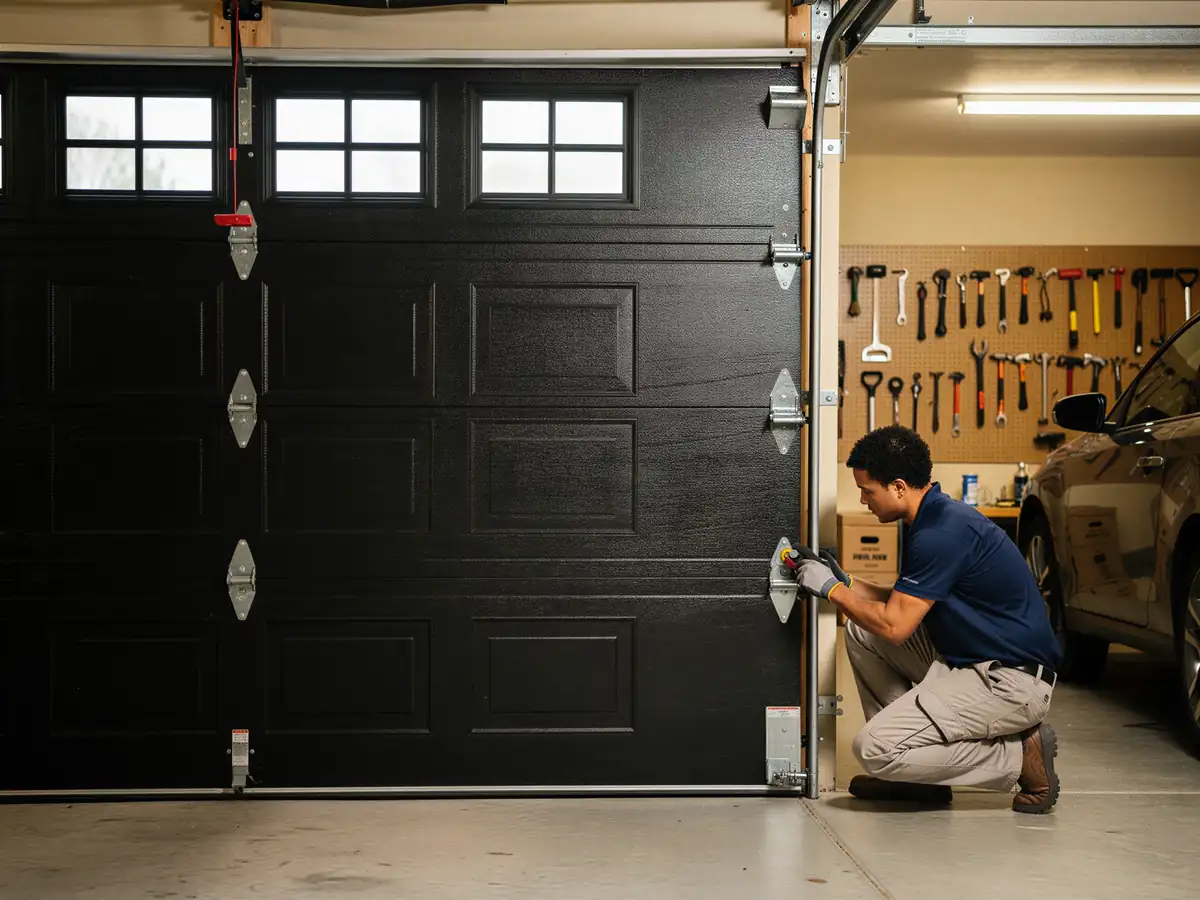
Most emergency calls fall into one of three buckets: a broken torsion or extension spring, a snapped or frayed lift cable, or a door off its track from a roller failure. On the pre-1960 housing common around here, the fix usually means sourcing a spring or cable sized to older drum and shaft dimensions rather than a current catalog part - that can add time versus a newer door, and it's the honest limitation worth saying up front: not every part ships same-day.
We inspect the full system before quoting, not just the broken piece. A spring that snapped under normal use sometimes took a cable or a bent track panel down with it, and fixing only the obvious failure leaves you with a second call in a month. On a 1940s-era door, we also check whether the opener was retrofitted later and whether its safety sensors are even wired to match current code - worth flagging if nothing else.
We work from Johnstown and reach Ferndale as a 2-mile trip, so the drive isn't what adds time to a repair - sourcing the right part for the hardware already on the house is.
How Long You Are Without the Door
A straightforward spring or cable swap on a door we can match parts for same-visit is usually done in one trip
Where the hardware is old enough that we need to source a non-stock spring size or a drum that matches a 1940s track width, the door may need to sit closed and secured for a day or two while the part comes in - we'll tell you straight whether your job is same-visit or a return trip, rather than guess on the phone.
If the door is off-track or a panel is bent
We can usually get it functional and secured the same day even if a full cosmetic repair waits on parts. Safety first, then full fix.
We don't promise a specific response window for the 2-mile run from Johnstown to Ferndale
That number isn't something we publish - but the distance itself isn't the bottleneck on most jobs. Part availability for older hardware is.
How to Book
Call when the door's stuck, off track, or a spring or cable has gone - we come out from Johnstown, a 2-mile trip to Ferndale. Have the door's approximate age (if it matches the house, likely mid-to-late 1940s) and whether it's a single or double door ready when you call; it changes which spring size we bring.
If it's not an emergency - a noisy opener, a rough-running track, a door that's just old and due for replacement - that's a different conversation and a different visit. See our page on garage doors in Ferndale for that side of things, or the broader emergency garage door repair page for Johnstown if you're elsewhere in the service area and landed here by mistake.